Read a little. Learn a lot. • Now Mullenweg-free! • Since 2009
☰

Tag: the pitch

22 posts

Aug282012t

From zero to infamy in 30 seconds

Not Just Todd Akin: The 10 worst political gaffes of the past decade

Here’s the final entry in our weekly summer post series, “The Pitch.” (We’ll bring this back at some point, we promise!) This post, written and research by Matthew Keys, examines what we’re calling the ten most-prominent political gaffes of the last decade or so. Follow Matthew on Twitter here.

  • From zero to infamy in 30 seconds: Before last week, Missouri Senate candidate and current Rep. Todd Akin didn’t have a national profile. He looked like he might take down Claire McCaskill thanks in part to changing demographics in the state. But thanks to a half-minute comment on the nature of abortion, Akin is down as much as ten points in a recent poll. He felt the wrath of the gaffe. And he’s not alone. Gaffes have taken on a life of their own in modern political coverage. So with that in mind, SFB contributor Matthew Keys (who you might know from his epic Twitter account) has thrown together a list of the worst gaffes of the past ten years. Which is the worst? Find out after the jump.

\10. John McCain becomes a zombie

This image has been lost

  • The above photo, snapped by Reuters photographer Jim Bourg, shows John McCain reacting after nearly walking through the wrong exit on stage after a presidential debate in New York. The picture, eventually dubbed the “McCain Zombie” photo, achieved viral status on the “Internets” (scroll down to number 5). (photo by Jim Bourg/Reuters) source

\9. Sarah Palin’s American history lesson

  • In 2011, former vice presidential candidate Sarah Palin had everyone speculating that she would throw her hat into the race for Republican presidential nominee. Her “One Nation” bus tour only fueled that speculation, but it was a campaign stop in Boston, Massachusetts that caused the “lamestream media” to shift focus away from her non-campaign and onto American history. Needless to say, we did some digging, and Paul Revere warned the colonists that the British were coming, not the other way around. source

\8. Joe Biden lauds the Health Care Reform Act

This image has been lost

  • The vice president is known for having the occasional bout of foot-in-mouth. His most notable gaffe — and the one that will likely become synonymous with his term — was when he was caught on an open microphone playing up the importance of the passage of the Affordable Care Act during the president’s signing of the bill into law. Biden’s historic “big f–king deal” moment was aired live by nearly ever cable news outlet in America and will forever be synonymous with the signing of the historic health care bill. (Photo by Chip Somodevilla/Getty Images) source

\7. Mitt Romney responds to a heckler

  • While campaigning for votes in the Iowa straw poll at the state fair in August 2011, now-presumptive Republican nominee for president Mitt Romney dropped his infamous “corporations are people” line in response to a heckler who suggested one way to balance the budget and keep things like Medicare was to raise taxes on them. Michele Bachmann wound up winning the straw poll a few days later. source

\6. Oops.

It’s three agencies of government, when I get (to the White House), that are gone: Commerce, Education and the — what’s the third one there? … I can’t. The third one, I can’t. Oops.

Rick Perry’s “Brain Freeze” moment at CNBC’s Republican National Debate in November 2011 became the hallmark for the rest of his presidential nominee campaign. To this day, we still aren’t quite sure what the third agency was. Anyone? Anyone? source

\5. President Bush pluralizes the World Wide Web

  • INTERNETS (noun, plural): Where the rumors are, according to two-term former President George. W. Bush.
  • During a 2004 presidential debate in St. Louis with then-Democratic presidential nominee John Kerry, Bush addressed the “rumors on the Internets” that the U.S. government would bring back the draft. Bush went on to say that the all-volunteer military worked. Though this use of the word “Internets” has been most attributed to Bush, it was not the first time he used the word: During a 2000 debate with former vice president Al Gore, Bush suggested placing filters on the “Internets” at schools and libraries to keep children from viewing pornography or violence.

\4. President Obama claims you didn’t build that

  • Politicians can sometimes forget things like hot microphones (Biden, see number 8), American history (Palin, see number 9) and “the third one” (Perry, see number 6). In this case, President Barack Obama forgot the mainstream media has access to editing machines. Speaking off the cuff at a campaign event in Virginia, Obama meant to send the message that if a business succeeds, the reason for that success is one part the business creator and one part the people who built the infrastructure to support the business (like roads and bridges and the like). But his impromptu line “If you’ve got a business, you didn’t build that!” became the isolated quote that ran on cable news and in political attack ads alike. It was a stern reminder that politicians of the 21st century should choose their words carefully. source

\3. Todd Akin’s own party turns on him

If it’s a legitimate rape, the female body has ways to try and shut that whole thing down.

Rep. Todd Akin, a Republican from Missouri who is currently running for the U.S. Senate, made his comment while affirming his anti-abortion stance on a local television program in St. Louis. One day later, Akin apologized for his comment, adding that the study he drew his opinion from was flawed and that he meant to say “forcible rape.” Akin decided to stay in the race for Senate despite calls from politicians, including Mitt Romney and Paul Ryan, to withdraw. source

\2. Anthony Weiner tweets his junk

  • first New York Congressman Anthony Weiner accidentally tweets what was meant to be a private photo of a bulge in his underwear on May 27, 2011. The link was removed quickly, but not before a handful of people saw the photograph.
  • then After the photo is exposed by recently-deceased blogger Andrew Breitbart, Weiner claims in interviews with the media that his Twitter account may have been hacked. Bloggers, rushing to Weiner’s aid, noted irregularities regarding the photo.
  • finally He ‘fessed up. Weiner admitted to sending explicit messages with six women over three years. He initially said he would not step down from Congress, but on June 20, 2011, he handed the House of Representatives his letter of resignation. source

\1. Howard Dean screams the states

  • 21states Dean screamed following the 2004 Iowa caucus
  • causeAfter coming third in Iowa, the former Vermont governor fired up his supporters at a rally by proclaiming “we have just begun to fight.” During his speech, Dean enthusiastically told the crowd his campaign was going to 13 states. Then, as the crowd cheered, he delivered the infamous “Howard Dean yell.” He wasn’t done; he named seven more states.
  • declineIn his book “The Revolution Will Not be Televised,” former Dean campaign manager Joe Trippi noted that, while the campaign was optimistic following the so-called “Iowa meltdown,” the emotion didn’t translate into numbers. Instead, the 24-hour news cycle isolated Dean’s infamous scream and looped it endlessly in news and commentary reports. source
  • » And things got worse. In the following New Hampshire primary, Dean would fall 12 points behind rival John Kerry, who went on to become the Democratic presidential nominee. From that point on, Dean was done. His gaffe had cost him a shot at the White House. Months of momentum, lost with a single moment repeated ad infinitum. That’s what a gaffe can do.

Research and writing by Matthew Keys, a journalist working for the Reuters news organization in New York and a ShortFormBlog contributor. Editing and presentation by Ernie Smith, who you might also know as a huge Dan Deacon fan.

Posted by ShortFormBlog • Permalink
Aug212012t

So just who is Paul Ryan, anyway?

The legend of Paul Ryan: Kinda like Paul Bunyan, except with more budget-cutting strategies

¡Hola! Here’s the latest entry in our weekly post series, “The Pitch.” This post, written by SFB’s very own Seth Millstein, analyzes the man, the myth, and the legend: Vice presidential candidate Paul Ryan. Follow Seth on Twitter over here.

  • So just who is Paul Ryan, anyway? Mitt Romney took a political risk, defied most pundits’ predictions, and delighted the conservative intelligensia last week by selecting Paul Ryan, a 42-year-old Congressman from Wisconsin, as his running mate. Ryan, who chairs the House Budget Committee, is a deeply polarizing figure. Some view him as an intelligent, non-combative policy wonk, a politician earnestly concerned with reducing the country’s deficit and unafraid to propose tough measures in order to do so. Others see Ryan a plutocratic snake-oil salesman, a GOP hardliner concerned primarily with gutting social programs and cutting taxes for the rich. So, what’s Ryan all about, and will he help or hinder Romney in November? ShortFormBlog’s Seth Millstein investigates after the jump.

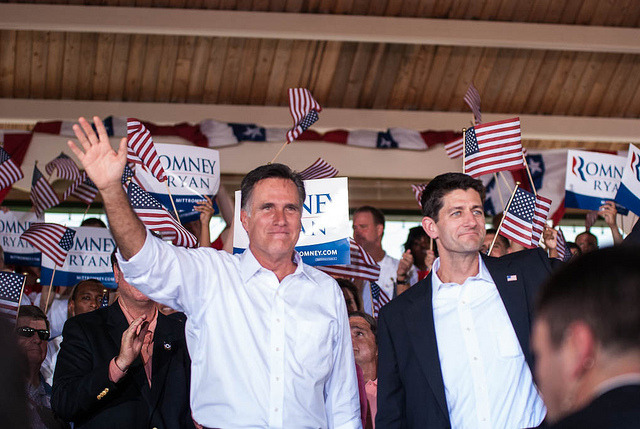
(photo by monkeyz_uncle)

Paul Ryan’s backstory

  • Wisconsin, born and raised: Unlike Mitt Romney, Paul Ryan wasn’t born into a political family — though he’s found his calling there, Ryan is as Wisconsin as they come, something that shows in his love of the outdoors. More about Ryan:
  • early Ryan was raised in Janesville, Wisconsin. In high school, he was elected class president during his junior year. He lost his father, who died of a heart attack when he was just 16.
  • middle At age 21, he became an intern in the U.S Senate in 1991, and after writing speeches for former vice presidential candidate and ardent supply-sider Jack Kemp, won a House seat in 1997.
  • current Ryan, who has served in the House for seven terms, gaining a rep as a budget wonk, married the former Janna Little in 2000. They have three children. His net worth is around $4.5 million.

Early philosophical inspirations

The reason I got involved in public service, by and large, if I had to credit one thinker, one person, it would be Ayn Rand.

Paul Ryan • Speaking about the early inspirations on his own political philosophy. Among some of the other thinkers he learned about at the University of Miami (Ohio), he grew a liking to Friedrich Hayek, Milton Friedman, and Ludwig von Mises. But it was Rand who drew the strongest influence — after reading Atlas Shrugged, he was inspired to jump into politics. “I said, ‘Wow, I’ve got to check out this economics thing,’" he told The New Yorker’s Ryan Lizza. “What I liked about her novels was their devastating indictment of the fatal conceit of socialism, of too much government.”

Ryan’s record as a public official

  • Ayn Rand is a major influence, but that doesn’t show up in his work: Ryan has gained a reputation as a bit of an economic hawk with libertarian leanings, but does that really hold up? Some critics disagree with that sentiment — particularly libertarian voices who were upset that he was pigeonholed with their political philosophy. So, let’s break it down. Where does he stand?
  • Economic Issues Put bluntly, the characterization of Ryan as a budget hawk doesn’t show in his voting record: He’s supported many policies that drastically increased, or would have increased, the deficit. Examples include the Bush tax cuts, Medicare Part D, the repeal of the Affordable Care Act, and a 2004 proposal to privatize Social Security. Ryan also voted for TARP, supported the war in Iraq, and opposed the PayGo requirement that tax cuts be offset with spending cuts, so it’s difficult to conclude that Ryan’s ideology is guided by an anti-big-government sentiment.
  • Social Issues Generally speaking, Ryan is socially conservative. He’s received a 100% rating from the National Right to Life Committee, an “A” from the NRA, and a 0% from Americans United for Separation of Church and State. He opposes the DREAM Act, supports anti-flag-burning legislation, and opposes gay marriage — yet he’s in favor extending anti-discrimination laws to cover sexual orientation. According to DW-Nominate, a statistical ranking system that attempts to quantify legislators’ ideology, Ryan is about as conservative as Michele Bachmann. source

The Ryan Plan: How Paul got his wings

  • How Paul Ryan became a national figure: Ryan came to prominence around 2010 when, after debating President Obama face-to-face on health care reform, he unveiled a dramatic budget proposal dubbed “The Path to Prosperity,” which he pitched in the video above. He’s put out similar budgets every year, and the most recent incarnation has found its way into the spotlight following Romney’s VP announcement. It has several staples:
  • Medicare vouchers Rather than insuring seniors directly, Ryan’s proposal would provide Medicare recipients with “vouchers” worth a certain dollar amount that they could then use to purchase private health insurance. In addition, the plan would increase the age of Medicare elligibility, from 65 to 67, by 2034.
  • Tax structure The Ryan plan replaces the current income tax structure with two rates —10% and 25% (this would be a 10% cut for the highest earners), and lowering the corporate tax rate to 25%. It also proposes simplifying the tax code and eliminating unecessary tax expenditures, but doesn’t specify just how.
  • Low-income programs Ryan’s budget would cut $2.17 trillion from Medicaid and related programs, as well as $750 billion from money from programs that serve to benefit the poor (like food stamps and Pell Grants). All in all, 62% of the cuts identified in Ryan’s budget come from programs aiming to benefit low-income Americans. source
  • » A credible proposal? A frequent criticism of Ryan’s budget is that while it purports to reduce the deficit, this claim relies on policy details that the plan itself does not specify. The primary issue is the plan’s claim to be “revenue-neutral.” This means that although, under Ryan’s budget, tax rates would be reduced, the federal government would still collect just as much money, because the plan eliminates tax breaks and expenditures that otherwise decrease tax intake. However, Ryan doesn’t name any of the breaks or expenditures that he’d reform, and doesn’t explain how they would be modified.

Skepticism about Ryan’s plans

I’m not comfortable dismissing what Ryan says he’ll do. But I’m not comfortable assuming that he’s going to do something he’s never done before, that the Republican Party is ideologically uninterested in doing, and that would be nearly impossible to get done.

The Washington Post’s Ezra Klein • Who’s unsure of how to deal with the lack of specificity in Ryan’s budget proposal. The “something” to which he refers? Offsetting the tax cuts in his budget proposal. The plan doesn’t, in fact, name a single tax offset; it simply asserts as a premise that the new tax policy will be “revenue-neutral.” According to the the Bipartisan Policy Center, Ryan would have to eliminate every tax expenditure on the books to obtain revenue neutrality.

What about November?

This image has been lost

  • Will having Ryan on the ticket help or hurt Romney? Who knows: So much of Ryan’s effect on the race will depend on things that either can’t be measured yet (his effectiveness as a fundraiser, how his candidacy gets framed, his oratorical skills) or can’t be measured at all (how many minds in Florida are changed due to his Medicare proposals, how many Democrats turn out to vote in Wisconsin who otherwise wouldn’t have, etc). It’s worth keeping in mind that even the most polarizing VP picks don’t necessarily sway the election (many people forget that John McCain was projected to lose long before he tapped Sarah Palin for VP), so any speculation with regard to his effect on the race is dubious at best. (photo by James B. Currie)

A risk or a brave choice?

When a prudent candidate like Mitt Romney picks someone like Representative Paul D. Ryan of Wisconsin as his running mate, it suggests that he felt he held a losing position against President Obama.

FiveThirtyEight’s Nate Silver • Regarding his view on Romney’s choice. He sees Ryan as a risky pick, because now, “Mr. Obama will no longer have to stretch to evoke the specter of Congress and its 15 percent approval rating,” because “with Mr. Ryan on the opposing ticket, he will be running against a flesh-and-blood embodiment of it.” Do you think that Ryan is the change the country needs? Did Mitt make the right choice?

Seth Millstein is a writer and Journalist who has penned articles for the likes of ShortFormBlog and The Daily. Reach him at @SethMillstein.

Posted by ShortFormBlog • Permalink
Aug212012t

It’s the final Pitch-down

Welcome to the eighth, and final, week of The Pitch!

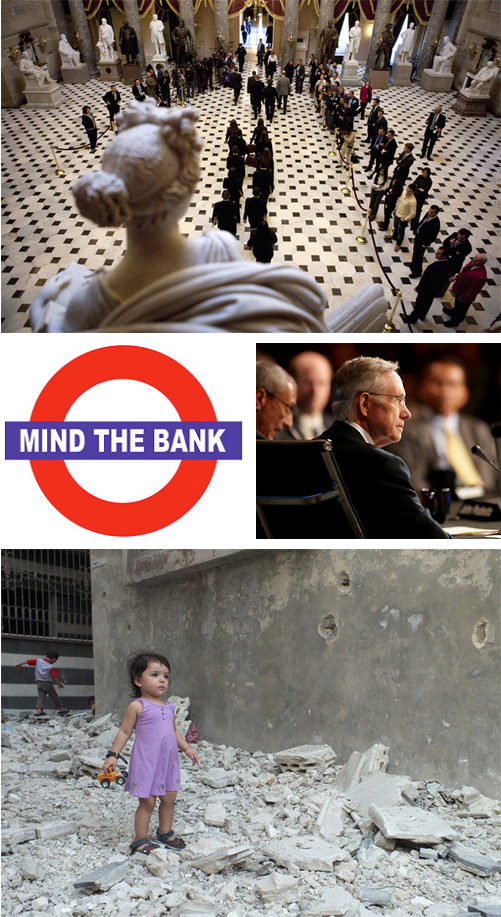
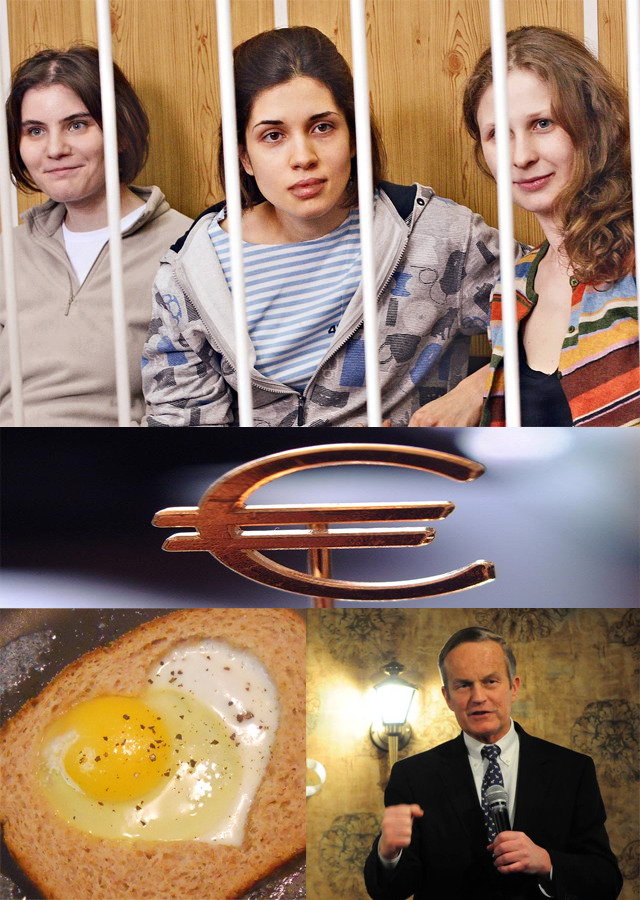
  • It’s the final Pitch-down: Well, it’s been a fun summer, hasn’t it folks? Your writers here at SFB have really enjoyed writing the stories you wanted to hear more about. In our last installment of The Pitch, we present to you four choices: a discussion on free speech in post-Soviet Russia, high stakes and suicide rates due to the economies of many countries, chol-egg-sterol and other health warnings, or the gaffe-a-palooza that is recent American politics. Head over to our FB album and choose wisely! You have, as always, until Friday evening to vote. Catch up on last week’s winner, the mythical man that is Paul Ryan. source

Posted by ShortFormBlog • Permalink

Aug212012t

On the future of The Pitch

rachelcstella says: Wait, this was only for the summer? You’re not going to continue? Oh, I wish you’d keep this feature going!

  • » SFB says: We like The Pitch, too, but we want to be careful to give features a chance to lay dormant, for fear of overexposure. (For example: We want to bring the Tumbl-zine back at some point.) We think that there’s a lot of opportunity to do things like The Pitch, but at the same time, we don’t want to have such a feature wear out its welcome. We may bring it back at some point based on time and reader demand for sure. We like doing it! :0 — Ernie @ SFB

Posted by ShortFormBlog • Permalink

Aug152012t

Seventh-inning Pitch

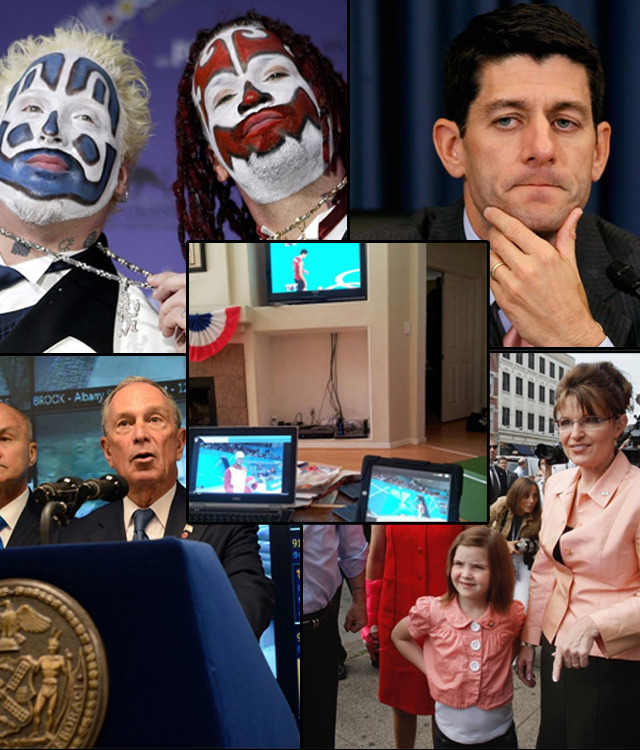
The Pitch, Week 7: A bunch of Juggalos and a ton of Paul Ryan

Posted by ShortFormBlog • Permalink

Aug72012t

Have you been on Facebook today?

“The Pitch,” week six: Who will you vote for this week?

  • Have you been on Facebook today? Our weekly contest, The Pitch, is heading into Week 6. Pick between a look back at the situation in Syria, a prediction of how the electoral college will act this year, actual coverage of the LIBOR scandal, or the feud between Reid/Romney. The story with the most votes by Friday evening will be written more in-depth for you by Monday. Head over to our FB album and vote! then be sure to read this week’s Pitch: “The Olympics and social media: When restrictive brand standards stifle everyone.”

Posted by ShortFormBlog • Permalink

Aug62012t

Last week, journalist Guy Adams learned about The Olympics’ corporate influence the hard way.

The Olympics and social media: When restrictive brand standards stifle everyone

  • Hey dudes! Here’s the latest entry in our weekly post series, “The Pitch.” This post, written by SFB editor Ernie Smith, considers the wider ramifications of Twitter’s incident with Guy Adams — particularly its ties to the Olympics’ heavy branding and strict rules. Find Ernie on Twitter over here.
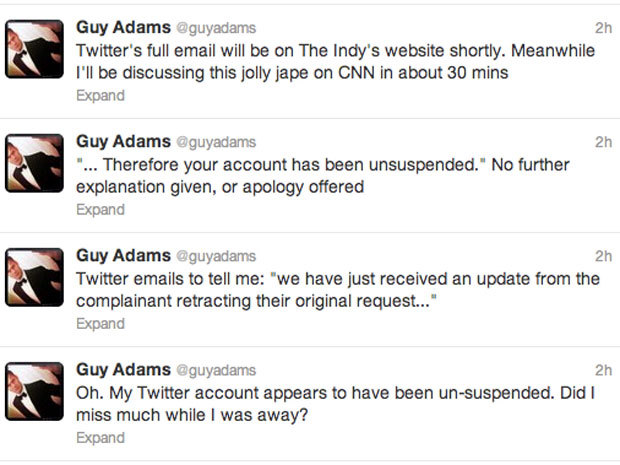
  • Last week, journalist Guy Adams learned about The Olympics’ corporate influence the hard way. The reporter and blogger for The Independent, who snarked heavily about NBC ahead of the Olympic opening ceremonies, spent much of last week reacting to the fallout around his Twitter account getting suspended. Why did this happen? And why are relatively open social networks suddenly feeling a lot less open in the wake of the Olympics? It all starts with the branding, and an organization that wants to ensure tight control over every aspect. But does that work in today’s era of share-everything social media? ShortFormBlog’s very own Ernie Smith analyzes the the conflict between brand control and social media overzealousness. Read more after the jump.

Preface: The importance of branding

The hundreds of millions of pounds necessary to organise and stage the Games is being raised by the London 2012 Organising Committee (LOCOG) from the private sector. In return for investing in the Games, we have promised our sponsors and merchandise licensees exclusive rights to use the London 2012 brand.

The London Olympics branding page • Describing the reasons why the event’s branding is extremely strict. The branding page describes a number of extremely strict standards as to which companies and private officials can use the Olympic marks — to the point where a section of the branding guidelines describes whether or not you can plant a version of the rings in your own private garden. Based on this page, we can’t use a picture of the rings on this article, though we can use the word Olympics to our heart’s content. So let’s do so. Here’s the SEO version of our brand guideline conversation: Olympics, London Olympics, London Olympics 2012, London Olympics Sports, London Olympics Branding Guidelines, IOC, Parlympics, Citius Altius Fortius, and so on. See that, LOCOG? You can’t do a thing to us about that sentence, because we’re writing an article! HAHAH! source

Why the tight standards? Money

  • $17 billion estimated cost of the London Olympic games source
  • $860M the amount security, thousands of soldiers provided by the British government, will cost
  • $1.2B the amount Visa predicts consumer spending will rise during the London Olympics
  • $20B the amount David Cameron believes the games will generate for the country
  • » And don’t forget the branding and distribution deals: How do they pay for all this stuff? Beyond the public funding, it comes down to sponsorship and broadcasting deals, of course! A number of major brands, from Acer and Panasonic to Visa and McDonald’s, pay a lot of money to be exclusive sponsors of the event. And broadcasting deals, like NBC’s multi-billion-dollar deal, also count for a massive chunk. These two sources — branding and broadcasting — pay for 92 percent of the International Olympic Committee’s funding. So there is a major financial incentive for the IOC to keep the limitations as strict as possible.

And hence, the crackdown …

  • beatsIf you’re an athlete and you’re spotted wearing a pair of Beats by Dr. Dre headphones, expect to get a stern talking-to over the matter, as Panasonic is the only brand you can use.
  • friesWant to eat a bag of chips that have nothing to do with a pair of golden arches? Hope you like fish, as Olympic officials are only allowing non-sanctioned chips to be sold with fish. Seriously.
  • wifiThe wireless access at the Olympic venues? A steep £5.99 for 90 minutes, thanks to a deal BT has. And don’t bring your own wi-fi, because people with detectors will hunt you down.

Where the social networks come in

This image has been lost

  • Try sharing this video on Facebook or another site. Watch what happens. Weird, eh? That’s because, due to restrictions on the content, this video has been blocked from sharing on many sites due to a lack of contracts with NBC Universal. While contract deals such as this one are somewhat common with big media companies, this case seems somewhat bizarre, as NBC doesn’t appear to have anything to do with the making of this video, which was directed by an Olympic swimmer, and other clips on the U.S. Olympic Swimming Team’s page remain shareable. This suggests one thing — The Olympics are such a big deal that those who make deals to carry coverage are willing to bend the rules to win them over. Which leads us to the tale of unlucky, snarky journalist Guy Adams.

Twitter tips off a TV network

We want to apologize for the part of this story that we did mess up. The team working closely with NBC around our Olympics partnership did proactively identify a Tweet that was in violation of the Twitter Rules and encouraged them to file a support ticket with our Trust and Safety team to report the violation, as has now been reported publicly. Our Trust and Safety team did not know that part of the story and acted on the report as they would any other.

A message from Twitter • Apologizing for its handling of the suspension of Guy Adams’ Twitter account, which appears to have been brought on by two factors: One, NBC had an agreement with Twitter to help share content, which led to employees working on that team noticing a comment they may have ignored otherwise; and two, Adams tweeting out the e-mail address of an NBC executive, in apparent violation of Twitter’s rules. After Twitter tipped off NBC, the network requested the account be suspended. An outcry ensued, and eventually both NBC and Twitter relented. Adams now has nearly 20,000 Twitter followers as a result of the notoriety he gained from last week’s incident.

The athletes feel stifled on Twitter, too

This image has been lost

  • Meet Olympic hurdler Dawn Harper. Recently, Harper and a handful of other athletes have taken to Twitter with complaints about “Rule 40,” a restriction in the United Kingdom that limits them from being able to mention their own sponsors during the Olympics, or featuring in advertising around a non-sponsor brand. To give you an example of this in action: Apolo Ohno features prominently in advertising for Subway right now, even though speed skating is a Winter Olympics sport and Subway counts Michael Phelps as one of their spokespeople. That’s because, by this rule in the United Kingdom and by agreement elsewhere, athletes can’t show up in non-sponsor ads during the Olympics. Harper has been among the loudest complainants over this issue.

So, where is the line, anyway?

You don’t want to protect that investment so much that you piss off everyone. You’ve got to keep sensible about it and you’ve got to remember that the moment that you as a brand by protecting your own brand start inhibiting consumer choice and consumer behavior … then that’s when you start risking impacting and affecting your brand.

Edelman Digital Director Matthew Gain • Discussing the issue that the IOC and other Olympic-related groups will face as the Olympics go on. While understanding as to why the IOC would want such control, considering the commercial realities, Gain suggests that by going after small companies or people merely trying to get into the Olympic spirit, they may be doing more harm than good. "I think if it’s a mum and dad business that’s not really benefiting from the Olympics but getting into the Olympic spirit … that’s probably where you’ve gone a little bit too far.“ That probably counts for the commenters and broadcasters, too. source

What we should take from all this

  • Why did Guy Adams’ Twitter account get suspended? Let’s put it this way: Adams probably screwed up by posting that e-mail address, but his account was noticed (and the situation taken more seriously than it would have been otherwise) because an air of normalcy was created by all these brand agreements, even though they’re anything but normal. When there are so many moving parts and so much protection around a brand and a reputation, what seems absurd to the outside world starts looks normal for someone having to work within these rules. If we could rewrite the Olympics script for 2016 or even 2014, here’s what we’d suggest:
  • one The Olympics are a important event and one with a huge financial windfall for the host country. But the costs of running the Olympics are so high that the event, sadly, reeks of corporate influence, from NBC to the official brand sponsors. What’s the point where the cost outweighs the benefit?
  • two Both the Olympics and NBC need to consider the implications of the restrictive culture around the Olympics in 2012 — because it’s feasible to imagine damage to the brand’s reputation in the long run if they don’t loosen their brand standards. Four words: Creative Commons-licensed content.
  • three The reason people got angry about the Guy Adams situation is because it was a sign Twitter is becoming more corporate and less free. We expect total freedom from our social networks, and no single brand, not even the Olympics, is worth violating that trust. Next time, stay out of the fray, Twitter.

Ernie Smith the editor of ShortFormBlog and a social media journalist for TMG Custom Media. He likes ”The Room.“ Reach him at @ShortFormErnie.

Posted by ShortFormBlog • Permalink

Aug32012t

In case you haven't heard, this week's The Pitch is a good one! Be sure to get your vote in so your voice is…

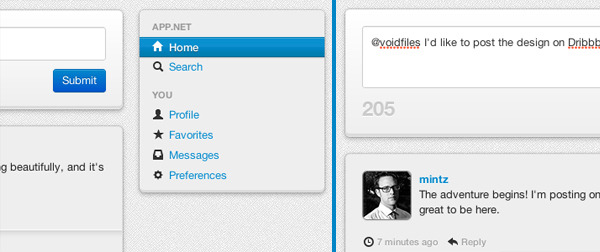
We have a tie! App.net is currently neck-and-neck with Twitter Olympics, though like a disease that’s been fairly dormant for decades, whooping cough could make a comeback. And of course, there’s still Chick-Fil-A, which has had a pretty busy week. Anyway, throw a like on one of these photos and vote!

Posted by ShortFormBlog • Permalink
Jul312012t

The Pitch is on fire

App.Net

Wooping Cough

Chick-Fil-A

Twitter London Olympics

The Pitch is on fire: Your SFB writers are here to serve you with a fifth week of friendly competition. Head over to our Facebook photo album and vote on which story you want us to delve more deeply into. From the whooping cough epidemic in Washington to a new social network start-up whose main focus is to be less ad-focused. Voting closes on Friday evening.

Posted by ShortFormBlog • Permalink