Instant Messenger History: Lessons for the Threads Era of Social Media
In case you’re annoyed that you have to share all your thought nuggets on six different platforms, you should know that we solved this problem in the ’90s.
 ShortFormBlogRead a little. Learn a lot. • Now Mullenweg-free! • Since 2009
203 posts
Instant Messenger History: Lessons for the Threads Era of Social Media
In case you’re annoyed that you have to share all your thought nuggets on six different platforms, you should know that we solved this problem in the ’90s.
Posted by Ernie Smith • Permalink
The verification requirements on the neighborhood app Nextdoor effectively make the app an unwelcome place for homeless people.
If you do not have a fixed address, you cannot complete the verification process to use the service.
Because homeless people are excluded from neighborhood discussions on Nextdoor, echo chambers that demonize the homeless seem to proliferate on the platform.
https://boingboing.net/2019/09/30/homeless-people-not-welcome-on.html
I’ve grown increasingly uncomfortable with the approach Nextdoor takes to community information, and this is a big part of the reason why. its old competitor, EveryBlock, had a much better approach because its DNA was less social.
Posted by Ernie Smith • Permalink
The thing about social media is that, while the site may look the same, the dynamic will never stay still. Too many elements are bound to change. You will never recover every memory. You’re reliving, not repeating, your glory days.
— My latest Tedium piece is about whether social media is mature enough at this point to allow for “reunion tours” of sorts. (Obviously, this has been on my mind lately, and much of the piece is about ShortFormBlog in particular.) I also talk about a story that happened involving a Tumblr meetup seven years ago and mention the much-missed @notnadia, who put together the meetup that night.
Posted by Ernie Smith • Permalink
Posted by Ernie Smith • Permalink
In regards to that theatlantic piece, basically what the piece is complaining about is something that happened two decades ago on Usenet. From Wikipedia:
In Usenet slang, Eternal September (or the September that never ended) began in September 1993, the month that Internet service provider America Online began offering Usenet access to its tens of thousands, and later millions, of users. Before then, every year in September, a large number of new university freshmen acquired access to Usenet for the first time, and took some time to become accustomed to Usenet’s standards of conduct and “netiquette”. But, after a month or so, these new users would learn the networks' social norms or simply tire of using the service. However, for the pre-existing users of Usenet, the influx of new users from September 1993 onwards was a new and endless manifestation of the phenomenon.
It’s not a new phenomenon, and will happen to any online community if you give it enough time and/or exposure.
Posted by Ernie Smith • Permalink
A nice breakdown of why Google+ is a success story for Google, even if people don’t use the social network itself.
Plus is now so important to Google that the company requires people to sign up to use some Google services, like commenting on YouTube. The push is being done so forcefully that it has alienated some users and raised privacy and antitrust concerns, including at the Federal Trade Commission. Larry Page, Google’s chief executive, tied employee bonuses companywide to its success and appointed Vic Gundotra, a senior Google executive, to lead it.
The value of Plus has only increased in the last year, as search advertising, Google’s main source of profits, has slowed. At the same time, advertising based on the kind of information gleaned from what people talk about, do and share online, rather than simply what they search for, has become more important.
Despite the fact that it has 540 million active users, more than half don’t use the social network itself. Think about that.
Posted by Ernie Smith • Permalink
Posted by Ernie Smith • Permalink
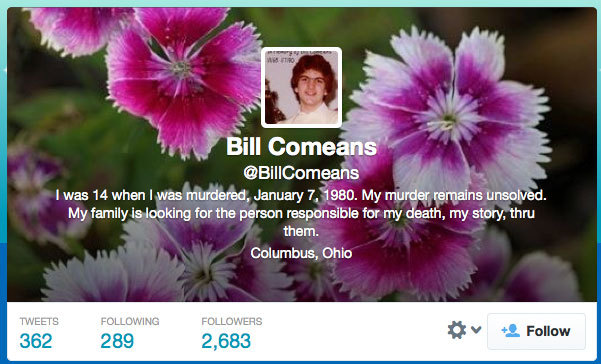
Woman Creates Twitter Account for Her Murdered Brother to Bring Attention to His Unsolved Case
Be sure to check out the interview with his sister. This may not get them the answers they want, but the catharsis in this move is clearly valuable.
Posted by Ernie Smith • Permalink
But I have to admit, I’m disappointed—and not just because I love blogs (like this one). Kottke’s forecast of the blog’s inevitable demise comes at a time when content management systems (CMSs)—which drive blogs, among other things—are more interesting than they’ve ever been. The technology, simply put, is starting to shake off some of the complexity that once made it so tough for content creators to navigate. If you start a blog in 2014, or decide to look past the usual CMS suspects, I think you’ll be pleasantly surprised at just how fresh some of the innovation is.
— I wrote a little something for the job on how awesome content management systems are these days. I love you, Tumblr, but you’re not the most innovative thing out there right now. I hope Ghost gains a foothold and requires you to up your game, not because I don’t like you, but because it will push you to innovate. — Ernie @ SFB
Posted by Ernie Smith • Permalink