Read a little. Learn a lot. • Now Mullenweg-free! • Since 2009
☰

Tag: cell phones

65 posts

Jul 6 2014t

As the traveling public knows, all electronic devices are screened by security officers. During the security…

As the traveling public knows, all electronic devices are screened by security officers. During the security examination, officers may also ask that owners power up some devices, including cell phones. Powerless devices will not be permitted onboard the aircraft.

— The TSA plans to confirm that overseas travelers have functional cell phones before they get on a flight to enter the U.S. Be sure to charge up beforehand.

Posted by Ernie Smith • Permalink

Oct 25 2013t

It would be great to meet her and of course she’s welcome to keep the phone. I am just keen to find out a…

It would be great to meet her and of course she’s welcome to keep the phone. I am just keen to find out a little bit more about how she got the phone and I think it would be an interesting project as part of my schoolwork.

— How true love happens in 2013: Guy gets phone stolen; girl from another country acquires it; photo stream attached to Dropbox shows that girl is adorable, in guy’s estimation; guy starts website asking mystery girl on date. (Forthcoming part to story: Girl turns him down, citing weirdness of situation.)

Posted by Ernie Smith • Permalink

Apr 30 2013t

Using cell phone data, IBM is helping re-route buses in Abidjan, the Ivory Coast's largest city.

The IBM work centered on Abidjan, where 539 large buses are supplemented by 5,000 mini-buses and 11,000 shared taxis. The IBM researchers studied call records from about 500,000 phones with data relevant to the commuting question.

Mobility data is created when someone uses a phone for a call or text message. That action is registered on a cell-phone tower and serves as a report on the user’s general location somewhere within the tower’s radius. The person’s movement is then ascertained as the call is transferred to a new tower or when a new call is made that connects to a different tower.

While the data is rough—and of course not everyone on a bus has a phone or is using it—routes can be gleaned by noting the sequence of connections. And IBM and other groups have found that these mobile phone “traces” are accurate enough to serve as a guide to larger population movements for applications such as epidemiology and transportation (see “Big Data from Cheap Phones.”)

The re-routing data could help trim transit times by as much as 10 percent. Neat. (ht Hacker News)

Posted by ShortFormBlog • Permalink

Apr 3 2013t

» SFB says

» SFB says: Hate to correct you back, pal, but the call shown in the clip we posted earlier is the first GSM call—which the post specifically states. :) GSM is a specific kind of technology for making cell phone calls, first launched in Europe with this phone call right here (which is from 1991, by the way), and currently used in the U.S. by AT&T and T-Mobile, among others. The first cell phone call was made 40 years ago using analog technology by a Motorola engineer. — Ernie @ SFB

Posted by Ernie Smith • Permalink

Jan 27 2013t

FYI: It's now illegal to unlock your phone, guys

  • then In October, the U.S. Library of Congress, in charge of rules related to the Digital Millenium Copyright Act (DCMA), decided that it would be illegal to unlock phones sold by U.S. carriers, so to allow off-brand carriers and SIM cards. You can read the full ruling here.
  • now Three months later, the grace period put into effect after that decision has ended, and unlocking your phone is now, indeed, prohibited. Carriers could now theoretically sue over it, though how aggressively they will try to enforce this is yet unclear. source

Posted by Chris Tognotti • Permalink

Oct 16 2012t

According to a new study

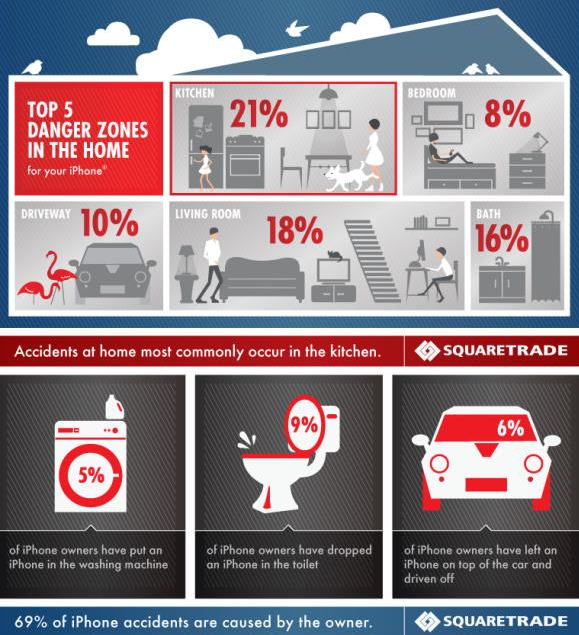
According to a new study, commissioned by device warranty provider Squaretrade, approximately 51 percent of broken smartphones are damaged inside the phone owner’s home. We’ve posted a portion of the accompanying infographic, depicting the most common household smartphone “danger zones”. So how does Squaretrade’s report stack up against your own usage? Whose kitchen has the highest kill/death ratio? source

Posted by Scott Craft • Permalink

Sep 23 2012t

True story

[](http://www.msnbc.msn.com/id/49136761/ns/world_news-europe/#__utma=14933801.1982421173.1348397241.1348407402.1348410304.4&__utmb=14933801.4.10.1348410304&__utmc=14933801&__utmx=-&__utmz=14933801.1348397241.1.1.utmcsr=(direct)|utmccn=(direct)|utmcmd=(none)&__utmv=14933801.|8=Earned By=msnbc|cover=1^12=Landing Content=Mixed=1^13=Landing Hostname=www.nbcnews.com=1^30=Visit Type to Content=Earned to Mixed=1&__utmk=73628306&__utma=14933801.1982421173.1348397241.1348407402.1348410304.4&__utmb=14933801.4.10.1348410304&__utmc=14933801&__utmx=-&__utmz=14933801.1348397241.1.1.utmcsr=(direct)|utmccn=(direct)|utmcmd=(none)&__utmv=14933801.|8=Earned%20By=msnbc%7Ccover=1^12=Landing%20Content=Mixed=1^13=Landing%20Hostname=www.nbcnews.com=1^30=Visit%20Type%20to%20Content=Earned%20to%20Mixed=1&__utmk=73628306)

nbcnews:

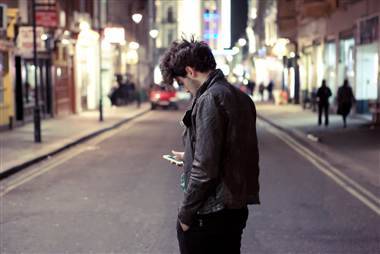
Put down the phone and walk! Teen pedestrian injuries on rise (Photo: James Whitaker / Getty Images)

Many of us have done it — checked our phones to read a new text or send a quick tweet as we stroll down the street. It only takes a few seconds, right? And while we know we should watch where we’re going, we think, worst case: we’ll bump into the person in front of us, or trip on the sidewalk.

But experts are blaming texting and walking on the rising number of pedestrian injuries and deaths among teens. Walking safely, they say, is, in fact, a two way street: it requires the focused attention of both pedestrians and drivers.

Read the complete story.

True story: A New Jersey town actually banned this practice.

Posted by Ernie Smith • Permalink

Jul 11 2012t

Interesting question raised: Why aren't cell phone companies simply building out huge Wi-Fi networks as…

A question raised by Richard Thanki, a wireless consultant who used to work for Ofcom. GigaOm summarizes:

This isn’t a new concept by any means – operators like AT&T, Verizon Wireless and Sprint are now planning their first small cell deployments with an aim of implementing multitechnology heterogeneous networks in the future. But while their plans include Wi-Fi to varying degrees, those operators are still leaning heavily on small cells built over licensed spectrum they own and control, which to Thanki makes absolutely no sense.

“For example a cellular picocell costs from $7,500 to $15,000 whereas a much higher capacity carrier-grade Wi-Fi access point costs around $2,000,” Thanki wrote. “The cost of a Wi-Fi chipset for a consumer device is around $5, whereas 3G cellular chipsets costs around $30.

Thanki specifically cites the rise of so-called “super Wi-Fi” technology, which could help reach rural areas much more easily than current Wi-Fi can. He suggests that TV “white spaces” — i.e. the parts of the local TV spectrum not being used to show “Seinfeld” reruns — get used for wireless access. Fascinating. (ht Hacker News)

Posted by ShortFormBlog • Permalink