Read a little. Learn a lot. • Now Mullenweg-free! • Since 2009
☰

Tag: IBM

17 posts

Apr302013t

Using cell phone data, IBM is helping re-route buses in Abidjan, the Ivory Coast's largest city.

The IBM work centered on Abidjan, where 539 large buses are supplemented by 5,000 mini-buses and 11,000 shared taxis. The IBM researchers studied call records from about 500,000 phones with data relevant to the commuting question.

Mobility data is created when someone uses a phone for a call or text message. That action is registered on a cell-phone tower and serves as a report on the user’s general location somewhere within the tower’s radius. The person’s movement is then ascertained as the call is transferred to a new tower or when a new call is made that connects to a different tower.

While the data is rough—and of course not everyone on a bus has a phone or is using it—routes can be gleaned by noting the sequence of connections. And IBM and other groups have found that these mobile phone “traces” are accurate enough to serve as a guide to larger population movements for applications such as epidemiology and transportation (see “Big Data from Cheap Phones.”)

The re-routing data could help trim transit times by as much as 10 percent. Neat. (ht Hacker News)

Posted by ShortFormBlog • Permalink

Jan102013t

Apparently the team

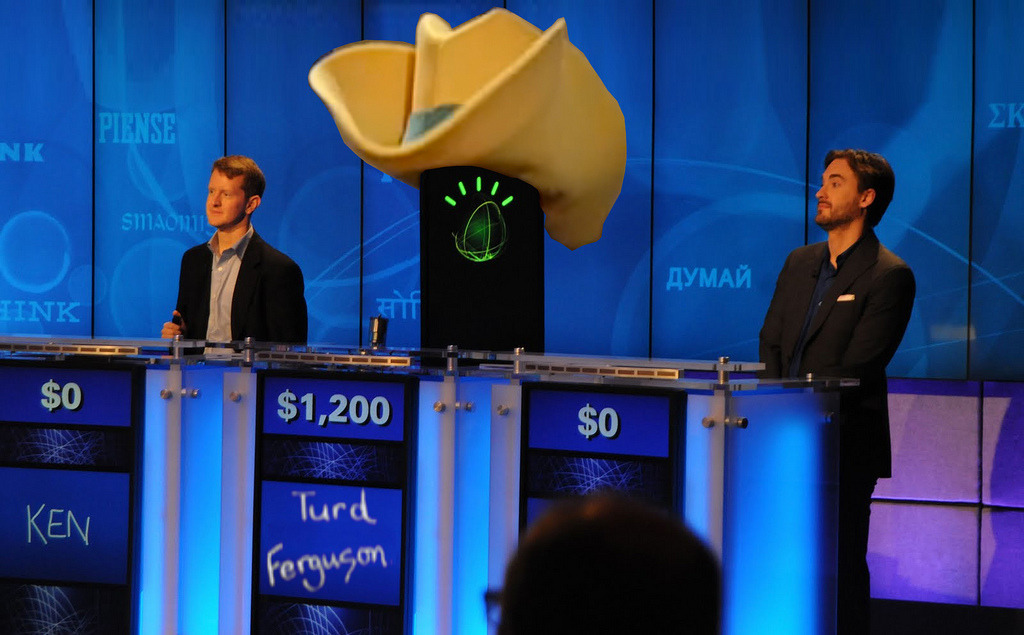
Apparently the team responsible for the Jeopardy-playing supercomputer Watson had to do some clean-up work after IBM’s AI learned the contents of Urban Dictionary. The Watson devs thought their AI could benefit from seeing the ways in which humans experiment with and redefine various words, though it apparently just confused Watson on the politeness of a few choice words. While the team may not have been fans of the supercomputer’s penchant for swearing, we’re just glad to see humanity one step closer to bringing Bender Bending Rodriguez into the real world. (Photo via CharlieCurve, ht The Atlantic) source

Posted by Scott Craft • Permalink

Nov212012t

Lotus, 3-2-1.

Lotus, 3-2-1.

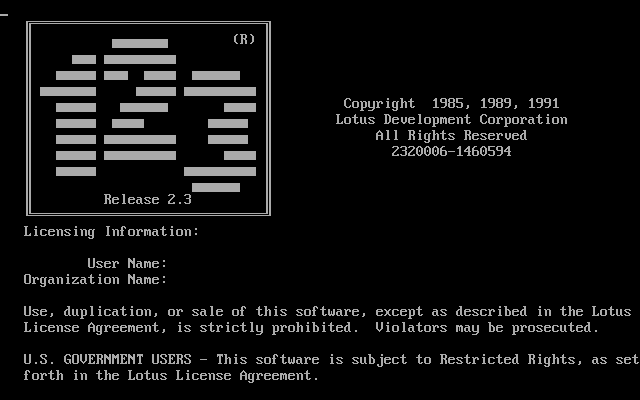
According to Time’s Harry McCracken, the Lotus brand, long associated with the early era of the PC and owned by IBM, will be retired as of the next version of the two still-active flagship apps it was associated with, Notes and Domino. But if you’re not a business computing user, you know them from their once-best-of-class spreadsheet program, Lotus 1-2-3, considered the PC’s first “killer app.” *sigh* *singletear*

Posted by Ernie Smith • Permalink

Apr32012t

IBM and Microsoft worked together on it … at first.

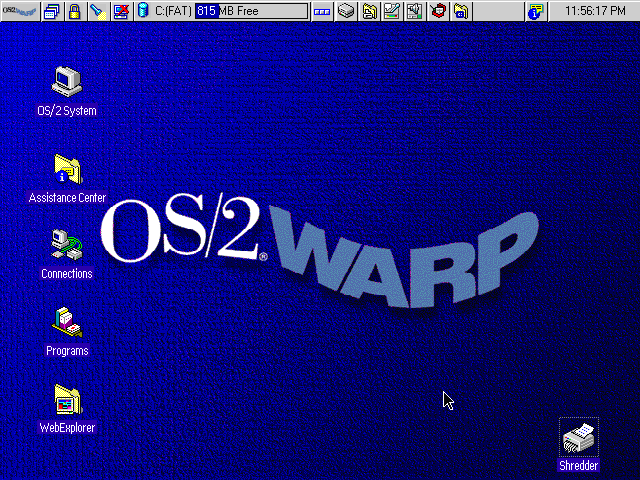
OS/2: IBM’s attempt at building an operating system turns 25

IBM and Microsoft worked together on it … at first. It seems like a footnote now, but for over a decade, IBM put a lot of work into creating a great operating system. Problem is, while it worked really well, it wasn’t very flashy, and IBM didn’t really know how to promote it outside of its big-business strongholds, and left the task to Microsoft, which had its own vested interests. As a result, a flashier operating system that had weaker fundamentals — Windows, that is — eventually gained market share. Even though OS/2 never caught on outside of a handful of niches such as ATMs and big businesses, it had its supporters, and by the mid-1990s really hit its stride. (Our family even used it as our primary OS for a few months. — Ed.) It even had a celebrity supporter: Howard Stern once backed the OS on the air, saying it was better than Windows 95. Did you rock OS/2 back in the day like Howard Stern?

Posted by ShortFormBlog • Permalink

Oct302011t

IBM hopes to simulate human brain in nine years.

8bitfuture:

IBM hopes to simulate human brain in nine years.

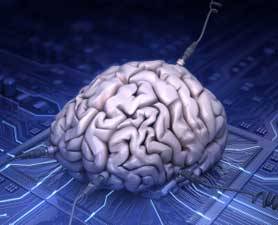
IBM’s Blue Brain Project has spent the last six years aiming to replicate the function of a human brain using supercomputers. At the last milestone two years ago, the group simulated the brain of a cat.

Now a new research paper is claiming the “dawn of a new era in the scale of cortical simulations”, by announcing that 4.5% of a working human brain has been replicated using 147,456 processors

The current schedule is set to have the simulated human brain 100% complete by 2019, using 880,000 processors.

They already ruined Ken Jennings’ career; might as well go for the full kill and take out society in the process. At the least they can do, they might as well replace Steve Jobs.

Posted by ShortFormBlog • Permalink

Aug122011W

Tech: One of the masterminds of the IBM PC admits its decline

They're going the way of the vacuum tube, typewriter, vinyl records, CRT and incandescent light bulbs.

Mark Dean, IBM's Middle East and Africa CTO • Talking about PCs. This is the one of the guys who originally designed the IBM PC, which has set the basic template for most desktop computers for roughly 30 years now. He goes on to say that he didn't ever think that he'd witness its decline. "It's becoming clear that innovation flourishes best not on devices but in the social spaces between them, where people and ideas meet and interact," he said. And it's true — think about all of the different devices we use today. The PC did start it all, but this article highlights why it's evident that the PC is on its way out. source

Posted by Justin Jones • Permalink

Oct62010W

Tech: Tech CEOs to Obama: Let us tell you how to cut the deficit

Our report contains straightforward, proven ways to pare back $1 trillion from the deficit while increasing productivity and enabling sustainable competitiveness.

Dell CEO Michael Dell • Regarding the suggestions the Technology CEO Council has for the President regarding reining in the national debt. Dell, whose own company knows something about leveraging partnerships and cutting corners in the money-saving process, is one of many CEOs backing the plan, which reportedly would cut debt by around $1 trillion in a decade using such methods as consolidating and standardizing processes, using virtualization and cutting energy usage. The methods have already been in use at many of the companies and have already shown results. Will Obama take the bait? source

Posted by Ernie Smith • Permalink

Jun12010W

Tech: These colorful blocks represent the fastest supercomputers

  • This may be one of the coolest infographics we've ever seen. This interactive work splits the relative speed of a bunch of supercomputers up a number of ways – by speed, by OS, by country – and looks awesome. Linux pretty much owns this market, by the way, and IBM and Intel have their fingers in the mix the most, although AMD, HP and Cray hold their own. source

Posted by Ernie Smith • Permalink