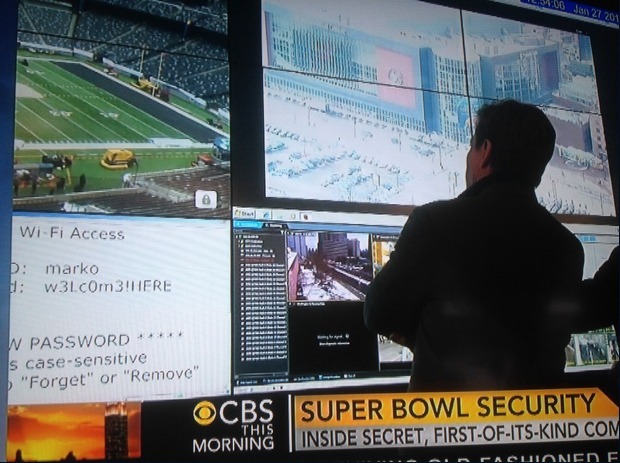
Ironically, in a CBS story about the security that goes into the Super Bowl, CBS aired the wi-fi password for the stadium on national TV. Genius.
 ShortFormBlogRead a little. Learn a lot. • Now Mullenweg-free! • Since 2009
28 posts
Ironically, in a CBS story about the security that goes into the Super Bowl, CBS aired the wi-fi password for the stadium on national TV. Genius.
Posted by Ernie Smith • Permalink
Posted by Scott Craft • Permalink
Today’s action demonstrates that compliance with FCC obligations is not optional. The open device and application obligations were core conditions when Verizon purchased the C-block spectrum. The massive innovation and investment fueled by the Internet have been driven by consumer choice in both devices and applications. The steps taken today will not only protect consumer choice, but defend certainty for innovators to continue to deliver new services and apps without fear of being blocked.
— FCC Chairman Julius Genachowski • Regarding an FCC ruling that basically prevents Verizon from charging money for its 4G wi-fi tethering services — a big victory for people who feel like they’re getting screwed by their phone provider. Why’s that? The 4G network was set up to be open and pro-consumer, with cell phone companies having limited influence on how their customers can use it. Verizon Wireless will also voluntarily make a $1.25 million payment to the Treasury to settle the issue.
Posted by ShortFormBlog • Permalink
A question raised by Richard Thanki, a wireless consultant who used to work for Ofcom. GigaOm summarizes:
This isn’t a new concept by any means – operators like AT&T, Verizon Wireless and Sprint are now planning their first small cell deployments with an aim of implementing multitechnology heterogeneous networks in the future. But while their plans include Wi-Fi to varying degrees, those operators are still leaning heavily on small cells built over licensed spectrum they own and control, which to Thanki makes absolutely no sense.
“For example a cellular picocell costs from $7,500 to $15,000 whereas a much higher capacity carrier-grade Wi-Fi access point costs around $2,000,” Thanki wrote. “The cost of a Wi-Fi chipset for a consumer device is around $5, whereas 3G cellular chipsets costs around $30.
Thanki specifically cites the rise of so-called “super Wi-Fi” technology, which could help reach rural areas much more easily than current Wi-Fi can. He suggests that TV “white spaces” — i.e. the parts of the local TV spectrum not being used to show “Seinfeld” reruns — get used for wireless access. Fascinating. (ht Hacker News)
Posted by ShortFormBlog • Permalink
That car-chase video is the default video in the template we use. Unfortunately for us, the Wi-Fi decided to konk out at the wrong time. It’s fixed now. Thanks for understanding.
Posted by ShortFormBlog • Permalink
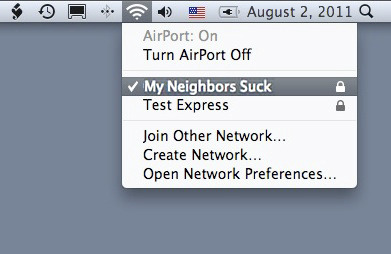
Happy WiFi Day, 8.02.11
We’re gonna celebrate by opening up our network so you guys can mooch off our network and steal our identity.
Posted by ShortFormBlog • Permalink
Google Senior VP of Engineering and Research Alan Eustace • Revealing what the company did in the wake of Google Street View's accidental wi-fi snooping in Europe. (Lots of training, lots of policy changes.) He also admitted, though, that (while most of what they grabbed were data fragments) the company did in fact grab entire e-mails and other private information. "We are mortified by what happened," Eustace writes, but says that they hope that the policy changes will prevent it from happening again. source
Posted by Ernie Smith • Permalink
Posted by Ernie Smith • Permalink
Posted by Ernie Smith • Permalink
Santa Clarita, Calif. resident Ted Thompson • Getting really angry over Starbucks' unlimited wi-fi service. See, the problem that Thompson doesn't seem to understand is that Starbucks is that coffee shops were never about drinking coffee. They all have coffee, sure, but they're social beasts in nature, plus they encourage people to read the news or play checkers while they're there. But, with laptops, people don't have to do that anymore. The social element is online. If you want good coffee instead of a place filled with laptops, try somewhere that doesn't have wi-fi. Just a tip. And get out of our way so that we can blog in peace, kind sir! source
Posted by Ernie Smith • Permalink