Read a little. Learn a lot. • Now Mullenweg-free! • Since 2009
☰

Tag: viruses

9 posts

Jul52012t

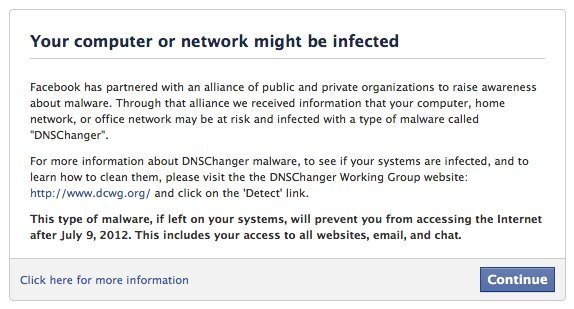
See a dialog box like this lately?

See a dialog box like this lately? Take heed. It’s a real issue, caused by a piece of malware called DNSChanger, and if you don’t take care of it by Monday, you’ll be knocked offline entirely. Over 300,000 separate IP addresses reportedly were affected by the virus as of June 11. While the hackers behind the malware no longer control the DNS routing, the Internet Systems Consortium plans to end their courtesy re-routing on Monday. So, to put it simply, learn how to get it fixed.

Posted by ShortFormBlog • Permalink

Jun12012t

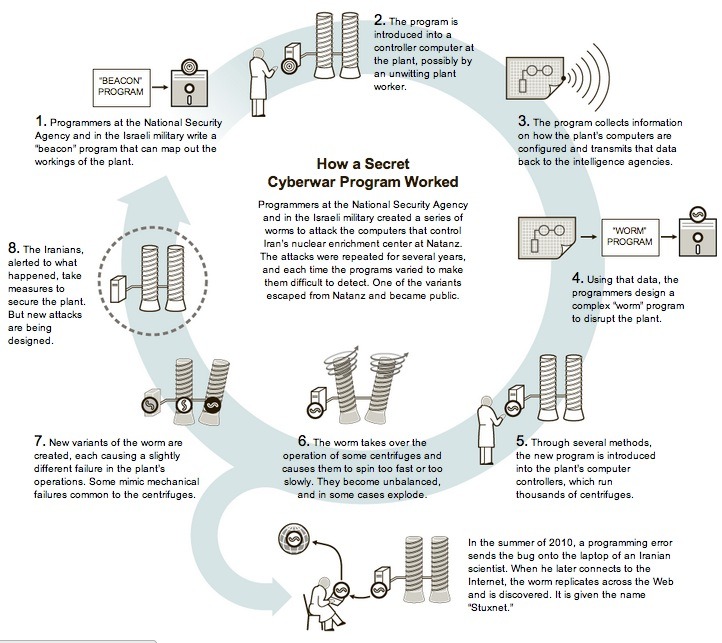
In case you were wondering,

In case you were wondering, here’s how infamous Iran-infrastructure-damaging bug Stuxnet worked. And to answer your question, the U.S. was involved in what was intended as an act of cyberwar … but the virus (which only got its name after it broke out online) was never intended it to break out onto the larger Internet. But Stuxnet, which broke out in 2010, is old news. A newer virus, Flame, is currently causing major online trauma in the Middle East.

Posted by ShortFormBlog • Permalink

Apr92012t

Going viral, then offline: Federal agency loses online access for months

  • 12 weeks offline for federal agency due to really, really bad virus source
  • » But it’s not all bad, they say: The Economic Development Administration, a part of the Commerce Department that helps economically-distressed communities, has been stuck working without internet access for roughly three months after a really bad virus forced their network offline. The virus was so strong that it endangered the entire Commerce Department’s intranet. How are the employees coping? Somewhat well — they’re making more phone calls. They’ve rediscovered the fax machine. They go to the post office. “It’s not necessarily something you look forward to in life,” said Philip Paradice Jr., who directs the Atlanta office. “But there’s a certain invigoration that’s come up. We’ve come up with workarounds.” It helps that employees at the Washington office don’t turn over much, meaning that many were around before e-mail existed. Still though … three months?

Posted by ShortFormBlog • Permalink

Jan172012W

Tech: Russian "Koobface" cyber-hackers gave themselves away

  • "Koobface" sounds like the cyberbully cousin of Scooby Doo. You might have been a victim of the Koobface gang. This Russian cybergang is responsible for viruses that spread through Facebook and other social network sites. Technically, none of the members are under investigation by law enforcement; it's hard to prosecture people that you can't find. Recently, the group has been "checking in" on Foursquare, completing their location with coordinates and pictures. With more and more information being leaked about the group, perhaps citizens, companies and governments will band together to help shut this group down — but even if they finally do, don't click on anything you don't trust. source

Posted by Sami Main • Permalink

Dec202011W

U.S.: U.S. Government: Don't let homemade version of bird flu get beyond lab

It's very important research. As this virus evolves in nature, we want to be able to rapidly detect … mutations that may indicate that the virus is getting closer to a form that could cross species lines more readily.

National Institute of Health science policy director Dr. Amy Patterson • Discussing a lab-produced version of bird flu that NIH officials have warned should not get out of said labs. The reason? It apparently can spread very easily among mammals — leading to fears that terror groups could get a hold of the virus and use it for biological warfare. Which of course is exactly the kind of thing non-sciencey folks love hearing. The NIH, however, says that releasing reports in scientific journals on the disease could ultimately help us understand more about the disease in the long term. We're seeing flashbacks of this Dustin Hoffman movie in our heads right now. source

Posted by Ernie Smith • Permalink

Jan162011W

World: Wikileaks, Stuxnet collide to create awesome article about Iran

  • Iran doesn't have the bomb yet. But they've been trying really hard to get it, according to the latest round of data released from Wikileaks. The Norwegian newspaper Aftenposten, which reportedly has all 250,000 diplomatic cables, has been releasing them slowly but surely, and the latest one is kinda sorta a big deal. The cables portray it as kind of last-gasp attempt for Iran to jump-start its diplomatic prowess. "A race exists between the bomb and financial collapse," one French nuclear expert explained in the cable. Some quick numbers:
  • 350 Iranian companies and groups were reportedly involved in the pursuit of nuclear technology
  • 30+ countries that have contacts Iran is trying to use to make this bomb thingy happen
  • no Iran doesn't have much in the way of its own uranium, making their job tougher source
  • » Oh, and remember Stuxnet? That computer worm seemingly designed to damage Iran's nuclear program was reportedly a American-Israeli joint, according to this here article by The New York Times. It was reportedly so effective at causing a malware ruckus that it set Iran's nuclear program back by several years. Favorite line: "The computer program also secretly recorded what normal operations at the nuclear plant looked like, then played those readings back to plant operators, like a pre-recorded security tape in a bank heist, so that it would appear that everything was operating normally while the centrifuges were actually tearing themselves apart." Class.

Posted by Ernie Smith • Permalink

Nov182010W

U.S.: Homeland Security: Stuxnet may be most dangerous virus yet

This code can automatically enter a system, steal the formula for the product you are manufacturing, alter the ingredients being mixed in your product, and indicate to the operator and your anti-virus software that everything is functioning as expected.

The Department of Homeland Security's Cybersecurity Center head, Sean McGurk • Explaining why the Stuxnet computer virus is unprecedented and scary and stuff. The virus, which appears to be targeting Iran's nuclear power plants, has infected 44,000 computers worldwide, mostly in Iran, although around 1,600 are in the U.S. Even though it's targeted against Iran right now, it's clear what McGurk is implying here: That the virus could be rewritten to attack other systems, at which point it could prove extremely dangerous. source

Posted by Ernie Smith • Permalink