Read a little. Learn a lot. • Now Mullenweg-free! • Since 2009
☰

Tag: genes

10 posts

Apr302013t

Thanks science.

theweekmagazine:

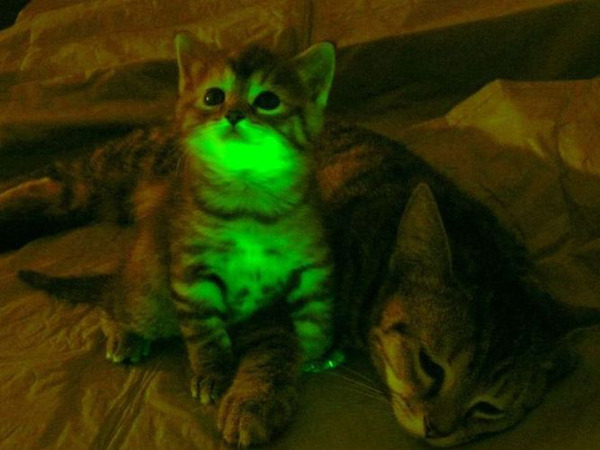
Genetically modified animals that glow in the dark

Scientists inserted a gene into cats that helps them resist Feline immunodeficiency virus—a close relative of HIV and tracked it with a green fluorescent protein. These cats appeared normal during the day, but can glow at night if prompted.

Thanks science.

While the above glow-in-the-dark kitten is obviously the internet kingpin of the all the photos behind this link, we’re equally mesmerized by the glowing sheep.

Posted by ShortFormBlog • Permalink

Apr52011t

Our friends at Newsy are wondering

Embedded media from www.newsy.com is no longer available.

A Myriad of troubles: Should we let companies patent genes?

  • Our friends at Newsy are wondering what a decision about blocking the ability of a company to patent genes means on a larger scale. Back in October, the U.S. government did an about-face on gene patents, and yesterday, the D.C.-based U.S. Court of Appeals heard arguments in a case about Myriad Genetics’ patents on two genes. The patents on the genes, found to increase the risk of breast and ovarian cancer, allow the company to make money from its research, but others argue that it limits outside research and the patient’s ability to get a second opinion. It’s a thorny issue with a lot of issues to consider. What do you think?

Posted by ShortFormBlog • Permalink

Mar72011W

Tech: New research may foreshadow leap in heart disease prevention

  • 13 gene regions linked to heart disease by scientific research source
  • » Cracking the heart disease code: As anybody with a family history, or personal history of heart disease knows, it's a frightening and pervasive concern. It should come as thrilling news, then, that a group of scientists believe they've located thirteen different gene regions that may indicate a vulnerability to heart attack. Though the knowledge is admittedly limited, and is likely years from practical application in a doctor's office, advancements like these are what give us hope for a brighter, healthier future, with fewer people unexpectedly dropping dead.

Posted by Chris Tognotti • Permalink

Oct302010W

Tech: Does the U.S. think companies should patent genes?

  • NO they think that genes are part of nature and shouldn't be source
  • » Why this is a big deal: Well, among other things, this is a change of policy for them, one that could make it harder for the biotechnology and medicine industries to keep innovations unique. We wish that the government would make this distinction on software patents over trivial things. See, that's where a change in decision is necessary.

Posted by Ernie Smith • Permalink

Jul312010W

Tech: Guy behind Human Genome Project: It's "useless information"

We have, in truth, learned nothing from the genome other than probabilities. How does a 1 or 3 percent increased risk for something translate into the clinic? It is useless information.

Human Genome Project researcher Craig Venter • Regarding the end result (as of right now) of all the work he did with the Human Genome Project. "We couldn't even be certain from my genome what my eye color was," he also claims. "Isn't that sad?" These are harsh words because of the fact that he spent so much of his life working on this project. But it doesn't mean it's a total wash – Venter is looking to use his history in genetic research to help create new forms of energy. Which, let's face it, would be cool. source

Posted by Ernie Smith • Permalink

Jun132010W

Tech: The Human Genome Project didn't cure cancer after all, guys

  • $3 billion amount that was spent to decode the human genome, a project finished a decade ago
  • not much the project's benefit to the medical world since then (its original selling point) source
  • » Clarification: While the completion of the Human Genome Project led to Bill Clinton saying that it will “revolutionize the diagnosis, prevention and treatment of most, if not all, human diseases,” it hasn't led to direct cures but perhaps more informed answers. It's becoming clear to some that rare variants, not common genes, are likely the cause of many diseases. Meaning it's not a silver bullet but a definite starting point. “Genomics is a way to do science, not medicine,” said Harold Varmus, the incoming chair of the National Cancer Institute.

Posted by Ernie Smith • Permalink

Oct42009W

Tech: Let's start thinking of our bodies as computer parts, OK?

When your hard drive dies, you can go to the nearest computer store, buy a new one, and swap it out. That’s because it’s a standard part in a machine. The entire electronics industry is based on a plug-and-play mentality. … Why shouldn’t we use biological parts in the same way?

UC Berkeley biochemical engineering professor Jay Keasling • Discussing his philosophy on health and disease. It's a very nontraditional approach. Cells are hardware. Genetic information is software. And by their powers combined, you have a new limb. Warning: Massive New Yorker profile piece at the link. Take a long lunch. (Hat tip to Andrew Sullivan.) source

Posted by Ernie Smith • Permalink

Mar42009W

Offbeat: Don't tell Nadya Suleman about this designer fertility clinic

  • Your baby, as you want it. LA Fertility Institutes wants to help you design the perfect designer baby. The clinic allows you to specify what your baby looks like – you pick the hair and eye color, wait nine months, and all of a sudden, a new accessory for your pink stroller pops out! If this sounds a little wrong and creepy, it's because it kind of is. source

Posted by Ernie Smith • Permalink