Read a little. Learn a lot. • Now Mullenweg-free! • Since 2009
☰

Tag: genetics

8 posts

Jun132013t

I join the judgment of the Court, and all of its opinion except Part I–A and some portions of the rest of the…

I join the judgment of the Court, and all of its opinion except Part I–A and some portions of the rest of the opinion going into fine details of molecular biology. I am unable to affirm those details on my own knowledge or even my own belief. It suffices for me to affirm, having studied the opinions below and the expert briefs presented here, that the portion of DNA isolated from its natural state sought to be patented is identical to that portion of the DNA in its natural state; and that complementary DNA (cDNA) is a synthetic creation not normally present in nature.

— A big-deal case passed the Supreme Court this morning, with the court finding that genes can’t be patented. But the fun part of this decision is Justice Antonin Scalia’s reasoning for joining with the majority, which disregards a part of the opinion which notes that “Genes form the basis for hereditary traits in living organisms.” Apparently Scalia slept through biology class in high school, because that’s all way over his head.

Posted by Ernie Smith • Permalink

Oct302010W

Tech: Does the U.S. think companies should patent genes?

  • NO they think that genes are part of nature and shouldn't be source
  • » Why this is a big deal: Well, among other things, this is a change of policy for them, one that could make it harder for the biotechnology and medicine industries to keep innovations unique. We wish that the government would make this distinction on software patents over trivial things. See, that's where a change in decision is necessary.

Posted by Ernie Smith • Permalink

Jul312010W

Tech: Guy behind Human Genome Project: It's "useless information"

We have, in truth, learned nothing from the genome other than probabilities. How does a 1 or 3 percent increased risk for something translate into the clinic? It is useless information.

Human Genome Project researcher Craig Venter • Regarding the end result (as of right now) of all the work he did with the Human Genome Project. "We couldn't even be certain from my genome what my eye color was," he also claims. "Isn't that sad?" These are harsh words because of the fact that he spent so much of his life working on this project. But it doesn't mean it's a total wash – Venter is looking to use his history in genetic research to help create new forms of energy. Which, let's face it, would be cool. source

Posted by Ernie Smith • Permalink

Jul182010W

Tech: Whoa: Are the roots of human sperm 600 million years old?

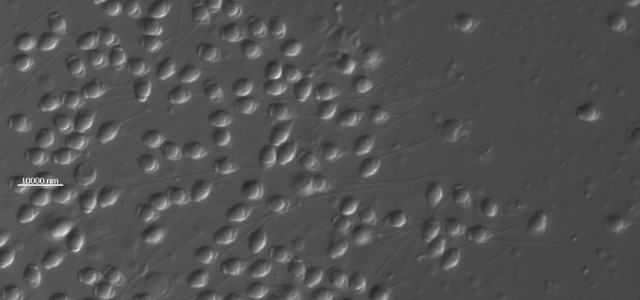
  • So, yeah, that's kinda old, guys. Northwestern University's Feinberg School of Medicine recently released a new study noting that the genetic secret sauce in human sperm, a gene named Boule, is apparently so important that it's found in nearly all animals – something not confirmed before the study. "Our findings also show that humans, despite how complex we are, across the evolutionary lines all the way to flies, which are very simple, still have one fundamental element that's shared," said Eugene Xu, author of the study published in the latest issue of PLoS Genetics. So, why are they researching it? Well, they're trying to get to the root of male infertility; Boule would be important to target for such a drug. Neat. source

Posted by Ernie Smith • Permalink

Jun132010W

Tech: The Human Genome Project didn't cure cancer after all, guys

  • $3 billion amount that was spent to decode the human genome, a project finished a decade ago
  • not much the project's benefit to the medical world since then (its original selling point) source
  • » Clarification: While the completion of the Human Genome Project led to Bill Clinton saying that it will “revolutionize the diagnosis, prevention and treatment of most, if not all, human diseases,” it hasn't led to direct cures but perhaps more informed answers. It's becoming clear to some that rare variants, not common genes, are likely the cause of many diseases. Meaning it's not a silver bullet but a definite starting point. “Genomics is a way to do science, not medicine,” said Harold Varmus, the incoming chair of the National Cancer Institute.

Posted by Ernie Smith • Permalink