Read a little. Learn a lot. • Now Mullenweg-free! • Since 2009
☰

Tag: supreme court

215 posts

Jun 13 2013t

I join the judgment of the Court, and all of its opinion except Part I–A and some portions of the rest of the…

I join the judgment of the Court, and all of its opinion except Part I–A and some portions of the rest of the opinion going into fine details of molecular biology. I am unable to affirm those details on my own knowledge or even my own belief. It suffices for me to affirm, having studied the opinions below and the expert briefs presented here, that the portion of DNA isolated from its natural state sought to be patented is identical to that portion of the DNA in its natural state; and that complementary DNA (cDNA) is a synthetic creation not normally present in nature.

— A big-deal case passed the Supreme Court this morning, with the court finding that genes can’t be patented. But the fun part of this decision is Justice Antonin Scalia’s reasoning for joining with the majority, which disregards a part of the opinion which notes that “Genes form the basis for hereditary traits in living organisms.” Apparently Scalia slept through biology class in high school, because that’s all way over his head.
Posted by Ernie Smith • Permalink

May 13 2013t

Supreme Court rules for Monsanto in genetically modified soybean case

The Supreme Court agreed with Monsanto on Monday that an Indiana farmer’s un­or­tho­dox planting of the company’s genetically modified soybeans violated the agricultural giant’s patent.

The court unanimously rejected farmer Vernon Hugh Bowman’s argument that he was not violating Monsanto’s patent because the company’s pesticide-resistent “Roundup Ready” soybeans replicate themselves. Justice Elena Kagan said there is no such “seeds-are-special” exception to the law.

“We think that blame-the-bean defense tough to credit,” Kagan wrote. “Bowman was not a passive observer of his soybeans’ multiplication; or put another way, the seeds he purchased (miraculous though they might be in other respects) did not spontaneously create eight successive soybean crops.”

We won’t pretend to be well-versed enough in this case and/or patent law (or any legal field for that matter) to have a strong opinion on the outcome of this case, though we suspect there will be more than a few readers who do. Anybody think the Supreme Court got this one wrong?

Posted by Scott Craft • Permalink

Apr 30 2013t

Years after the fact, former Supreme Court Justice Sandra Day O'Connor suggests the court shouldn't have…

Looking back, O'Connor said, she isn’t sure the high court should have taken the case.

“It took the case and decided it at a time when it was still a big election issue,” O'Connor said during a talk Friday with the Tribune editorial board. “Maybe the court should have said, ‘We’re not going to take it, goodbye.’”

The case, she said, “stirred up the public” and “gave the court a less-than-perfect reputation.”

“Obviously the court did reach a decision and thought it had to reach a decision,” she said. “It turned out the election authorities in Florida hadn’t done a real good job there and kind of messed it up. And probably the Supreme Court added to the problem at the end of the day.”

O'Connor’s vote was the deciding vote in the case, leading to Bush’s election. (via The Daily Beast)

Posted by Ernie Smith • Permalink

Apr 27 2013t

Supreme Court Justice Stephen Breyer was hospitalized yesterday, after fracturing his shoulder in a bicycle…

Justice Breyer, the 74-year-old Clinton appointee, also suffered a broken collarbone after a bicycling accident in 2011, and in 1993 (prior to his appointment) fractured ribs and punctured a lung in yet another. The moral of the story? You’re not gonna get him off that bicycle, apparently. He reportedly underwent shoulder surgery this morning, and is resting comfortably, pending release.

Posted by Chris Tognotti • Permalink

Mar 26 2013t

If you look at it just from a legal standpoint there is nothing to argue. You can argue from a moral…

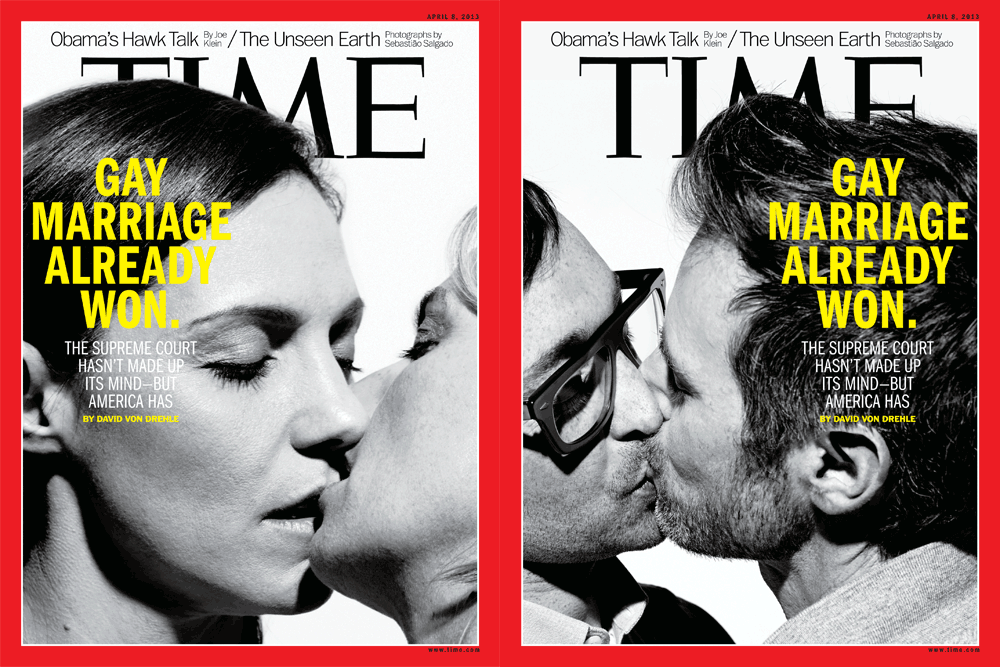
If you look at it just from a legal standpoint there is nothing to argue. You can argue from a moral standpoint. You can say, ‘morally, I don’t like the idea of gay marriage’ because your church teaches you a certain thing. That’s fine. And we’re not asking anybody, or forcing churches to perform ceremonies. We’re not asking anybody to go outside of their religious beliefs. But marriage is not a religious right. It is a civil right. That is provided by the government. A church does not have a right to marry someone—except that it is given the right by the government. The government issues marriage licenses. The government decides who gets married and who doesn’t.

— Rob Reiner on the legality of gay marriage (via C-SPAN)

Posted by Ernie Smith • Permalink

Feb 27 2013t

[A] majority of the Court seems committed to invalidating Section 5 of the Voting Rights Act and requiring…

[A] majority of the Court seems committed to invalidating Section 5 of the Voting Rights Act and requiring Congress to revisit the formula for requiring preclearance of voting changes…It is unlikely that the Court will write an opinion forbidding a preclearance regime. But it may be difficult politically for Congress to enact a new measure.

— SCOTUSblog’s Tom Goldstein earlier this morning. The Supreme Court is hearing arguments today on Section 5 of the Voting Rights Act, which requires certain states with a history of voter disenfranchisement to obtain approval from the federal government before making any changes to their voting laws. One possible outcome: The court strikes down the criteria used in Section 5, but doesn’t strike down the requirement for preclearance itself. If that happens, a new criteria for preclearance would have to be constructed and enacted. And who would be responsible for that? John Boehner and Harry Reid, of course. Sigh. More on today’s arguments here. source

Posted by Seth Millstein • Permalink

Feb 21 2013t

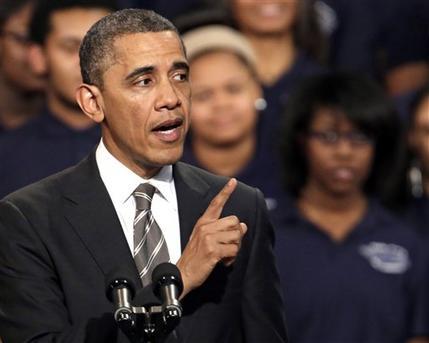
Obama Weighs Stepping In On Gay Marriage Case

bylinebeat:

Obama Weighs Stepping In On Gay Marriage Case Facing heightened expectations from gay rights supporters, the Obama administration is considering urging the Supreme Court to overturn California’s ban on gay marriage - a move that could have a far-reaching impact on same-sex couples across the country.

The administration has one week to file a friend-of-the-court brief with the justices outlining its opinion on the California ban, known as Proposition 8. While an administration brief alone is unlikely to sway the high court, the government’s opinion does carry weight with the justices.

Opponents of the Proposition 8 ban believe the president signaled his intention to file a brief when he declared in last month’s inaugural address that gays and lesbians must be “treated like anyone else under the law.” An administration official said Obama - a former constitutional law professor - was not foreshadowing any legal action in his remarks and was simply restating his personal belief in the right of gays and lesbians to marry, though the official said the administration was considering filing a brief.

The Proposition 8 ballot initiative was approved by California voters in 2008 in response to a state Supreme Court decision that had allowed gay marriage. Twenty-nine other states have constitutional amendments banning gay marriage, while nine states and Washington, D.C., recognize same-sex marriage.

Photo Credit: (AP Photo/M. Spencer Green)

If he were to step in on this, would it help or harm the case in front of the Supreme Court?

Posted by ShortFormBlog • Permalink