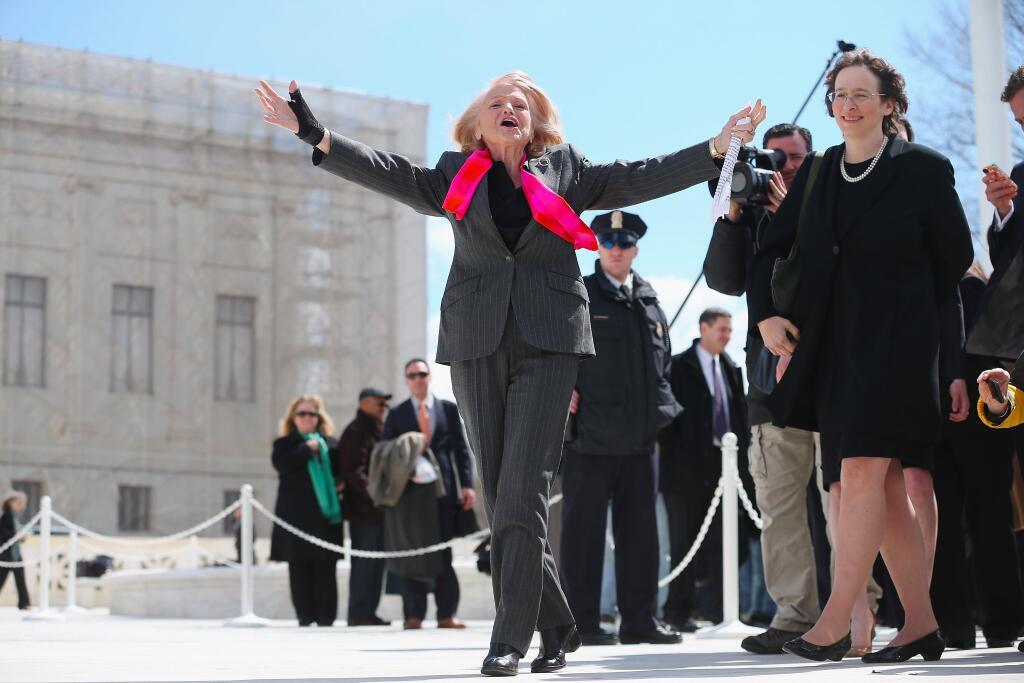
Plaintiff Edith Windsor after SCOTUS strikes down DOMA.
Image via Getty
EDIT: As imwithkanye points out, this image is not from this morning, but from March 27.
 ShortFormBlogRead a little. Learn a lot. • Now Mullenweg-free! • Since 2009
147 posts
Plaintiff Edith Windsor after SCOTUS strikes down DOMA.
Image via Getty
EDIT: As imwithkanye points out, this image is not from this morning, but from March 27.
Posted by Ernie Smith • Permalink
A New York City immigration judge immediately stopped the deportation proceedings of a gay Colombian man who is legally married to an American citizen soon after the Supreme Court struck down the Defense of Marriage Act (DOMA) for being unconstitutional, as was first reported by Americablog on Wednesday. The federally-sanctioned DOMA only recognizes marriage between […]
This is a reminder that the ramifications of marriage equality extend far beyond people simply feeling included as part of an institution. For this man, the Supreme Court’s ruling meant the difference between living in America with his partner and living alone in South America. source
Posted by Seth Millstein • Permalink
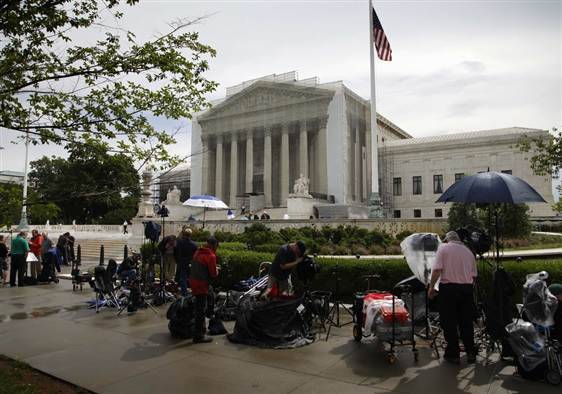
BREAKING: Supreme Court strikes down a key part of 1965 Voting Rights Act
(Photo: Jonathan Ernst / Reuters, file)
Live SCOTUSblog offers latest details.
Chief Justice John Roberts, in his opinion on the case: “Nearly 50 years later, [the rules laid out by the Voting Rights Act] are still in effect; indeed, they have been made more stringent, and are now scheduled to last until 2031. There is no denying, however, that the conditions that originally justified these measures no longer characterize voting in the covered jurisdictions.”
Thoughts?
Posted by Ernie Smith • Permalink
It falls upon congress to decide on a new formula–essentially, to figure out which states should still require federal approval to change their voting laws. Given how congress is these days, we’re exceedingly doubtful that any agreement will be reached anytime soon. source
Posted by Seth Millstein • Permalink
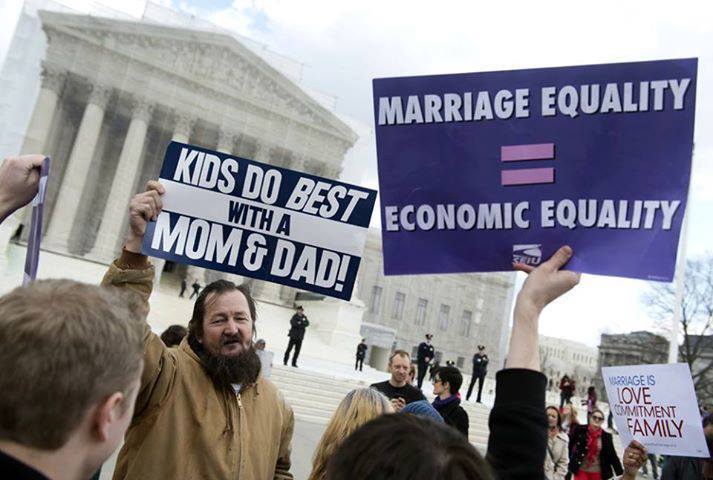
Same-sex marriage opponents plan for DOMA ruling, weigh constitutional challenge (Photo: Saul Loeb / AFP – Getty Images file)
Opponents of same-sex marriage prepare for their next chapter as they await highly-anticipated Supreme Court rulings on the Defense of Marriage Act and California’s Proposition 8. If the decisions aren’t in their favor, they say they may pursue an amendment to the U.S. Constitution defining marriage as between a man and a woman.
Anyone seeing them actually being able to pull off such an amendment? Here’s what it would take, according to Wikipedia:
Before an amendment can take effect, it must be proposed to the states by a two-thirds vote of both houses of Congress or by a convention (known as an Article V convention) called by two-thirds of the states, and ratified by three-fourths of the states or by three-fourths of conventions thereof, the method of ratification being determined by Congress at the time of proposal. To date, no convention for proposing amendments has been called by the states, and only once—in 1933 for the ratification of the twenty-first amendment—has the convention method of ratification been employed.
The first route is unlikely considering the current makeup of the Senate in particular. The second route is unlikely because it would require a lot of movement at a grassroots level to make it happen.
Posted by Ernie Smith • Permalink
The Supreme Court on Monday ordered lower courts to take a fresh look, under a more demanding standard, at the race-conscious admissions policy used to admit students to the University of Texas. The 7-to-1 decision was simultaneously modest and significant, and its recalibration of how courts review the constitutionality of affirmative action programs is likely to give rise to a wave of challenges to admissions programs at colleges and universities nationwide.
For now, the Texas program and other affirmative action programs can continue without changes.
See the full ruling here.
Posted by Scott Craft • Permalink
I join the judgment of the Court, and all of its opinion except Part I–A and some portions of the rest of the opinion going into fine details of molecular biology. I am unable to affirm those details on my own knowledge or even my own belief. It suffices for me to affirm, having studied the opinions below and the expert briefs presented here, that the portion of DNA isolated from its natural state sought to be patented is identical to that portion of the DNA in its natural state; and that complementary DNA (cDNA) is a synthetic creation not normally present in nature.
— A big-deal case passed the Supreme Court this morning, with the court finding that genes can’t be patented. But the fun part of this decision is Justice Antonin Scalia’s reasoning for joining with the majority, which disregards a part of the opinion which notes that “Genes form the basis for hereditary traits in living organisms.” Apparently Scalia slept through biology class in high school, because that’s all way over his head.
Posted by Ernie Smith • Permalink
Looking back, O'Connor said, she isn’t sure the high court should have taken the case.
“It took the case and decided it at a time when it was still a big election issue,” O'Connor said during a talk Friday with the Tribune editorial board. “Maybe the court should have said, ‘We’re not going to take it, goodbye.’”
The case, she said, “stirred up the public” and “gave the court a less-than-perfect reputation.”
“Obviously the court did reach a decision and thought it had to reach a decision,” she said. “It turned out the election authorities in Florida hadn’t done a real good job there and kind of messed it up. And probably the Supreme Court added to the problem at the end of the day.”
O'Connor’s vote was the deciding vote in the case, leading to Bush’s election. (via The Daily Beast)
Posted by Ernie Smith • Permalink
Justice Breyer, the 74-year-old Clinton appointee, also suffered a broken collarbone after a bicycling accident in 2011, and in 1993 (prior to his appointment) fractured ribs and punctured a lung in yet another. The moral of the story? You’re not gonna get him off that bicycle, apparently. He reportedly underwent shoulder surgery this morning, and is resting comfortably, pending release.
Posted by Chris Tognotti • Permalink
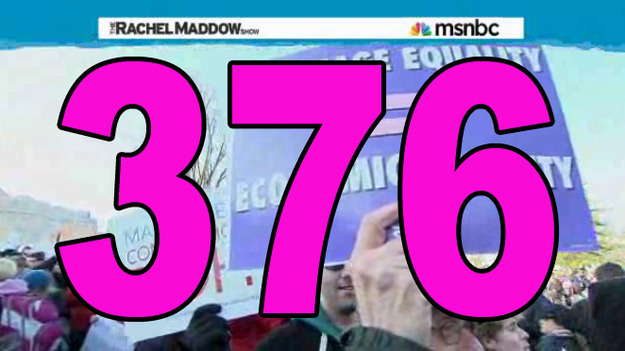
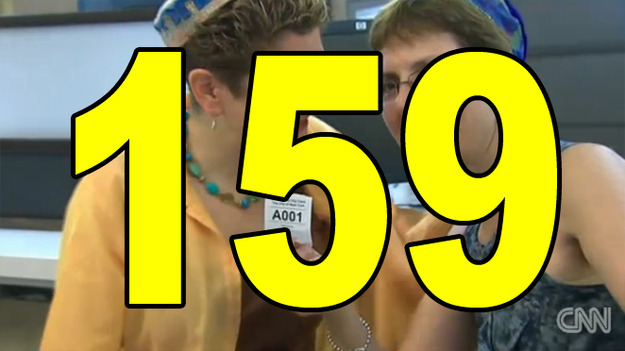
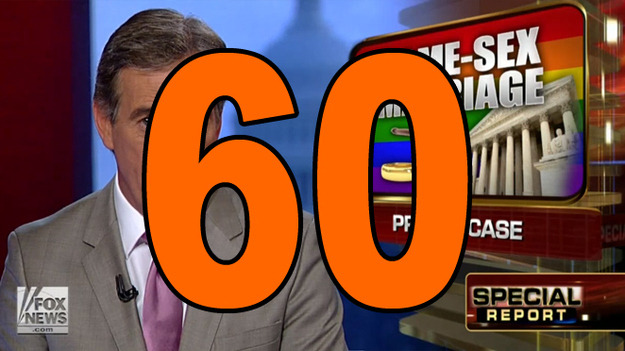
Total minutes devoted to yesterday’s Prop 8 coverage on cable news.
Simple, effective, shareable.
Posted by Ernie Smith • Permalink