Read a little. Learn a lot. • Now Mullenweg-free! • Since 2009
☰

Tag: science

127 posts

Jan 25 2012W

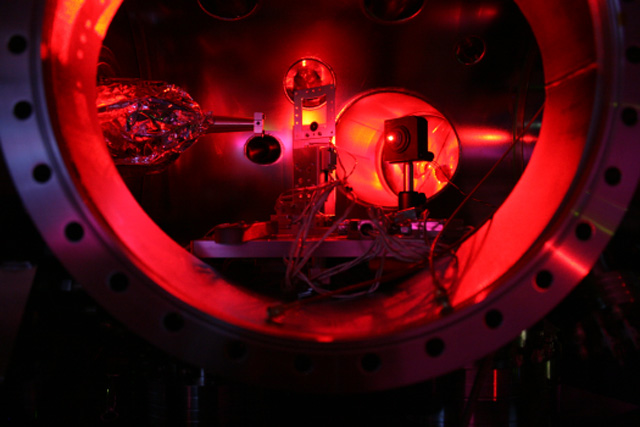
Tech: That's hot: X-Ray laser heats aluminum foil to 3.6 million degrees

  • Hot dense matter, indeed: Scientists at the SLAC National Accelerator Laboratory have successfully super-heated a small piece of aluminum foil, as thin as spider silk, to a temperature of 3.6 million degrees Fahrenheit. They did this by hitting it with a rapidly pulsing, high-powered X-ray laser, which caused the foil to become what scientists refers to as "hot dense matter," commonly found only in places like the center of stars. This is the first time a sample has been able to be reproduced in a lab setting, and could lead to greater understanding of nuclear fusion, among other things — the 3.6 million degree matter was, in fact, hotter than the corona of our Sun. (Photo from University of Oxford/Sam Vinko) source

Posted by Chris Tognotti • Permalink

Jan 3 2012W

U.S.: NASA scientist denounces 2012 apocalypse theories

Nibiru is ridiculous because it doesn't exist — it never existed as anything but a figment of the imagination by pseudo-scientists who don't seem bothered by a complete lack of evidence.

Dan Yeomans, director of NASA's Near-Earth Object program • Dismissing some of the 2012 apocalyptic theorizing that's become something of a cultural meme leading up to this year. The fear that Earth will be struck by a planetary body known as Nibiru (also sometimes called "Planet X") represents one such theory, distinct from similarly stoked fears about whether the Mayan calendar can somehow forecast the end of the world. source

Posted by Chris Tognotti • Permalink

Jan 3 2012W

Culture: Researchers: Eating too much fat can injure parts of your brain

  • C is for Uh-Oh: Medical researchers have found that within 24 hours of a high-fat diet, there is measurable damage in the brains of rodents and humans. "Obese individuals are biologically defending their elevated body weight," said Dr. Michael Schwartz, a professor at the University of Washington. The study indicates that eating fat leads to changes in the brain, and in the body, because it affects the hypothalamus, which regulates weight. source

Posted by Sami Main • Permalink

Dec 13 2011W

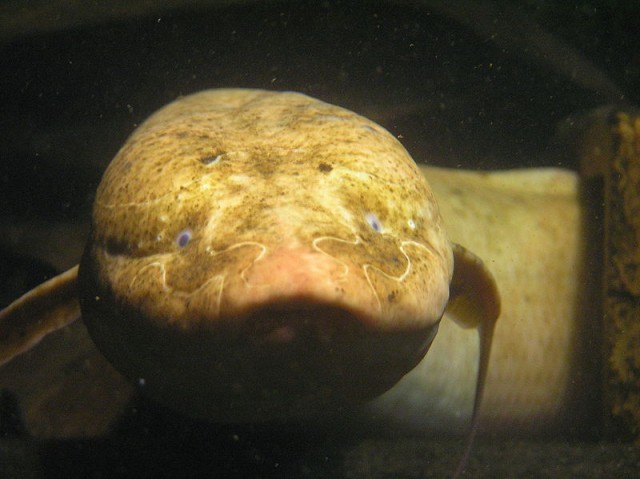
Culture: Did the roots of walking come from "hopping" fish?

  • Birds gotta fly, fish gotta ... walk? Scientists have long known that the early ancestors of almost every four-limbed creature — from mammals to reptiles to birds, and so on — are fish that learned to breathe on land. But now scientists say that the African lungfish, using its "eel-like body and a pair of flimsy hind fins," can walk/propel itself underwater, suggesting that walking isn't merely an above-ground phenomenon. "This shows us — pardon the pun — the steps that are involved in the origin of walking," said the University of Chicago's pun-friendly researcher, Neil Shubin. Not that their walking abilities would be obvious to researchers based on appearances alone. "Their fins seem like the furthest thing from walking appendages possible," Shubin noted. source

Posted by Sami Main • Permalink

Dec 5 2011W

World: Who's the newest planet on the universe block?

  • It's our baby brother! Remember the name "Kepler-22b". Its surface temperature is a balmy 72 degrees; it orbits a star that is very similar to our sun; its year is even close to ours — 290 days. Don't worry just yet, though, as scientists haven't fully discovered what makes up its surface. But "the planet would likely be warm enough to host liquid water on its surface." The scientists on the study are “getting really close, we are really homing in on the true Earth-sized habitable planets.” source

Posted by Sami Main • Permalink

Nov 15 2011W

World: Two words you don't normally hear together: "Whale cemetery."

  • 15 whales found in a "graveyard": Over the span of 15 days, paleontologists have found the remains of 15 whales, in just one area of Chile. Some of the fossils date back seven million years. Not only that, but the scientists have also discovered new species, too. "The whale discovery is a discovery of global importance," said Sol Squire, one of the paleontologists on the project. source

Posted by Sami Main • Permalink

Nov 2 2011t

Bolded the important part.

nationalpost:

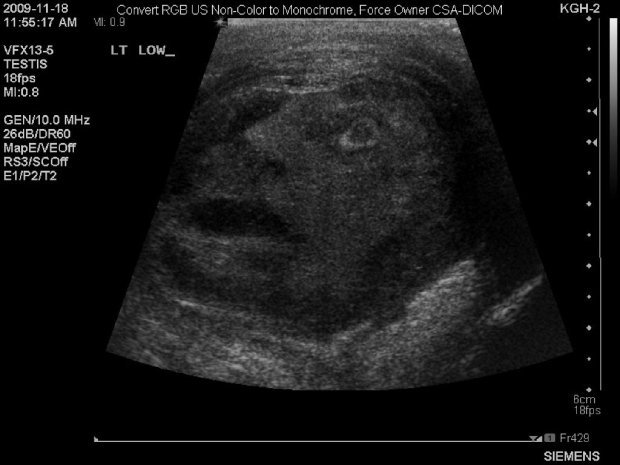
The face testicular pain: Doctors find ultrasound image smiling back at them
Move over grilled cheese Virgin Mary. Step aside bathroom door Jesus. When Canadian researchers recently conducted an ultrasound to examine a growth on a patient’s testicles, they expected to look at the mass, but didn’t expect the mass to be staring back.

“It was almost like art coming out of this patient’s testicles,” said Dr. Naji Touma, an assistant professor of urology at Queen’s University in Kingston, Ont. “It was an amusing finding.”

Bolded the important part. Stop it medicine! You’re scaring us!

Posted by ShortFormBlog • Permalink

Oct 26 2011W

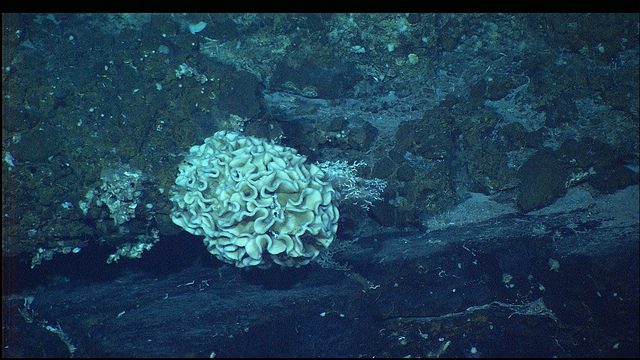
Tech: Scientists discover huge single-cell organisms deep on the ocean floor

  • Meet the Xenophyophores: Scientists have announced the discovery of a hitherto unknown, large single-celled organism living about 6.6 miles beneath the ocean's surface. The organisms, called xenophyophores, were discovered in the Mariana Trench, the deepest place known in the ocean floor. They aren't kidding about the "large," either — a single cell can exceed four inches, which kind of blows our minds, honestly. Research suggests the xenophyophores are resistant to heavy metal toxicity, as by trapping water particles they concentrate high levels of mercury, uranium and lead, with no apparent detriment to the their health. source

Posted by Chris Tognotti • Permalink