Read a little. Learn a lot. • Now Mullenweg-free! • Since 2009
☰

Tag: earth

16 posts

Oct172013t

Russian astronomers say asteroid might collide with Earth -- in 2032

Ukrainian astronomers say an asteroid might collide with Earth in a couple of decades, a Russian news service reported Thursday.

Space watchers from the observatory in the Crimean peninsula said they discovered an asteroid about 1,345 feet in diameter, which they call 2013 TV135, that is approaching Earth at a potentially dangerous trajectory, RIA Novosti said.

The astronomers calculated the date of a potential collision as Aug. 26, 2032, the news service said, but they acknowledged that the odds of an impact as 1 in 63,000.

Well, at least we know what a small segment of the poulation will spend the next two decades obsessing over, now that all of the 2012 hullabaloo is behind us.
Posted by Scott Craft • Permalink

Sep222013t

Study: Earth suitable for life for at least another 1.75 billion years

breakingnews:

Study: Earth suitable for life for at least another 1.75 billion years

Live Science: A new study conducted by scientists in the UK concludes that Earth should be suited for life for at least another 1.75 billion years.

A nuclear holocaust or a rogue asteroid are among the potential disasters that could prevent Earth being habitable for that long.

If one of those scenarios doesn’t occur, between 1.75 billion and 3.25 billion years from now, Earth will travel out of the habitable zone of the solar system and move too close to the sun, causing Earth’s oceans to evaporate.

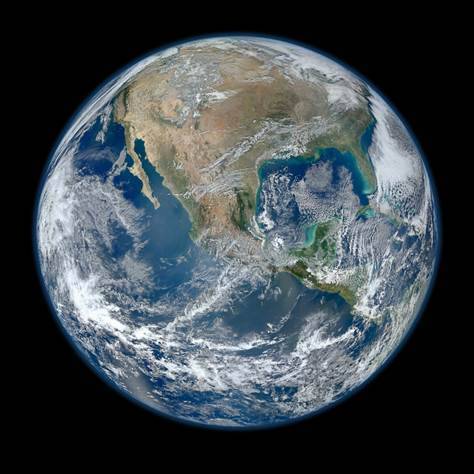
Photo: This composite image uses a number of swaths of the Earth’s surface taken in January 2012. (NASA/NOAA/GSFC/Suomi NPP/VIIRS/Norman Kuring)

This is a huge relief! We’d been walking around thinking we only had another 1.5 billion or so.

Posted by ShortFormBlog • Permalink

Dec52012t

There is no scientific debate on the age of the Earth, it’s established pretty definitively, it’s at least…

There is no scientific debate on the age of the Earth, it’s established pretty definitively, it’s at least 4.5 billion years old.

— Sen. Marco Rubio - During an interview with Politico’s Mike Allen, which briefly focused on comments the Florida Republican made during a GQ interview last month. Some were confused by the Senator’s answer when asked about the planet’s age, and many readers were left unsure as to exactly what the Republican believed himself. Rubio says he was simply trying to acknowledge those who have a hard time accepting data which seems to fly in the face of their religious teachings, but wanted to be clear that he knows there is “no scientific debate.” source

Posted by ShortFormBlog • Permalink

Sep152012t

Jupiter may have “saved Earth from a devastating cosmic collision”

theweekmagazine:

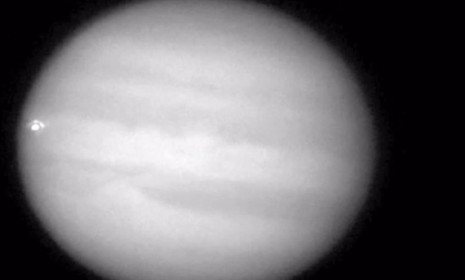
Jupiter may have “saved Earth from a devastating cosmic collision” on Monday when it took a hit from what may have been a massive asteroid, resulting in a 100-mile-wide fireball large enough to be caught on film from Earth.

This is the third time since 2009 observers have seen an impact flash on Jupiter’s surface, and some astronomers think the big planet’s gravitational pull serves as a sort of “cosmic shield” for the inner rings of planets — including Earth — “sweeping up incoming objects that would have a deadlier effect” if they were to crash into us. A few scientists think that without Jupiter’s protection, life on Earth wouldn’t have been able to develop.

Watch the collision on Jupiter

Remember folks, it always pays to have a cosmic bodyguard.

Posted by ShortFormBlog • Permalink

Tags for this post

May262012t

Without carbon, the building blocks of life cannot exist… So it is reduced carbon that, with hydrogen, with…

Without carbon, the building blocks of life cannot exist… So it is reduced carbon that, with hydrogen, with oxygen, with nitrogen make up the organic molecules of life. This research shows, yes - it does exist on Mars and now we are moving to the next set of questions. What happened to it, what was its fate, did it take the next step of creating life on Mars?

— Research team leader Dr. Andrew Steele • Giving comment on the findings of he and his team (from the Carnegie Institution for Science), who were investigating the presence of carbon on the planet Mars. Their efforts yielded worthy and interesting results — they determined that, based on meteorite samples, Mars indeed has carbon on it that was not “contaminated” to the planet through Earth, but rather originated there. They determined that the carbon did not spring from life forms, however — this is a so-called -building block’ for life, not a byproduct of it. source ( source • source)

Posted by ShortFormBlog • Permalink

May42012t

Pursuit of Light

jtotheizzoe:

Pursuit of Light

“Water and stone. Flower and bone: home.”

From the terrestrial to the celestial, from the atomic to the tectonic, discovery is all about pursuing light in some way, isn’t it?

NASA has given us many gifts: Knowledge of this planet and many worlds beyond. At a time when many of their missions, and our sense of wonder and inspiration along with them, are in jeopardy … they remind us of how illuminating science can be.

Pursuit of Light is promotion for NASA, but it’s also promotion for thinking big, and embracing that “Ahhh” feeling. Full screen, HD, sound up.

Share it with someone you love, and stay curious.

(↬ Bad Astronomy)

Because what’s a good day without having your mind blown at least once?

Posted by ShortFormBlog • Permalink

Dec52011W

World: Who's the newest planet on the universe block?

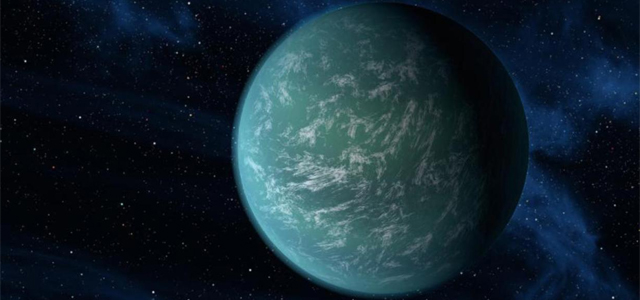
  • It's our baby brother! Remember the name "Kepler-22b". Its surface temperature is a balmy 72 degrees; it orbits a star that is very similar to our sun; its year is even close to ours — 290 days. Don't worry just yet, though, as scientists haven't fully discovered what makes up its surface. But "the planet would likely be warm enough to host liquid water on its surface." The scientists on the study are “getting really close, we are really homing in on the true Earth-sized habitable planets.” source

Posted by Sami Main • Permalink

Sep302010W

World: Earthlike planet around nearby star? We're posting from there now

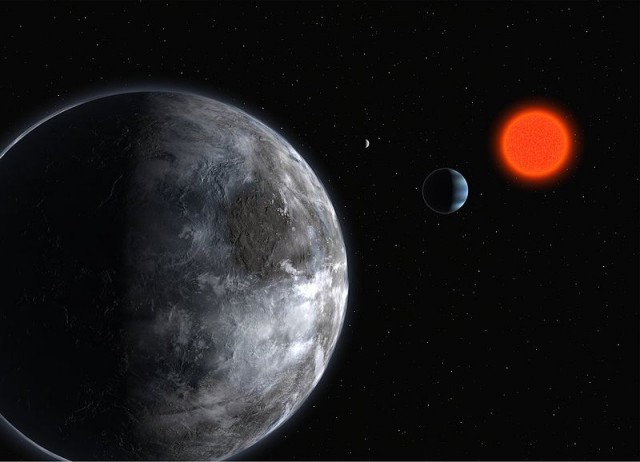
  • Hey, that's not Earth! In fact, you're right. It's what scientists refer to as a "possible Earthlike planet" in the "goldilocks zone" of a nearby star. Which means that when we inevitably destroy this planet by overloading landfills with discarded toxic Hot Pockets sleeves, we'll have somewhere to go to next. And we'll screw up that place, too. source

Posted by Ernie Smith • Permalink