Read a little. Learn a lot. • Now Mullenweg-free! • Since 2009
☰

Tag: tokyo

20 posts

Sep172013t

Two-time evictee bears Olympic-size grudge

Tokyo’s successful bid to host the 2020 Olympics made much of plans to re-use venues built for Japan’s last Summer Games. But for Kohei Jinno, redevelopment means eviction again — just like in 1964.

While much of Japan celebrated Tokyo’s victory at the recent meeting of the International Olympic Committee in Buenos Aires, 79-year-old Jinno was cursing his luck.

In 1964, his home and business were torn down to make way for an Olympic park around the main stadium for the Tokyo Games. Now he has been told he must move again to make way for the stadium’s redevelopment and expansion in time for 2020.

Posted by Scott Craft • Permalink

Sep82013t

The Olympics will return to Japan in 2020,

olympics:

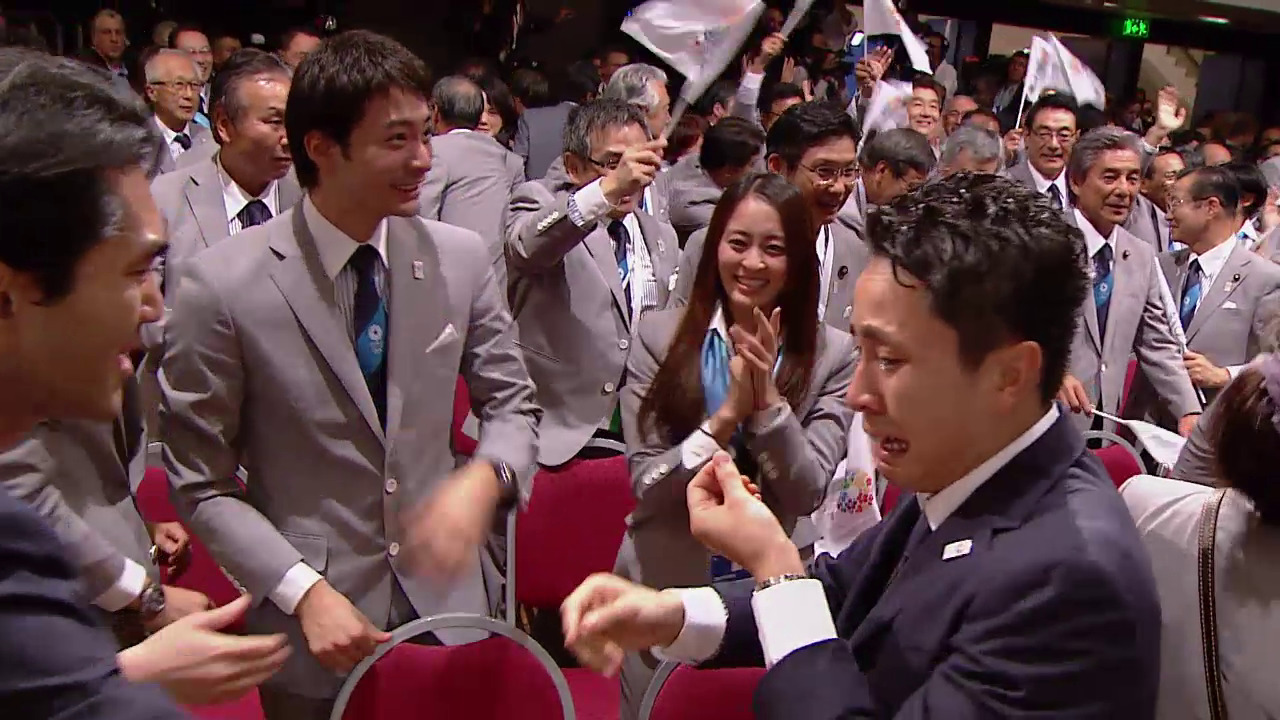
Tokyo reacts after being elected as 2020 Olympic Games Host City.

The Olympics will return to Japan in 2020, for the first time since the 1998 Winter Olympics in Nagano. This time Tokyo will play host, having beat out the Turkish capitol of Istanbul in a run-off, despite concerns in recent days that the IOC would shirk Tokyo amid concerns about the ongoing (and we do stress ongoing) radioactivity leaks at the Fukushima Daiichi nuclear plant.

Posted by ShortFormBlog • Permalink

Sep72011W

World: Ex-Japan PM Naoto Kan imagined uninhabitable Tokyo post-Fukushima

Deserted scenes of Tokyo without a single man around came across my mind. It really was a spine-chilling thought.

Former Japanese Prime Minister Naoto Kan • Offering a truly harrowing vision of a post-Fukushima future for Tokyo. The vision for the 20-million-strong city helped push Kan towards encouraging renewable energy during his final months as Prime Minister, when he was dealing with the march earthquake. We're with him. That's a scary thought and it's understandable why he changed his track as a result. source

Posted by Ernie Smith • Permalink

Jun52011W

World: Post-Fukushima, Japanese businesspeople dress down to cool off

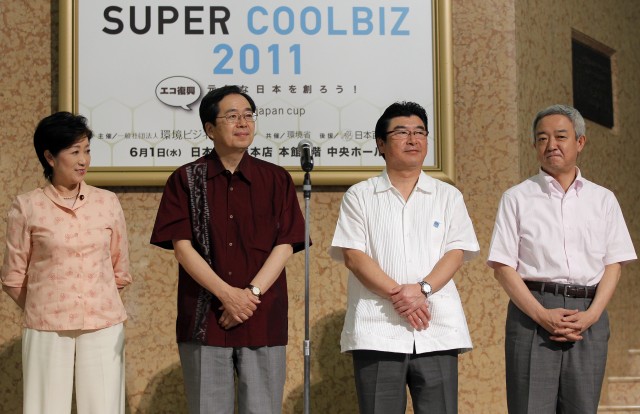
  • Why are these Japanese businesspeople dressed up like they're about to go to a cookout? The reason actually has to do with March's earthquake, if you can believe it. See, Japan has this campaign called "Super Cool Biz," where the AC doesn't go up nearly as high and businesses cut their electricity use by 15 percent. Which means that offices shouldn't get cooler than 28 degrees Celsius (82 degrees Fahrenheit) and workers should probably dress down and stuff. While the campaign isn't new — it was introduced in 2005 as a way to fight global warming — companies are finally starting to jump on board with the idea due to the earthquake. (Photo by Itsuo Inouye/Associated Press) source

Posted by Ernie Smith • Permalink

Mar172011W

World: Tokyo's dealing with their energy drama fairly well so far

  • yes the trains are running slower and less frequently in Tokyo, in an effort to save energy
  • no authorities don't expect Tokyo's power to go out despite higher usage in the wake of cold weather
  • yes people in Tokyo have gotten stuck in elevators as the result of rolling blackouts source

Posted by Ernie Smith • Permalink

Mar162011t

More on the "minor" radiation levels in Tokyo

acmesalesrep says: Worldwide, the average dose rate due to naturally occurring background radiation is about 0.3 µSv/hr (the “per hour” being significant as the sievert is a unit of dose, not dose rate). This can vary significantly depending on local geology, altitude, etc. I don’t know what the normal background rate in Tokyo is—and without that information, this picture is pretty much meaningless.

  • » We say: You’re right, we should’ve provided that information with the photo. Here’s a piece from AFP that explains the levels: “From Tokyo officials said they had detected 0.809 micro-sievert in the morning and 0.075 four hours later – compared with a normal radiation level of around 0.035. A chest X-ray typically involves a dose of 20 micro-sieverts." (I double-checked and the levels are "per hour.” AFP just screwed up and didn’t mention that part of the equation.) The fact that it went up is the “minorly” shocking part – and the photo didn’t even show the radiation levels at their peak. But it’s a level so low that officials didn’t seem to think it was dangerous. This chart here shows this in perspective, starting with the X-ray.

Posted by ShortFormBlog • Permalink