Read a little. Learn a lot. • Now Mullenweg-free! • Since 2009
☰

Tag: fukushima nuclear plant

10 posts

Feb 14 2012W

World: Japanese activists want referendum on nuclear power in Osaka

  • then Last year, following the violent earthquake and tsunami that struck Japan, the Fukushima Daiichi nuclear reactor was thrown into a state of emergency. System failure prevented adequate cooling of enriched uranium rods, causing a meltdown while hydrogen explosions rocked the plant.
  • nowJust under a year removed from the disaster, a group of Japanese activists have submitted a petition in Osaka (within Kansai Prefecture), calling for a referendum on nuclear power. Osaka is Japan's second largest city behind Tokyo, and draws power from 11 nuclear reactors near the city. source

Posted by Chris Tognotti • Permalink
Mar 16 2011W

World: Discrepancy in Fukushima evacuation zone raises concerns

  • 80km the distance that the U.S. Embassy in Tokyo is urging Americans to maintain from the damaged and irradiated Fukushima Nuclear Plant
  • 30km the distance the Japanese government have evacuated their own people, so … that's a pretty concerning discrepancy source
  • » Overly cautious, or overly cavalier? That's a question that should likely be weighing on the minds of the Japanese today, as the American Embassy in Tokyo's suggested range of evacuation is 50km more than their own government's. U.S. Ambassador John Roos, who issued the warning, said that the projection was based on American expert analysis, as well as information provided by Japanese officials, which begs the question- have these Japanese officials given the same advice to their own government?

Posted by Chris Tognotti • Permalink
Mar 16 2011t

More on the "minor" radiation levels in Tokyo

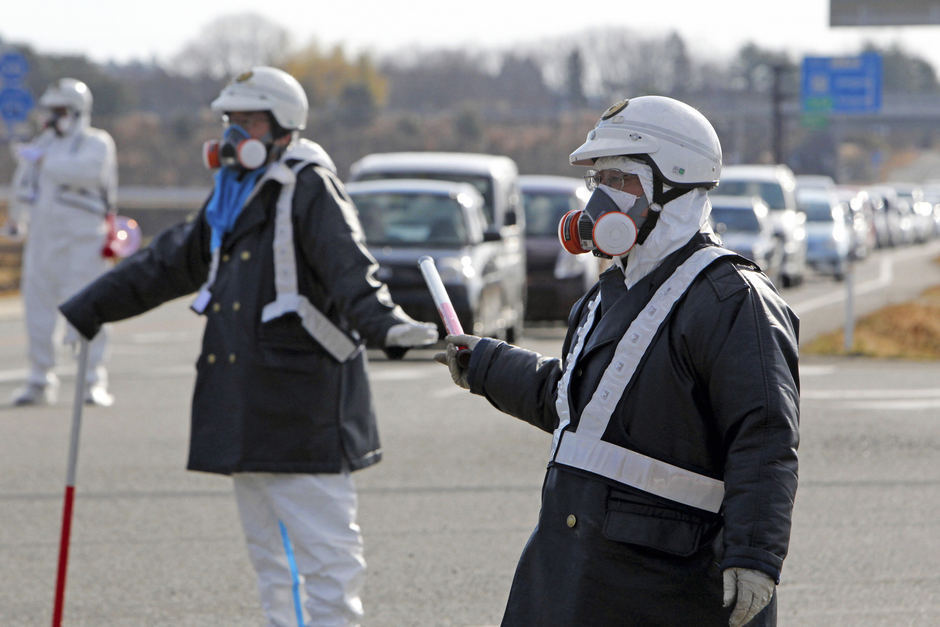
acmesalesrep says: Worldwide, the average dose rate due to naturally occurring background radiation is about 0.3 µSv/hr (the “per hour” being significant as the sievert is a unit of dose, not dose rate). This can vary significantly depending on local geology, altitude, etc. I don’t know what the normal background rate in Tokyo is—and without that information, this picture is pretty much meaningless.

  • » We say: You’re right, we should’ve provided that information with the photo. Here’s a piece from AFP that explains the levels: “From Tokyo officials said they had detected 0.809 micro-sievert in the morning and 0.075 four hours later – compared with a normal radiation level of around 0.035. A chest X-ray typically involves a dose of 20 micro-sieverts." (I double-checked and the levels are "per hour.” AFP just screwed up and didn’t mention that part of the equation.) The fact that it went up is the “minorly” shocking part – and the photo didn’t even show the radiation levels at their peak. But it’s a level so low that officials didn’t seem to think it was dangerous. This chart here shows this in perspective, starting with the X-ray.

Posted by ShortFormBlog • Permalink

Mar 14 2011t

On the Japan nuclear tip, somebody sent us this article, written by an MIT researcher named Josef Oehmen.

  • Josef Oehmen, an MIT scientist with some strong cred, says that the situation in Fukushima isn’t that big a deal. “There was and will *not* be any significant release of radioactivity,” he writes. “By ‘significant’ I mean a level of radiation of more than what you would receive on — say — a long distance flight, or drinking a glass of beer that comes from certain areas with high levels of natural background radiation.” He was also very critical of the mainstream media’s coverage of the disaster, going so far as to say some articles had errors in every paragraph (ouch!). Oehman wrote a lengthy piece — initially as a personal e-mail to members of his family — explaining exactly what is going on. Now, the first question, of course, is wether or not this guy is legit. He appears so. He has a Twitter. And a long list of research. Lots of people have read his explanation but it hasn’t been picked up by the mainstream press yet. (Will they pick it up?) Rather than summarize it, we feel you should read everything. It’s pretty well-explained. (thanks Benjamin Harrison) source

Posted by ShortFormBlog • Permalink

Mar 12 2011t

Smoke rises from the Fukushima nuclear power plant in Japan Saturday after an explosion at one of its…

inothernews:

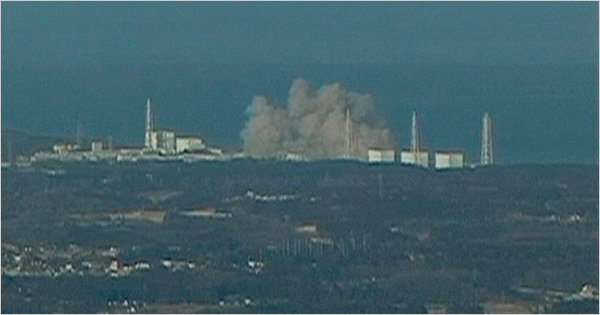
Smoke rises from the Fukushima nuclear power plant in Japan Saturday after an explosion at one of its buildings, blowing the roof off one building, brought down walls and caused a radiation leak of unspecified proportions. The evacuation zone around Fukushima has been doubled to 12 miles in radius. A government spokesman initially denied that an explosion had occurred — despite video evidence. (Photo: NHK TV via APTN / The New York Times)

I think we should all be concerned at this point how the Japanese government is handling the situation at Fukushima. It’s understandable that there may be some confusion just one day after a massive earthquake, but for Christ’s sake, you can’t have a government spokesman denying that an explosion happenedwhen it fucking happened.And that’s after they told us everything was okay at the four nuke plants closest to the epicenter, when things clearly weren’t.

The International Atomic Energy Agency needs to take point on any and all news regarding Fukushima and the country’s other nuclear reactors. The Japanese government just can’t be trusted anymore.

Well, this isn’t what we expected to wake up to. Good morning Japan.

Posted by ShortFormBlog • Permalink

Mar 12 2011t

Hourly, the Fukushima plant

More about the danger of what’s happening in Fukushima

Hourly, the Fukushima plant is letting off around 1,015 microsievert of radiation – which is the equivalent of what people are usually allowed to take in over an entire year. While it’s not immediately dangerous due to current nuclear plant design, some experts (most notably Columbia University’s disaster-preparedness expert Dr. Irwin Redlener) have noted that the levels of radiation being put out could raise the risk of thyroid cancer in nearby residents later on. “I would personally absolutely not want to be inside,” Redlener said, noting that the levels would be much higher. The government is urging people to stay calm, while keeping them away. (photo by Asahi Shimbun/Reuters) source

Posted by ShortFormBlog • Permalink

Mar 11 2011t

More on the whole "1,000 times normal radiation" thing

  • Just because the issue is sort of a big thing right now, here are a few links to confirm everything: One, the original report, which cites Japan’s Nuclear and Industrial Safety Agency. Al Jazeera’s liveblog also has this: “More reports from the Fukushima nuclear plant - radiation levels at a central control unit in the "No.1 reactor” have reached 1,000 times normal, a trade ministry official told Reuters. But that’s not a level that would require workers to evacuate the plant, the official said.“ So, to put it simply, it’s bad but not bad enough for workers to leave the plant. However, civilians have been evacuated from the 10km immediate area. (credit to kateoplis, though with some stuff to push the story forward)

Posted by ShortFormBlog • Permalink