Read a little. Learn a lot. • Now Mullenweg-free! • Since 2009
☰

Tag: radiation

29 posts

Mar32013t

WHO study finds elevated cancer risk for babies in Fukushima area

  • 4%increased lifetime relative risk of cancer for babies exposed to the highest radiation areas around Fukushima, Japan, after the 2011 tsunami that caused multiple radiation leaks at the Fukushima Daiichi nuclear plant (according to the World Health Organization). The amount of radiation exposure varied throughout Fukushima Prefecture, with some areas as high as 12 - 25 millisieverts, but much else in the 3 - 5 range.

Posted by Chris Tognotti • Permalink

Sep152012t

Not the sort of thing

nbcnews:

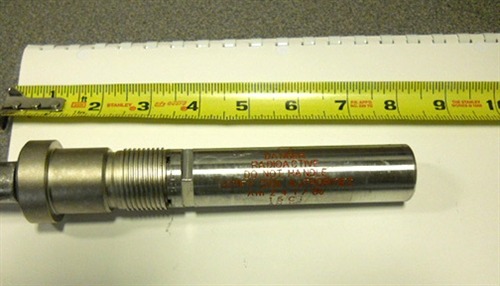
Halliburton misplaces mystery radioactive device: ‘Do not handle’ (Photo: Texas Department of State Health Services)

Somewhere in West Texas is a 7-inch radioactive cylinder that Halliburton would like to find. Anyone who comes across it is advised to keep their distance.

“It’s not something that produces radiation in an extremely dangerous form,” said Chris Van Deusen, a spokesman for the Texas Department of State Health Services. “But it’s best for people to stay back, 20 or 25 feet.”

Read the complete story.

Not the sort of thing you’d expect to find laying around, to be sure.

Posted by ShortFormBlog • Permalink

Aug22011W

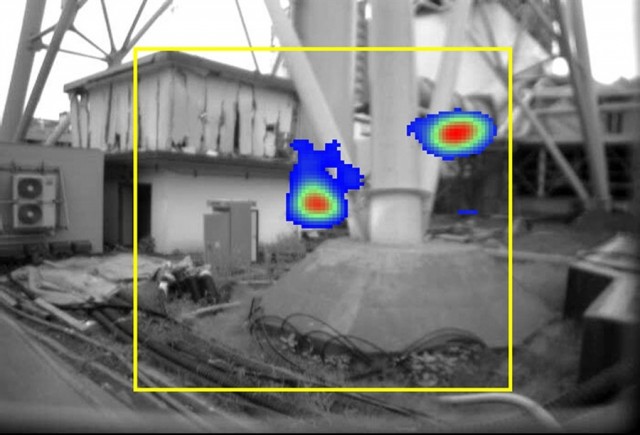
World: Fukushima radiation: What deadly radiation "hot spots" look like

  • See the red spots? You know, the ones surrounded by blue and green? Those represent 10 sieverts per hour of radiation. That is extremely high and could lead to death within seconds. And at the Fukushima site, that's what they're apparently still dealing with … mind you, five months after the fact. "Radiation leakage at the plant may have been contained or slowed but it has not been sealed off completely," noted Osaka University professor and nuclear engineering expert Kenji Sumita. "The utility is likely to continue finding these spots of high radiation." To put this in perspective, add three zeros to the number 10, to make it 10,000 millisieverts per hour (mSv). Then, take a look at this graphic. Yeah. Scary as hell, right? We'll say. source

Posted by Ernie Smith • Permalink

May312011t

More on that WHO/cell phones/cancer thing

oldmanyellsatcloud said: This story sounds…familiar. Quick google foo brought up this old transcript. transcripts.cnn.com/TRA… Weird. Any link to the actual WHO study? only found this: who.int/mediace…

  • » SFB says: This is new. Engadget has a press release if you’re curious. The International Agency for Research on Cancer, a WHO-affiliated group, made the specific report. If anything else, this certainly makes things more interesting.

Posted by ShortFormBlog • Permalink

Apr22011W

World: Radioactive water continues to leak into ocean from Fukushima

  • NO concrete fails to plug irradiated water leak at Fukushima source
  • » The flow has continued at a seemingly unchanged rate. This is bad news for pretty obvious reasons- the leak, coming through an eight-inch crack in a pit containing power cables, is sending water irradiated at 1000 millisieverts per hour into the ocean. Having tried pumping in concrete and failed to make any progress, TEPCO's next plan is to employ a similar strategy using a type of polymer. Polymer spraying has already been happening throughout the plant, in an effort to prevent radioactive isotopes from escaping into the environment.

Posted by Chris Tognotti • Permalink

Mar272011W

World: TEPCO corrections: Not "10 million times" normal level, "100,000 times"

  • errors As you might have noticed earlier today, TEPCO reported a level of radiation that was insanely high — 10 million times the usual level — coming from the water at a Fukushima reactor. This was very wrong, so much so that we took down our posts about this.
  • correctionsTEPCO apologized — while noting the amount was a still-very-high 100,000 times its normal level. "I am very sorry," said TEPCO's vice president, Sakae Muto. "I would like to make sure that such a mistake will not happen again." Good apology, Muto. source

Posted by Ernie Smith • Permalink

Mar242011t

According to VOA,

Embedded media from serve.a-widget.com is no longer available.

Ex-Rad: The U.S. government’s new anti-radiation drug?

According to VOA, the U.S. government (along with a drug firm named Onconova) is currently working on an anti-radiation drug called Ex-Rad. “Ex-Rad is a drug which is effective in saving a cell damaged by radiation,“ says Onconova CEO Ramesh Kumar, "and we have found that it can be given in advance of exposure to radiation up to a day ahead or it can be given up to a day after the exposure to radiation.” If this is true, it’s worth keeping an eye on. source

Posted by ShortFormBlog • Permalink