Watch Curiosity land on Mars in full, glorious HD.
There’s a little noise reduction, color balance and sharpening, but this is all Mars, baby. Now that the MARDI descent imager has sent home its full collection of 1600 by 1200 images, NASA could piece together a video of the landing. Missing frames were interpolated using thumbnail data.
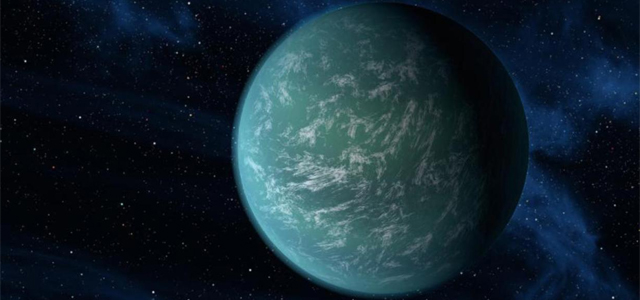
It's our baby brother! Remember the name "Kepler-22b". Its surface temperature is a balmy 72 degrees; it orbits a star that is very similar to our sun; its year is even close to ours — 290 days. Don't worry just yet, though, as scientists haven't fully discovered what makes up its surface. But "the planet would likely be warm enough to host liquid water on its surface." The scientists on the study are “getting really close, we are really homing in on the true Earth-sized habitable planets.” source
hey kids, it's a new planet! Say hello to Kepler-10b, the new kid in town. Or, to be more accurate, the new kid from out of town: this tiny, rocky planet actually resides outside of our solar system. It's a little guy - the smallest, in fact, ever discovered outside of our Sun's orbit. The confirmation of Kepler-10b's existence is the product of over eight months of data collection, and represents the "first solid evidence of a rocky planet orbiting a star other than our sun." Here are some key facts about it with which to impress your friends.
it's a lot like usKepler-10b has a diameter 1.4x that of our beloved blue orb. It's also classified as a "rocky" planet, meaning it has a composition similar to that of Earth (as opposed to a gaseous planet like Saturn).
it's probably way hotAlthough the physical composition of the planet would render it capable of hosting water, it's way too close to the star it orbits (its "Sun," if you will) for that to be possible.
nasa's pumped about itWhile Kepler-10b is outside of the "habitable zone," scientists are giddy about its mere discovery, and optimistic that the spacecraft that found it will yield more results in the future. source
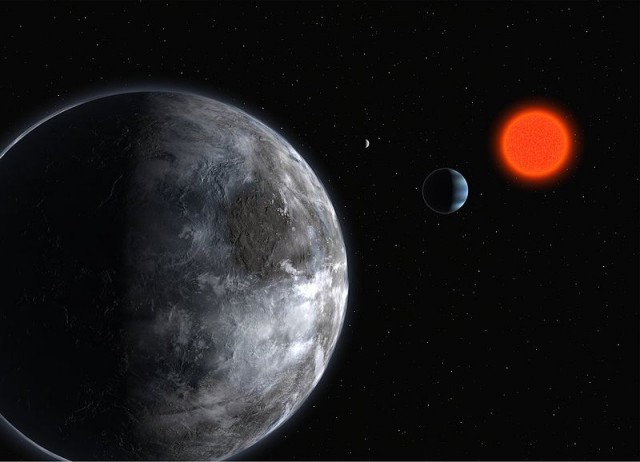
Hey, that's not Earth! In fact, you're right. It's what scientists refer to as a "possible Earthlike planet" in the "goldilocks zone" of a nearby star. Which means that when we inevitably destroy this planet by overloading landfills with discarded toxic Hot Pockets sleeves, we'll have somewhere to go to next. And we'll screw up that place, too. source
 ShortFormBlog