Read a little. Learn a lot. • Now Mullenweg-free! • Since 2009
☰

Tag: science

127 posts

Mar 9 2013t

New scientific study rates our dire place in climate history

  • 4000year high for global temperatures, according to a new research study headed by climatologist Shaun Marcott of Oregon State University. The study utilized the most in-depth reconstruction of climate information from over the last 11,300 years, virtually the entire Holocene era, and was released in the academic magazine Science earlier this week.

Posted by Chris Tognotti • Permalink
Feb 23 2013t

In a memorandum issued on Friday, John P. Holdren, science adviser to President Obama, called for scientific…

In a memorandum issued on Friday, John P. Holdren, science adviser to President Obama, called for scientific papers that report the results of federally financed research to become freely accessible within a year or so after publication. The findings are typically published in scientific journals, many of which are open only to paying subscribers. The new policy would apply to federal agencies, including the National Science Foundation, the Department of Energy and the Department of Agriculture, that finance more than $100 million a year of research. The agencies have six months to submit plans for how they would carry out the new policy. The hope is that broad access to scientific results will encourage faster progress on research and will let anyone apply the knowledge for technological advances.

— U.S. Speeds Access to Publicly Financed Scientific Research - NYTimes.com (via dendroica)

We admit we’re not exactly entrenched in the world of federally-backed scientific reports, but this certainly seems like a worthy idea, even if it doesn’t spur more research as desired, to give some of these findings more public profile — any dissenters out there? What do you think?

Posted by ShortFormBlog • Permalink

Jan 19 2013t

All’s fair between chimps?

All’s fair between chimps? Psychologist Darby Proctor of Yerkes National Primate Research Center in Lawrenceville, Ga., and her colleagues say chimpanzees tend to react in a way that recognizes fairness. “Humans and chimpanzees show similar preferences in dividing rewards, suggesting a long evolutionary history to the human sense of fairness,” Proctor said.

However, other researchers claim that the chimps in the study “interacted little with each other and showed no signs of understanding that some offers were unfair and could be rejected.”

Josep Call and Keith Jensen co-authored previous studies where chimps “generally shared as little as possible with partners, who accepted most offers.”

Does Proctor’s new study, which compares the actions of her chimps with those of pre-school aged kids, prove that fairness can transcend species lines? Do humans even play fair anyway?

Posted by Sami Main • Permalink

Dec 5 2012t

There is no scientific debate on the age of the Earth, it’s established pretty definitively, it’s at least…

There is no scientific debate on the age of the Earth, it’s established pretty definitively, it’s at least 4.5 billion years old.

— Sen. Marco Rubio - During an interview with Politico’s Mike Allen, which briefly focused on comments the Florida Republican made during a GQ interview last month. Some were confused by the Senator’s answer when asked about the planet’s age, and many readers were left unsure as to exactly what the Republican believed himself. Rubio says he was simply trying to acknowledge those who have a hard time accepting data which seems to fly in the face of their religious teachings, but wanted to be clear that he knows there is “no scientific debate.” source

Posted by ShortFormBlog • Permalink

Oct 25 2012t

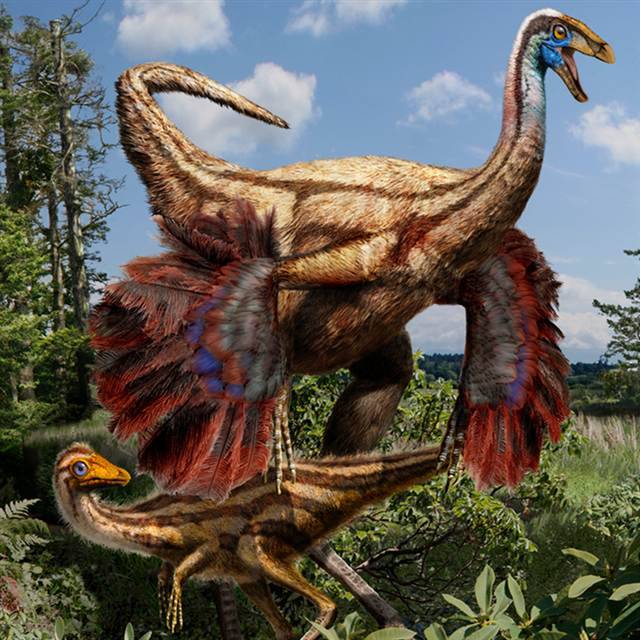
This illustration is just … too much.

nbcnews:

Dinosaurs looking for love grew alluring feathers, scientists say (Photo: Julius Csotonyi via AFP - Getty Images)

Dinosaurs may have wooed potential mates with flashy feathers, peacock style. Researchers have discovered lengthy wisps on a sexually mature adult, but absent in the toddler specimen of the same dinosaur species.

Read the complete story.

This illustration is just … too much. Side note: The name “Dinosaur Feathers” would automatically earn your band a Best New Music on Pitchfork.

EDIT: There is already a band named Dinosaur Feathers.

Posted by Ernie Smith • Permalink

Sep 13 2012t

Guardian

breakingnews:

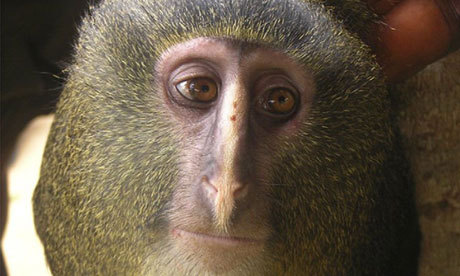
New monkey species identified in Democratic Republic of Congo Guardian:A new species of monkey has been identified in Africa in what is only the second time such a discovery has been made on the continent in 28 years. The finding is considered significant because the identification of mammals new to science is rare.

‘Lesula,’ as the monkey is known locally, has a naked face and mane of long blond hairs. Researchers say it is a shy and quiet creature that lives on the ground and in trees in a habitat of lowland rainforests.The animal’s diet consists of mostly fruit and vegetation.

Photo: A new species of monkey, known locally as the lesula. (Hart JA, Detwiler KM, Gilbert CC/PA)

Hey little buddy. Didn’t know you existed until now but wish we had.

Posted by Ernie Smith • Permalink

Sep 11 2012t

I LOOK GOOD

inothernews:

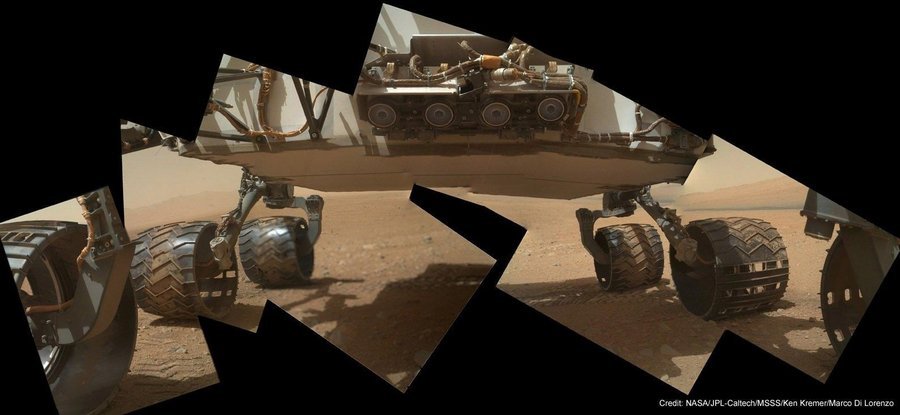
I LOOK GOOD A mosaic of photos taken by an imager on NASA’s Curiosity rover shows the underside of the rover and its six wheels, with Martian terrain stretching back to the horizon. The four circular features on the front edge of the rover are the lenses for the left and right sets of Curiosity’s hazard avoidance cameras, or Hazcams. Because of the different perspectives used for different images, some of the borders of the photos don’t line up precisely. (Photo: ASA / JPL via NBC News)

Considering he’s on Mars all by himself, I don’t think we can judge Curiosity for the incomplete camera work.

Posted by ShortFormBlog • Permalink

Tags for this post

Sep 11 2012t

The donor community and conservation movement are leaning increasingly towards a ‘what can nature do for us’…

The donor community and conservation movement are leaning increasingly towards a ‘what can nature do for us’ approach, where species and wild habitats are valued and prioritized according to the services they provide for people. This has made it increasingly difficult for conservationists to protect the most threatened species on the planet. We have an important moral and ethical decision to make: Do these species have a right to survive or do we have a right to drive them to extinction?

— Jonathan Bailie, conservation director at the Zoological Society of London • In a new report, “Priceless or Worthless?”, listing the top 100 most endangered species in the world. The list was compiled by 8,000 experts on behalf of the Zoological Society of London and the International Union for Conservation of Nature. The group also noted that, although these 100 face the most imminent threat of extinction, thousands of other species currently face extinction as well. source

Posted by Scott Craft • Permalink