Read a little. Learn a lot. • Now Mullenweg-free! • Since 2009
☰

Tag: media

135 posts

May 21 2012t

“It’s important to realize that no matter what crazy thought that enters your head, there’s now a minor media…

It’s important to realize that no matter what crazy thought that enters your head, there’s now a minor media outlet out there willing to tell you that you are right…And we get trapped in the sort of reality dysmorphia, this idea that we can just view what it is that we want to see in the world without that actually being attached to reality.

— Clay Johnson on a healthier “Information Diet” (via newshour)

Read this. Then take this context into account when you read this.

Posted by ShortFormBlog • Permalink

May 13 2012t

Worth keeping in mind

theatlantic:

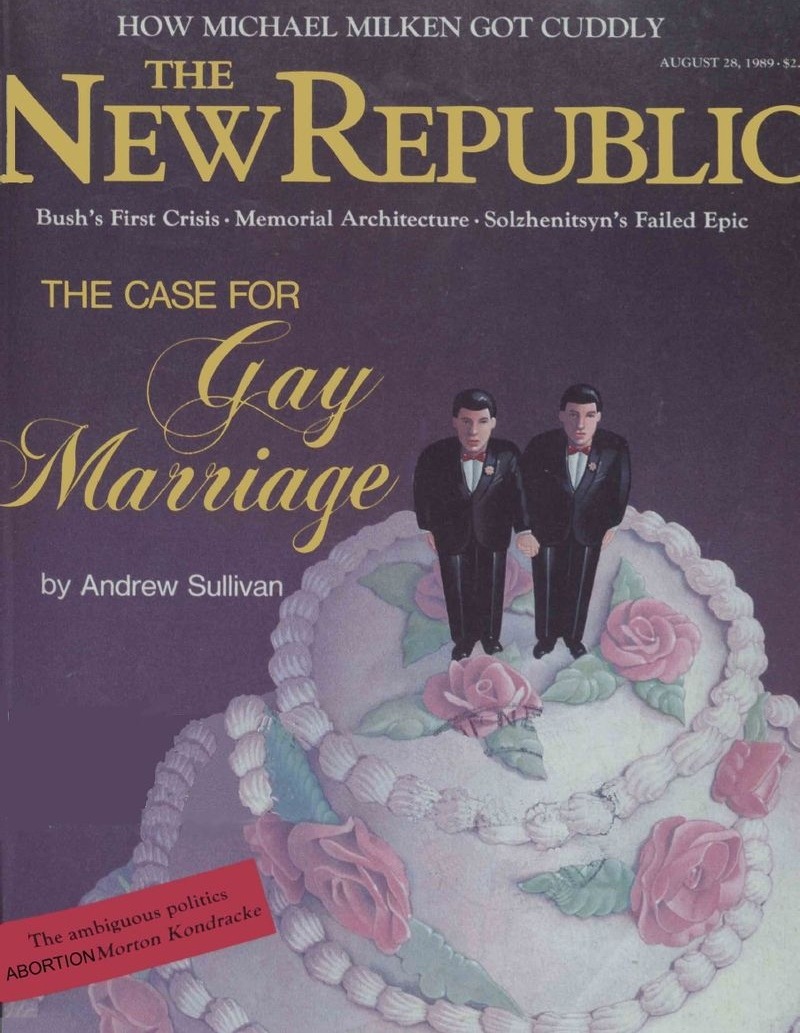
Robert Wright on Gay Marriage, Barack Obama, and Andrew Sullivan

I was at the New Republic in 1989 when Andrew Sullivan published his pathbreaking cover story “The Case for Gay Marriage.” There are two things about the experience that may be hard to convey to people younger than 25, maybe even 30:

  1. What a radical idea this seemed like at the time. I’m not sure I’d ever heard anyone mention gay marriage, and I’d certainly never seen a written defense of it.

  2. How important a single magazine could be in pre-internet days. Mike Kinsley, who for my money is the most amazing editor of his generation, had during the 1980s made the New Republic the magazine in Washington.

The combination of these two things was potent. When you take an off-the-charts idea and unveil it on the most prominent stage in Washington, it gets people talking. Yesterday, when President Obama embraced gay marriage, this was a kind of culmination of the conversation that Andrew, more than any other person, started.

Read more. [Image: The New Republic]

Worth keeping in mind that the guy who wrote this cover story also wrote this one.

Posted by ShortFormBlog • Permalink

May 3 2012t

“The overall thesis of what we’re trying to do is empower and highlight interesting creative advertising,”…

The overall thesis of what we’re trying to do is empower and highlight interesting creative advertising,” said Derek Gottfrid, Tumblr’s vp of product. “It’s not meant for the direct-response crowd.

— Derek spoke to me about Tumblr’s new ad platform. Click here to read the article. (via joshsternberg)

Minimum ad price: $25,000. The look of said ad: Intended to be seamless and attuned to the platform.

Posted by ShortFormBlog • Permalink

Apr 29 2012t

Our advice to the press: Don’t seek professional safety through the even-handed, unfiltered presentation of…

Our advice to the press: Don’t seek professional safety through the even-handed, unfiltered presentation of opposing views. Which politician is telling the truth? Who is taking hostages, at what risks and to what ends?

— The best line in that article we just posted.

Posted by ShortFormBlog • Permalink

Apr 17 2012t

Can Twitter Replace the Newswire?

joshsternberg:

The telegraph became mainstream in the 1830s thanks to Samuel Morse and immediately changed society. The communications technology broke space and time; people no longer waited months for messages to be transmitted. The beginnings of a democratized mass media took place as the telegraph enabled newswires to exist, transmitting information instantaneously across the world. Can Twitter, the modern telegraph, upend newswires?

Traditional newswires, like the Associated Press or Reuters, provide publishing partners with short bursts of information, as well as intensive reporting where outlets are under-sourced or may not even have staff. Newswire content has long filled the gaps for newspapers. But with the advent of the 140-character social network, newswires find themselves, like many other traditional models, disrupted by the Internet, looking down the barrel of a gun. The choices seem obvious. Either adapt to the speed of real-time communication and use Twitter as a complementary tool to help with reporting or face irrelevancy as Twitter and other social networks tap into the power of the ultimate free resource, people with an Internet connection and desire to share what they see.

Click through to read the rest.

We have a tiny little thought in this. On a side note, we were playing with Prismatic today and it’s pretty good at combining philosophies on news wires and Twitter accounts.

Posted by ShortFormBlog • Permalink

Apr 3 2012t

Publishers Go Back in Time on Facebook

joshsternberg:

Digital media has long favored the young. Newer entrants didn’t have the legacies of the dinosaurs they sought to replace. But in some ways, Facebook is giving power back to legacy publishing companies, at least with its shift to Timeline for company pages.

Last week Facebook rolled out its Timeline for brands, and media properties were quick to show off how deep into archives they could go. The Timeline is meant as a better way for Facebook residents to present themselves in unique ways. Media outlets are no exception. Whether it’s taking you all the way back to when the outlet was founded or highlighting coverage from historical events, media outlets can use Facebook as a way to draw readers into their worlds.

“They have to figure it out,” said Dave Marsey, group media director at Digitas. “It’s interesting because there’s a lot of news archives for the nostalgic out there.”

Click through to see how The New York Times, The Wall Street Journal, The New Yorker, The Atlantic and one surprise candidate.

We also have something in the works. Can’t wait to show it to you guys.

Posted by ShortFormBlog • Permalink

Mar 22 2012t

Traffic Whoring and the Newsroom

futurejournalismproject:

A fascinating look at Gawker’s newsroom by Nieman Lab’s Andrew Phelps.

In particular, the results of an experiment in which each staff writer spends one day a week on “traffic-whoring duty” while the rest pursue in-depth articles.

Gawker editor AJ Daulerio explained the experiment back in January:

This week, the writers of this site have all agreed to participate in an obnoxious, but worthwhile exercise. Each day, a different staff writer will be forced to break their usual routine and offer up posts they feel would garner the most traffic. While that writer struggles to find dancing cat videos and Burger King bathroom fights or any other post they feel will add those precious, precious new eyeballs, the rest of the staff will spend time on more substantive stories they may have neglected due to the rigors of scouring the internet each day to hit some imaginary quota. The writers not relegated to traffic-whoring duty will still post, just less frequently than many of them are probably used to.

Andrew Phelps, Nieman Lab. I can’t stop reading this analysis of Gawker’s editorial strategy.

Most newsrooms will probably do this in five years, but they’ll give it a slightly less edgy name.

Posted by ShortFormBlog • Permalink

Mar 20 2012t

Duchess of Cambridge spoke about a new children’s hospice

Kate Middleton’s first solo public speech overshadowed by her dress

  • Duchess of Cambridge spoke about a new children’s hospice: Her three-minute speech was “faultless — made with a slow but measured delivery.” Although she appeared to be nervous at first, she “delivered her maiden speech slowly and carefully, sticking precisely to her script, without any ad-libs.” The details of her speech made the news but so did what she wore. Perhaps what female speakers wear is a trivial detail for the media to focus on, but Middleton’s dress happens to be borrowed from her mother’s closet. source

Posted by ShortFormBlog • Permalink

Mar 13 2012t

Cmdr Taco Goes to Washington

joshsternberg:

I interview Rob Malda (aka Cmdr Taco) on his new role as chief strategist at WaPo Labs:

Do you get a newspaper now? Do you expect people to still buy print newspapers in five years?
I subscribe to a handful of print magazines, but I read all of my news digitally. I see people buying tons more newspapers; they will just increasingly be buying them in digital formats. I’m looking forward to working with the labs team to figure out what those newspapers will look like, so that I will have the ability to see the words that the Washington Post newsroom will put in them.

Oh wow. That’s an amazing role for him. I actually work on the floor above WaPo Labs and have seen the cool stuff they’re doing already; he could probably do some great things in terms of considering how to add community to the overall strategy of the WP Social Reader and some of their other products. Clearly he’s already thinking in this direction. From the story: “We worked to create a unified voice for the site, but let the community guide us all along. Communities can be fast, but noisy. … Traditional print is more refined but slower. The best solution is in the middle somewhere." — Ernie @ SFB

Posted by ShortFormBlog • Permalink

Mar 12 2012t

…where is the line between promoting the good work of others and simply lifting it? Naughty aggregation is…

…where is the line between promoting the good work of others and simply lifting it? Naughty aggregation is analogous to pornography: You know it when you see it.

— David Carr (via soupsoup)

Good article. Also recommend reading up on what Philip Bump had to sayabout this topic. “If you’re going to solve a problem that doesn’t need a solution — at least solve it.” While the idea has some merit — proper sourcing is a problem all around the Web — it’s not without its flaws.

Posted by ShortFormBlog • Permalink