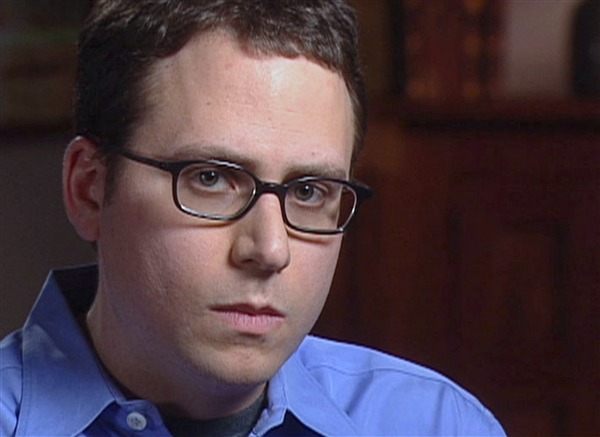
Stephen Glass, the guy who made up a bunch of stories in The New Republic and shattered the glass ceiling for folks like Jayson Blair and Jonah Lehrer, can’t become a lawyer in California. The state’s supreme court turned him down.
 ShortFormBlogRead a little. Learn a lot. • Now Mullenweg-free! • Since 2009
13 posts
Stephen Glass, the guy who made up a bunch of stories in The New Republic and shattered the glass ceiling for folks like Jayson Blair and Jonah Lehrer, can’t become a lawyer in California. The state’s supreme court turned him down.
Posted by Ernie Smith • Permalink

Here’s a piece for the libertarians out there: The New Republic has a story laying out the potential for Rand Paul to follow in his movement-creating dad’s footsteps, noting that Rand’s strength is that he’s a strong political player, not just an ideologue. The NSA scandal only plays into that, Julia Ioffe writes: “This is a moment tailored for Rand Paul, more than for Marco Rubio or Chris Christie, or anyone else in the potential Republican 2016 lineup.” Read on for a pretty solid talker.
Posted by Ernie Smith • Permalink

From the New Republic’s cover story on Aaron Swartz:
Other hackers have killed themselves, too. Before there was Aaron Swartz, there was Ilya Zhitomirskiy, a 22-year-old founder of the social-network site Diaspora*, frequently described as the “anti-Facebook” because it gives users control over their personal data rather than packaging it for advertisers. Before Ilya, there was Len Sassaman, a brilliant cryptographer who helped make Internet communications anonymous, especially when governments or powerful corporations might want to nose in on them. Before Sassaman, there was Christopher Lightfoot, who was revered for his daring, Swartz-style bulk downloads of British government data. And before Lightfoot, there was Gene Kan, who made a name for himself in the peer-to-peer movement—the technology used to swap music and video files outside the reach of their copyright holders.
The particulars of each case were different, of course. Like Swartz, Sassaman had the occasional run-in with the government over his online exploits. Kan seemed to briefly make his peace with the powers-that-be by going to work for Sun Microsystems, the Silicon Valley giant. And, in any case, who can really say why anyone might take that tragic, irreversible step? But all in their own way came across as highly concentrated distillations of computer hacker culture: precocious, technically brilliant, bracingly idealistic. All were prone to disillusionment when reality fell short of their vision for it.
The piece ends on a tough question — whether we should put such child prodigies on a pedestal. “We want people doing this work, of course—in many cases, we need them doing it," Noam Scheiber writes. "It’s just far from clear that we want them doing it before they can drive a car or buy a beer. In Aaron Swartz’s case, too many adults refused to see that a child isn’t a messiah or even a leader of men, however brilliant he may be. A child is just a child.” Thoughts? Agree/disagree?
Posted by Ernie Smith • Permalink
Well, look, I’ve always believed that there are a bunch of Republicans of goodwill who would rather get something done than suffer through the sort of nasty atmosphere that prevails in Washington right now. It’s not a fun time to be a member of Congress.
And I think if you talk privately to Democrats and Republicans, particularly those who have been around for a while, they long for the days when they could socialize and introduce bipartisan legislation and feel productive. So I don’t think the issue is whether or not there are people of goodwill in either party that want to get something done. I think what we really have to do is change some of the incentive structures so that people feel liberated to pursue some common ground.
One of the biggest factors is going to be how the media shapes debates. If a Republican member of Congress is not punished on Fox News or by Rush Limbaugh for working with a Democrat on a bill of common interest, then you’ll see more of them doing it.
I think John Boehner genuinely wanted to get a deal done, but it was hard to do in part because his caucus is more conservative probably than most Republican leaders are, and partly because he is vulnerable to attack for compromising Republican principles and working with Obama.
The same dynamic happens on the Democratic side. I think the difference is just that the more left-leaning media outlets recognize that compromise is not a dirty word. And I think at least leaders like myself—and I include Harry Reid and Nancy Pelosi in this—are willing to buck the more absolutist-wing elements in our party to try to get stuff done.
This oughta drive some major talking-head debate over the next week or so. (BTW, it’s worth noting that the interview with Obama corresponds with a bold new redesign of The New Republic. The magazine is owned by Facebook co-founder Chris Hughes, who helped interview the president, and it shows.)
Posted by Ernie Smith • Permalink
Remember Stephen Glass? The man at the center of a major Clinton-era journalistic scandal at The New Republic (shown above in film trailer form) is looking to make a comeback — as a lawyer. Glass, now 39, has poured tons of money into the effort, and has worked hard to rehabilitate himself and his image, even going through therapy. And his boss, trial lawyer Paul Zuckerman, is one of the strongest advocates for his push to get a California law license, giving him a second chance after reflecting on his own earlier substance abuse. "People can say he is fooling me,“ Zuckerman said. "But I truly know the man.”
Posted by ShortFormBlog • Permalink

In case you missed it: We’ve unveiled TNR Reader, a collection of the best writing across the web curated with a TNR sensibility. Check out http://reader.tnr.com/
This is really cool. Very slick summaries, akin to Romenesko when he was still at Poynter.
Posted by ShortFormBlog • Permalink
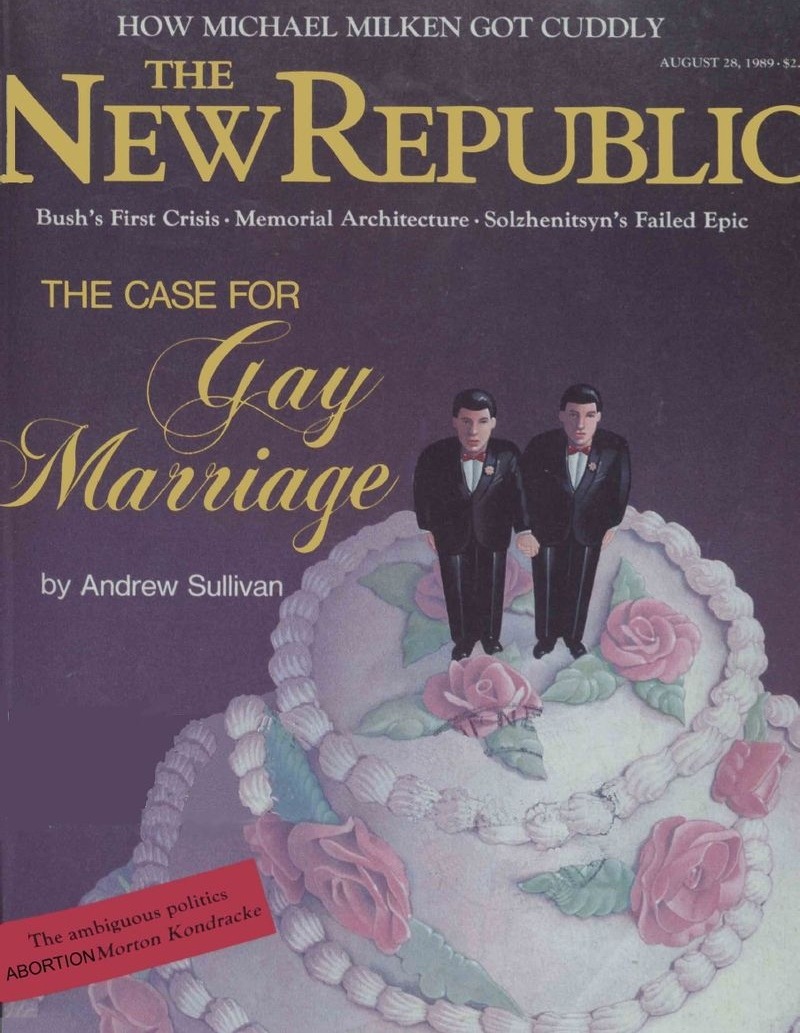
Robert Wright on Gay Marriage, Barack Obama, and Andrew Sullivan
I was at the New Republic in 1989 when Andrew Sullivan published his pathbreaking cover story “The Case for Gay Marriage.” There are two things about the experience that may be hard to convey to people younger than 25, maybe even 30:
What a radical idea this seemed like at the time. I’m not sure I’d ever heard anyone mention gay marriage, and I’d certainly never seen a written defense of it.
How important a single magazine could be in pre-internet days. Mike Kinsley, who for my money is the most amazing editor of his generation, had during the 1980s made the New Republic the magazine in Washington.
The combination of these two things was potent. When you take an off-the-charts idea and unveil it on the most prominent stage in Washington, it gets people talking. Yesterday, when President Obama embraced gay marriage, this was a kind of culmination of the conversation that Andrew, more than any other person, started.
Read more. [Image: The New Republic]
Worth keeping in mind that the guy who wrote this cover story also wrote this one.
Posted by ShortFormBlog • Permalink

How did Jeffrey Toobin keep up the “train wreck” echo chamber?
“There are two ways to explain the early onset of liberal panic over last week’s health care hearings at the Supreme Court. In the first, Solicitor General Don Verrilli turned in an unexpectedly weak performance during last Tuesday’s oral arguments, flubbing tough questions from the court’s skeptical swing votes. In the second, New Yorker writer and CNN legal correspondent Jeffrey Toobin got on television and scared the hell out of all of us.”
- Simon van Zuylen-Wood, Jeffrey Toobin’s Big Week
Photo courtesy of The Charlie Rose Show
An interesting example of how one line can greatly influence the overall discussion. It’s of note that Toobin’s analysis is a bit more tempered in this New Yorker article.
Posted by ShortFormBlog • Permalink
It seems that today too many media institutions chase superficial metrics of online virality at the expense of investing in rigorous reporting and analysis of the most important stories of our time. When few people are investing in media institutions with such bold aims as ‘enlightenment to the problems of the nation,’ I believe we must.
— Just-announced New Republic majority owner Chris Hughes • Discussing his plans for the small-but-influential magazine, which are somewhat ironic because he’s the co-founder of Facebook. Huge props to him, though. We need someone fighting for serious, well-considered insight even as the world is moving closer and closer to sharing as little as possible.
Posted by ShortFormBlog • Permalink
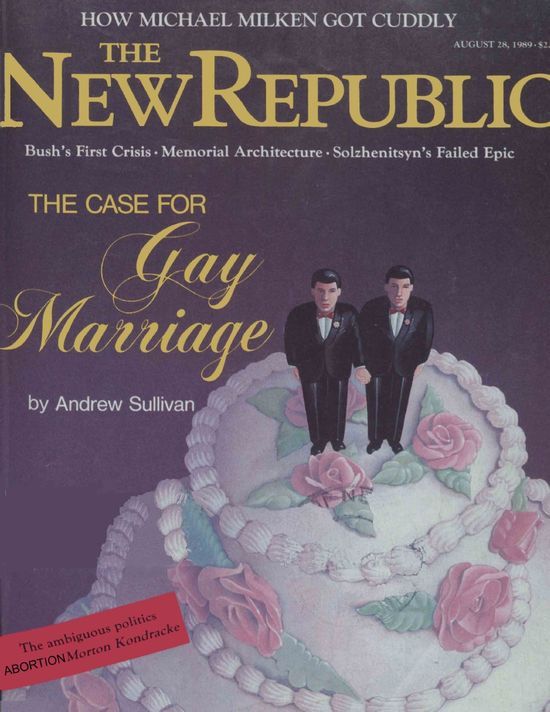
Twenty-two years ago, Andrew Sullivan wrote the cover story for The New Republic, arguing for gay marriage. TNR is reprinting the original story, “Here Comes the Groom: A Conservative Case for Gay Marriage,” published in August of 1989. Sullivan takes an interesting approach (a socially conservative one) to arguing for gay marriage. Many who agree with his conclusions would probably disagree with how he got there. It’s definitely, however, this morning’s read.
…gay marriage could both avoid a lot of tortured families and create the possibility for many happier ones. It is not, in short a denial of family values. It is an extension of them.
Great idea. Great way to celebrate a major victory in this fight. Andy was totally ahead of the curve on this issue — by a couple of decades, as it turns out.
Posted by ShortFormBlog • Permalink