Read a little. Learn a lot. • Now Mullenweg-free! • Since 2009
☰

Tag: Fukushima

115 posts

Mar 15 2011W

Politics: The Mark 1 Nuclear Reactor's legacy of safety concerns

  • Unheeded warning of the day: The Mark 1 Nuclear Reactor's containment system, produced by General Electric in the 1960s, has been the subject of pointed safety concerns for nearly forty years. Stephen Hanauer, then an official with the Atomic Energy Commission, wrote in 1972 that the Mark 1's pressure systems posed an unacceptable risk of hydrogen explosion, and should be discontinued. You probably know where this is going- the Fukushima Plant in Japan uses the Mark 1, as do twenty-three American reactors. A critical difference between these and the more highly regarded pressurized water reactors? The Mark 1's containment vessel is "physically less robust." So, because apparently this needs saying, don't skimp on nuclear reactor containment. source

Posted by Chris Tognotti • Permalink
Mar 15 2011W

World: Tracking radiation levels in Tokyo: A minorly scary photo

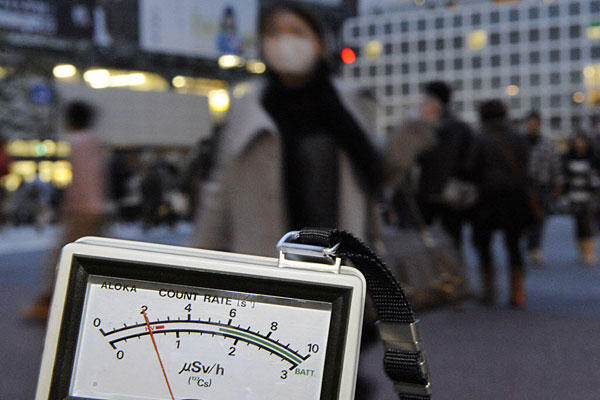
  • Photo of the day: "A radiation detector marks 0.6 micro-sieverts, exceeding normal levels Tuesday, near Shibuya train station in Tokyo. Concern over possible radiation exposure has increased after a fourth reactor released radiation, Tuesday." To compare – this level is higher than average, but only a tiny percentage of what's happening at the plant. 1,000 micro-sieverts per hour equals one milli-sievert per hour. So this is high, but still minor. (Kyodo News/AP) source

Posted by Ernie Smith • Permalink

Mar 15 2011t

If all workers do in fact leave the plant, the nuclear fuel in all three reactors is likely to melt down…

If all workers do in fact leave the plant, the nuclear fuel in all three reactors is likely to melt down, which would lead to wholesale releases of radioactive material — by far the largest accident of its kind since the Chernobyl disaster 25 years ago.

— The New York Times • In this article about the possibility of Fukushima workers leaving the plant. Scary, yes, but we refer you to this link we posted earlier. It could be bad, but it won’t be kill-us-all bad.

Posted by ShortFormBlog • Permalink

Mar 15 2011t

Even 100 milisieverts would be enough to cause infertility in exposed males; at 500 or more the lymphocytes…

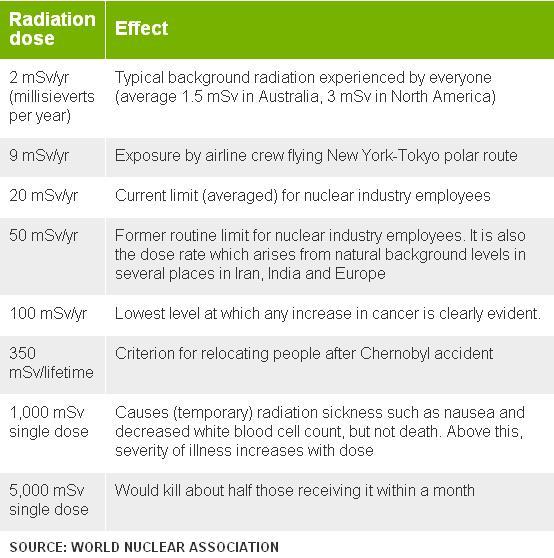
Even 100 milisieverts would be enough to cause infertility in exposed males; at 500 or more the lymphocytes in the blood will decrease. Clearly the 50 workers who remain will have protective gear. But without it, with that level of exposure, your health could be harmed in a very short time.

— An expert from NHK • Explaining the health effects of getting nailed by 400 milli-sieverts per hour of radiation. It’s a high level that can lead to illness.

Posted by ShortFormBlog • Permalink

Mar 15 2011t

Graphic: How much radiation is being released by Japan’s runaway reactors? Japan continues to struggle to…

nationalpost:

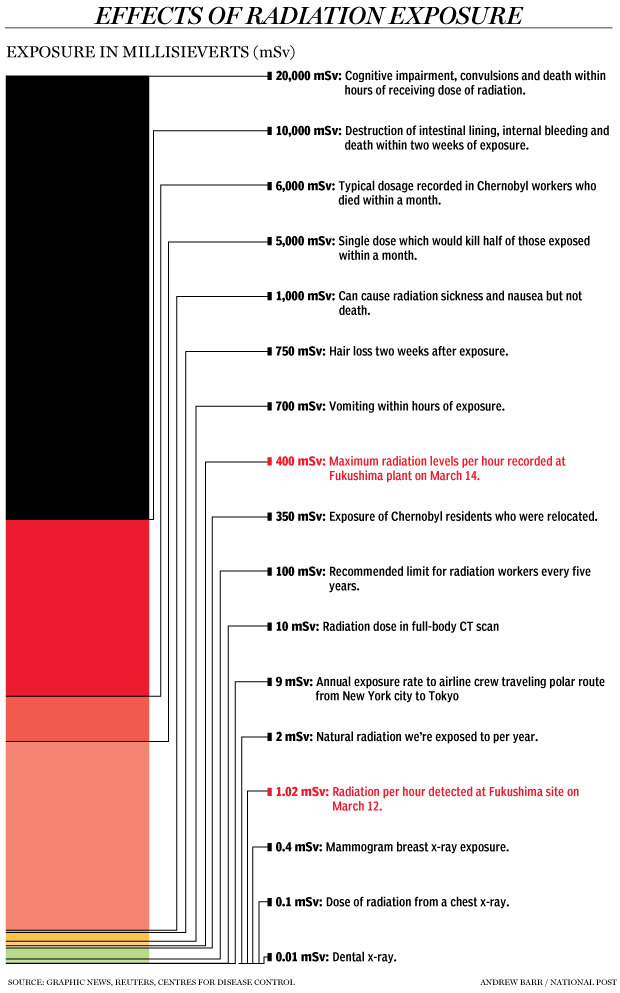
Graphic: How much radiation is being released by Japan’s runaway reactors?
Japan continues to struggle to control a number of nuclear reactors whose cooling systems were damaged in last week’s devastating quake and tsunami. But just how much radiation is being pumped out by the malfunctioning reactors in Japan? The graphic above puts the numbers in context.

Japan Earthquake Graphic: Monitoring a meltdown
Photos: Crisis deepens in Japan
Japan Earthquake Graphic: The battered coastline

Graphic: Nuclear plant blasts
Graphic: Meltdown fears: Inside a boiling water reactor
Graphic: Disaster in Japan ­ The Aftermath
Videos of Japan’s earthquake and tsunami

This graphic does a good job explaining what’s happening in Japan, and why it’s scary, but not as scary as it looks.

Posted by ShortFormBlog • Permalink

Mar 14 2011W

World: UPDATE: What does "400 times annual legal limit" mean?

  • 400 the amount of radiation in the air, in milli-sieverts per hour, according to the given estimate
  • 40 the amount of radiation that is, in roentgen per hour – which, don't get us wrong, is very high
  • 30k the amount of radiation in Chernnobyl had – which Fukushima doesn't touch source
  • » This is an extremely large jump: One milli-sievert per hour is the legal annual limit for radiation in a year. Our earlier estimate showed a level of 8,217 micro-sieverts. 1,000 micro-sieverts equals 1 milli-sievert. So we went from 8,000 to 400,000 in a couple of hours. This is still no Chernobyl, but this is a huge jump. If it jumps to 1,000,000 micro-sieverts, it leads to radiation sickness – and then we're in trouble.

Posted by Ernie Smith • Permalink