Read a little. Learn a lot. • Now Mullenweg-free! • Since 2009
☰

Tag: Fukushima

115 posts

Apr 19 2011t

More on nuclear energy and whether it's safe

p53angel asks: Hey guys! So first, a little background, I’m a 2nd year microbio major at Ohio State U (basically, I’m into science and what we can use it for). However, and a big however, looking at what’s happened in Chernobyl, Brazil, and recently Japan (heck even the “demon core,”) I’m beginning to wonder if we haven’t bitten off more than we can chew with nuclear power. Before the Sendai earthquake, I was pretty convinced that nuclear power was pretty safe because we understood it, and took tons of precautions with it, but I’m having doubts now; and it was a magic solution to the fossil fuels dilemma. But what about all the toxic waste we don’t really have a way of getting rid of? What about when it goes wrong, something completely out of our control (like an earthquake and tsunami.) It’s like the Jurassic Park question: we can, but should we? In this case, are we ready to play with this fire? I mean, areas in Ukraine are never going to be habitable again. That’s pretty serious stuff. (and, granted, Fukushima is not like that, and Chernobyl was 30 years ago in the Soviet Union). Still. The question stands; Should we use nuclear power on such a massive scale when we really can’t control what we’re doing to our environment/ourselves? Just my thoughts, I’m curious about what you guys have to say. Thanks!

  • » We say: Without digging too far into all this, I guess that you have to weigh the risk/reward here. That’s ultimately our feeling on the whole mess, and something we’ve said in the past about this matter. The thing is, even with the environmental issues that have come up of late, it’s still far safer than many forms of energy. And even ones considered “safe” have their downsides. And to put into clear terms: I don’t think anyone’s arguing about making nuclear our only energy source. Rather, I think that, because the damage caused when nuclear energy screws up is so acute (thereby lending itself to media frenzy), it leads to the type of overreaction that ultimately hurts further research and discourages figuring out how to make it safer. Coal and oil make smog and are growing more limited by the year; solar is an intermittent resource without continuous availability; wind makes noise and has many of the same problems as solar; biomass cuts into our food supply; fracking natural gas can damage the water supply. And well, nuclear energy occasionally causes fluke accidents like Fukushima and has not-insignificant waste issues. The question is, is there a way avoid or limit these flaws, with any of these sources?

Posted by ShortFormBlog • Permalink

Apr 18 2011W

World: Poll: Japanese people want PM Naoto Kan to step down over quake

  • 70% of those polled think Naoto Kan should step down source
  • » A revolving door: Were Naoto Kan to step down, he'd be the fifth prime minister in a row to step down or lose an election after a year or less on the job. From Shinzō Abe to Yasuo Fukuda to Taro Aso and Yukio Hatoyama, the job has not proven a stable one. And Kan is nearing his one-year mark in the position. But none of his recent predecessors had to deal with a crisis nearly as crazy as the double-teaming of Fukushima and the Sendai quake.

Posted by Ernie Smith • Permalink

Apr 15 2011W

World: TEPCO: Paying displaced residents … but cutting our workforce

  • 50k the number of households near Fukushima eligible for payments from TEPCO
  • ¥1M the amount that could be offered to each household — roughy $12,000 total
  • ¥50B the amount that would be offered based on that assessment —around $600 million source
  • » Raising money by cutting jobs? While Company President Masataka Shimizu didn't speculate on what the final amount might be, he did point out a possible way to pay for said payments to local residents. They're looking at cutting jobs to streamline operations and pay the people affected by the accident. "We must pursue rationalization that regards nothing as sacred," he said. "We will make utmost efforts to raise funds." Now, maybe we're wrong here, but doesn't it seem weird to cut employees after a massive disaster that had at least some root in safety issues?

Posted by Ernie Smith • Permalink

Apr 12 2011W

World: Experts: Forget the scale. Fukushima isn't as bad as Chernobyl.

Fukushima was not as bad as Chernobyl. If Fukushima is a level 7 accident, maybe we need to go back and recalibrate the scale and add a level 8 or 9.

University of Southern California Prof. Najmedin Meshkati • Expressing frustration that Fukushima was rated on the same level as Chernobyl, a 7 on the nuclear accident scale. Japan's own Nuclear and Industrial Safety Agency says it's only 10 percent as bad as Chernobyl. On top of that, nobody has died from the post-quakeaccident and 21 workers have gotten minor illnesses from radiation. At Chernobyl, a number of people died — dozens immediately and many more from cancer years later. If we're somehow putting Chernobyl on the same level as Fukushima, something's wrong about the levels. source

Posted by Ernie Smith • Permalink

Apr 10 2011W

World: Fukushima now has its own unmanned remote-controlled mascot

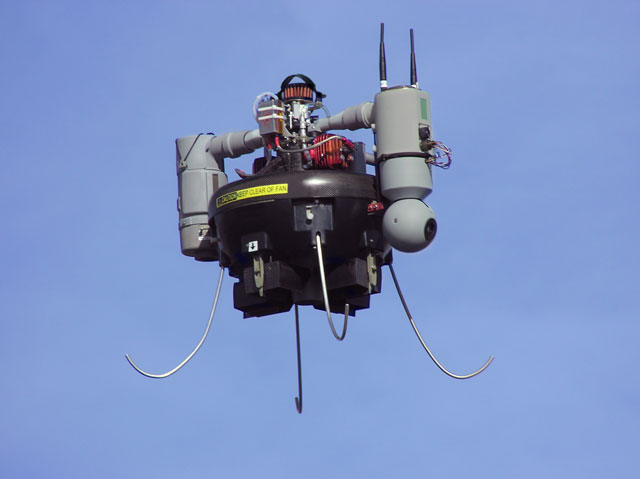
  • This little guy right here? He's a T-Hawk drone, a little unmanned remote-controlled flying thingamajig, built by Honeywell, that engineers used to get an up-close view of the situation inside the damaged Fukushima reactors. It can shoot both normal pictures as well as infrared shots. Plus, if you own one of these, you'll be the coolest kid on your block. Engineers say that they'll have some photos to share with the world on Monday. But we want them now! source

Posted by Ernie Smith • Permalink

Apr 7 2011t

Tsunami warning lifted after 7.4 quake rattles Japan TOKYO — A strong earthquake of magnitude 7.4 shook the…

nationalpost:

Tsunami warning lifted after 7.4 quake rattles Japan
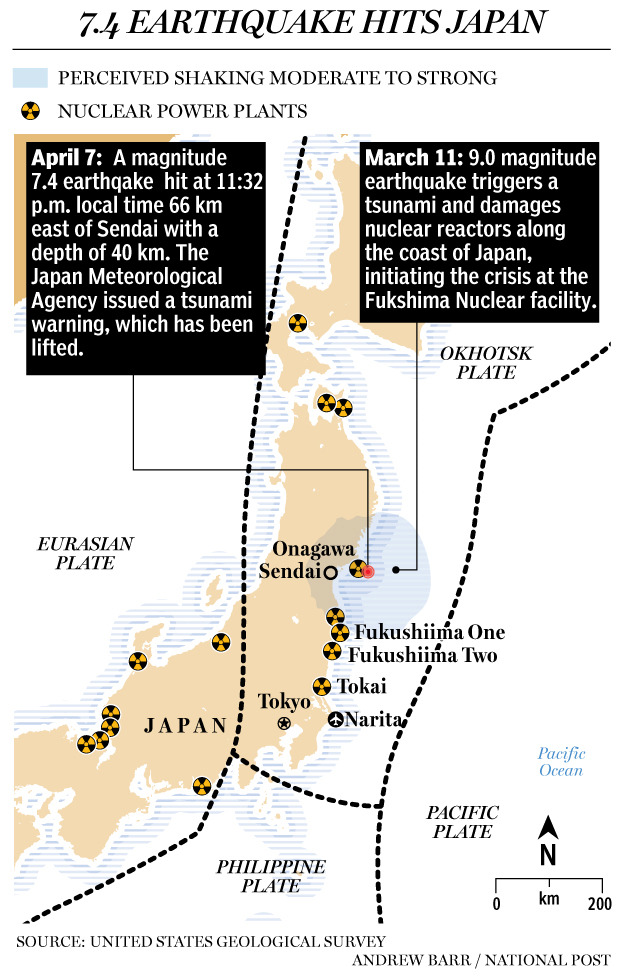
TOKYO — A strong earthquake of magnitude 7.4 shook the northeast of Japan late on Thursday, and a tsunami warning was issued for the coast already devastated by last month’s massive quake and the tsunami that crippled a nuclear power plant.

No damage from Thursday’s quake was detected at the plant and NHK said workers had been evacuated without reports of any injuries.

Japan is struggling to bring the Fukushima Daiichi plant under control after the March 11 quake and tsnumai, which killed, or left missing, about 28,000 people.

You guys work quick.

Posted by ShortFormBlog • Permalink