Read a little. Learn a lot. • Now Mullenweg-free! • Since 2009
☰

Tag: data

34 posts

Aug182013t

…the first unusually hot day of the year correlates with a surge in air conditioner sales in Chicago, but not…

…the first unusually hot day of the year correlates with a surge in air conditioner sales in Chicago, but not in muggy Atlanta—there, people wait through an average of two hot days before heading to the appliance store. When the crafts retailer Michaels approached the Weather Channel about advertising on rainy days—when craft projects are popular—the Weather Channel found Michaels’ sales increased not on actual rainy days, but instead when an extended forecast predicted rain within the next three days.

— The Weather Channel knows what you want to buy… (via fastcompany)

meb says: Hide yo kids, hide yo wife: no one is safe from the tag team of Mother Nature and Big Data.

(via maneatingbadger)

If only The Weather Channel was smart enough with their big data to, you know, change the weather.

Posted by Ernie Smith • Permalink

Aug52013t

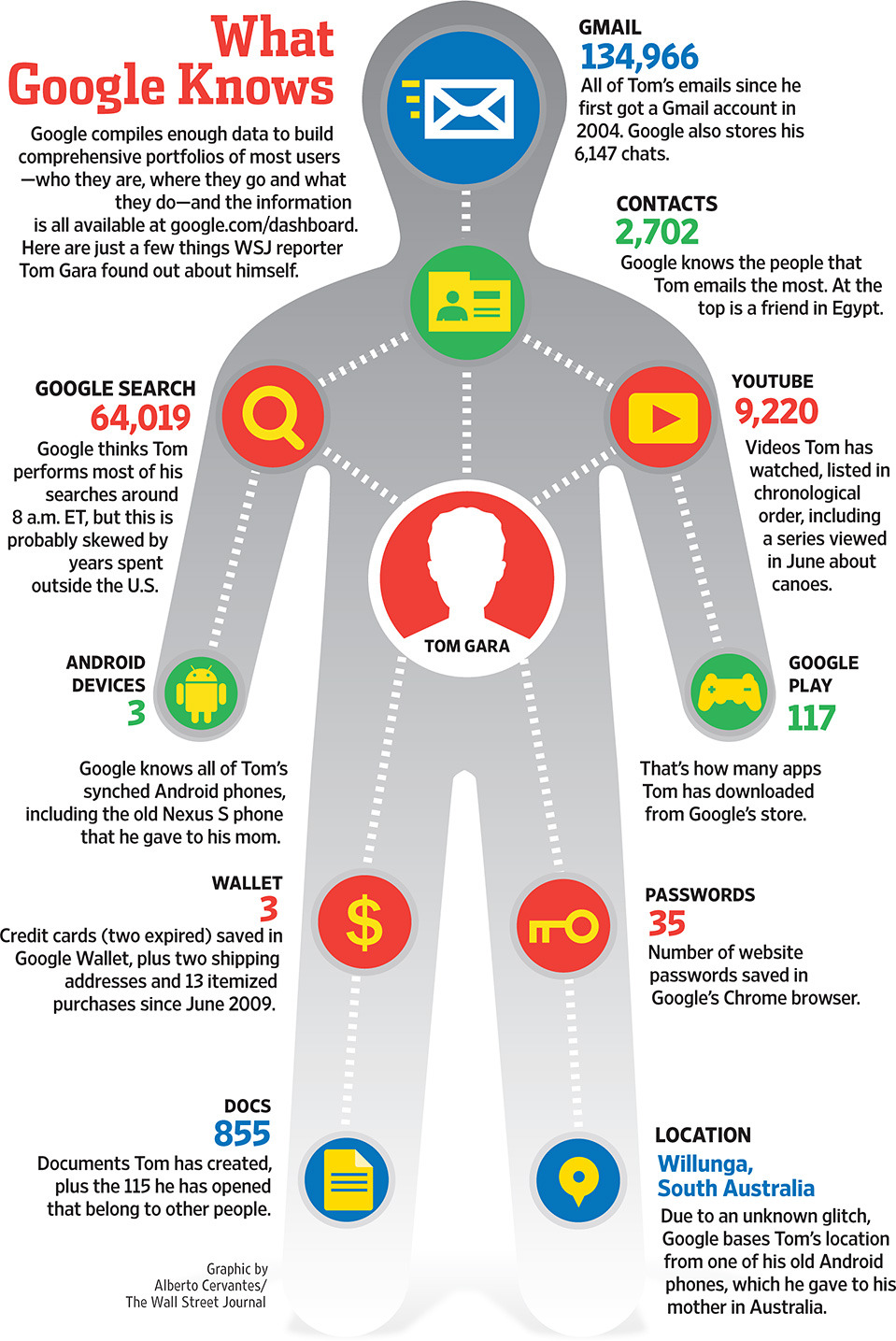
What Google Knows

futurejournalismproject:

What Google Knows

Via the Wall Street Journal:

Every hour, an active Google user can generate hundreds or thousands of data “events" that Google stores in its computers, said people familiar with its data-gathering process.

These include when people use Google’s array of Web and mobile-device services, which have long collected information about what individuals are privately searching for on the Web. It includes the videos they watch on YouTube, which gets more than one billion visitors a month; phone calls they’ve made using Google Voice and through nearly one billion Google-powered Android smartphones; and messages they send via Android phones or through Gmail, which has more than 425 million users.

If a user signs in to his or her Google account to use Gmail and other services, the information collected grows and is connected to the name associated with the account. Google can log information about the addresses of websites that person visits after doing Google searches.

Even if the person visits sites without first searching for them on Google, the company can collect many of the website addresses people using Google’s Chrome Web browser or if they visit one of millions of sites that have pieces of Google code, such as its “+1” button, installed.

Android-based phones and Google Maps can collect information about people’s location over time. Google also has credit-card information for more than 200 million Android-device owners who have purchased mobile apps, digital books or music, said a person with direct knowledge of the matter.

Somewhat related bonus: The Public-Private Surveillance Partnership, via Bloomberg.

Image: What Google Knows, via the Wall Street Journal. Select to embiggen.

What Google knows about you could fill a data center.

Posted by Ernie Smith • Permalink

Tags for this post

Aug42013t

[T]wo months ago, I contacted some colleagues at NSA. We had a little meeting, and the question came up, was…

[T]wo months ago, I contacted some colleagues at NSA. We had a little meeting, and the question came up, was NSA collecting everything now? Because we kind of figured that was the goal all along. And the answer came back. It was, yes, they are collecting everything, contents word for word, everything of every domestic communication in this country.

— Russel Tice, former NSA Analyst. (via letterstomycountry)

If these claims are correct, that expands the scope from “metadata” considerably.

Posted by Ernie Smith • Permalink

Sep142011W

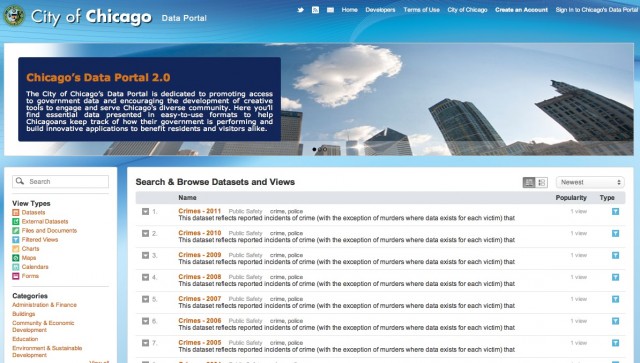
U.S.: A win for transparency: Chicago throws its crime records online

  • OK, this isn't nearly as sexy as, say, EveryBlock or the Sunlight Foundation. But throwing records of the past decade of crimes online represents a new era of transparency for a famously-guarded city. Or as Brett Goldstein, the city's chief data officer and former police officer, puts it: “It's a whole new era of openness and transparency. You determine your own analysis.” And on top of that, EveryBlock could totally plug into this database if they wanted to. Some have been a bit critical of what isn't in the data — race, for example — but many analysts note that this is more than a lot of cities offer. You done good, Rahm! source

Posted by Ernie Smith • Permalink

Feb192011t

Where the public gets its news The internet is slowly closing in on television as Americans’ main source of…

sunfoundation:

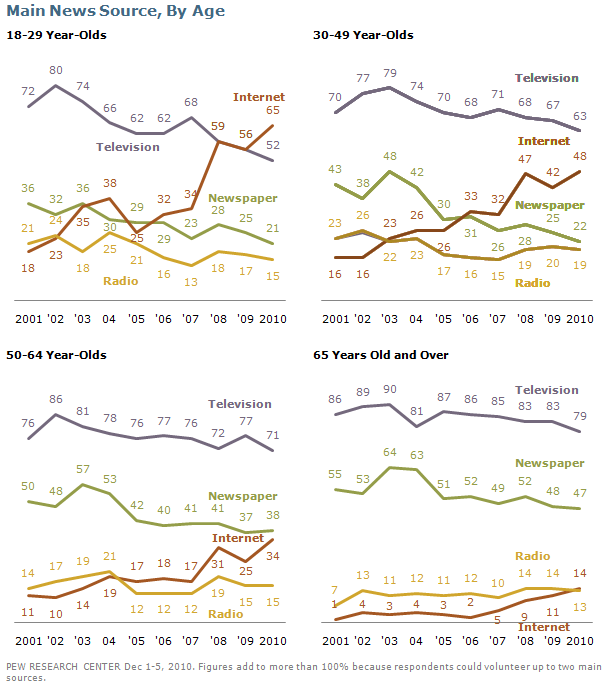
Where the public gets its news

The internet is slowly closing in on television as Americans’ main source of national and international news. Currently, 41% say they get most of their news about national and international news from the internet, which is little changed over the past two years but up 17 points since 2007. Television remains the most widely used source for national and international news – 66% of Americans say it is their main source of news – but that is down from 74% three years ago and 82% as recently as 2002.

So, the Sunlight Foundation has a Tumblr. You should follow. They’re one of the groups really, truly serious about transparency in journalism, and in providing tools for journalists to more easily parse the confusing data coming out of DC and elsewhere. We’re fans. :) You should be too.

Posted by ShortFormBlog • Permalink

Aug132010W

Politics: On Wikileaks, Sarah Palin does what she does best: Spouts off

Wikileaks staff-whomever's calling the shots there is unconscionably aiding/abetting the enemy;don't contribute to this. Speak out. Do right

A tweet from @SarahPalinUSA • Taking on Wikileaks' decision to release more Afghan War documents. Despite the fact that Wikileaks is an organization with no U.S. ties that attempts to operate outside of any government's control, she invokes freedom of the press in criticizing Wikileaks: "Free press protection gives no license to aid enemy," she writes. Odds that someone at Wikileaks will heed this: Zero. source

Posted by Ernie Smith • Permalink