Read a little. Learn a lot. • Now Mullenweg-free! • Since 2009
☰

Tag: anthony kennedy

6 posts

Jun 30 2013t

They lost in the district court, they lost in the court of appeals and they’ve lost in the United States…

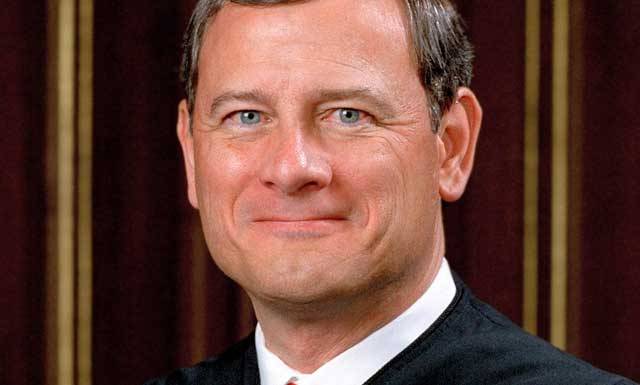
They lost in the district court, they lost in the court of appeals and they’ve lost in the United States Supreme Court. And I think we’ll be better off in this country if we stopped doing this sort of thing that is divisive and is hurting people who live next door, who work for us, who are our cousins and brothers and sisters.

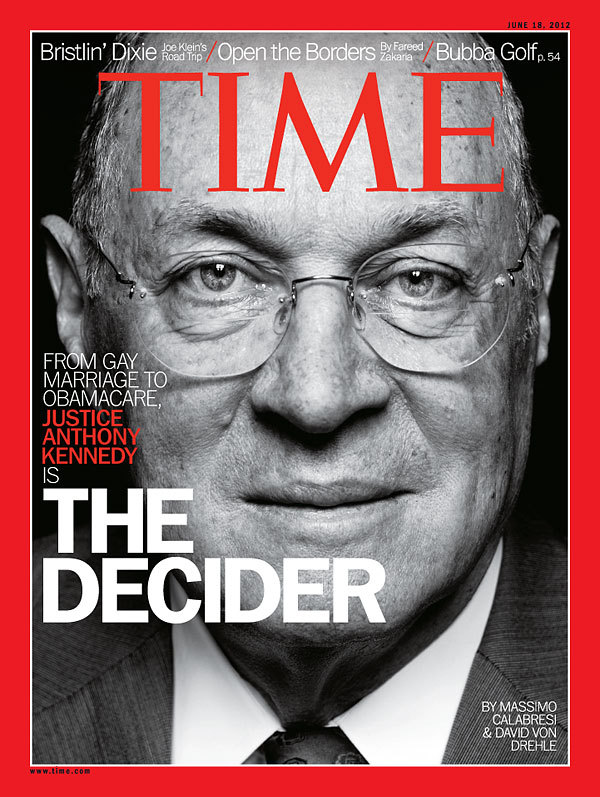
— Former Solicitor General Ted Olson • Discussing an effort by opponents of same-sex marriage to stop the issuance of marriage licenses in the state of California, which started back up on Friday. The move was quickly batted away, without comment, by Supreme Court Justice Anthony Kennedy on Sunday, though opponents could try asking another Supreme Court justice to consider the move. Olson argued in favor of proponents of same-sex marriage in court.
Posted by Ernie Smith • Permalink

Jul 9 2012t

Stepping back and looking in wider context

Supreme Court flip-flops: Health care wasn’t the first. It won’t be the last.

  • Stepping back and looking in wider context: Conservatives were very upset with Chief Justice John Roberts last month when he provided the tie-breaking vote to uphold the Affordable Care Act. That anger grew exponentially when reports surfaced that Roberts had originally voted to overturn the law, but then switched his vote to side with the court’s liberals. Why did Roberts flip-flop? How common is vote switching on the Supreme Court? And how often has a single justice’s indecisiveness significantly affected the law of the land? ShortFormBlog reports. (Read more after the jump.)

Preface: How justices think

These are not nine all-wise people who retire to a secret room and come up with the answer that nobody else can figure out. They’re nine human beings who are trying to wrestle with the problem the way the rest of us do.

Former SCOTUS clerk Bill McDaniel • Discussing the nature of Supreme Court justices changing their minds. The Court has a very heavy case-load in a given year, and the June period is especially heavy. WIth much wheeling and dealing taking place behind the scene, especially among moderates, it’s very likely that nobody’s mind is made up on any individual case immediately.

Some notable historical swaps

  • 11 decision-changing swaps made between 1991 and 1994 alone
  • Abortion rights In 1992, a last-minute vote switch prevented the overturning of Roe v. Wade. A case involving a highly-restrictive Pennsylvania abortion law made its way to the Supreme Court. Advocates of the legislation argued that, while the law did indeed violate Roe, Roe itselfwas unconstitutional, and should thus be overturned. During the first vote, the court ruled 5-4 in favor of overturning Roe …but then, at the last minute, Justice Kennedy changed his mind, voting with the liberal wing of the court instead.
  • VCRs (seriously) Do VHS machines violate copyright law? That was the question before the court in 1983, when the entertainment industry argued that, because the devices enable people to record and pirate copyrighted material, they should be outlawed. The initial vote was 5-4 against the video cassette recorder, but Justice Sandra Day O’Conner switched her vote after the majority opinion was written, thus protecting the rights of future nine-year-olds to tape The Mighty Ducks when it came on TV. A single tear for Emilio Estevez.
  • Homosexuality In 1986, the court debated whether or not anti-sodomy laws were constitutional. Justice Lewis Powell had originally agreed that “homosexual acts,” as they were ominously referred to back then, were permissible in the privacy of one’s home, but then changed his mind, keeping the ban on sodomy in place. This decision was ultimately less influential than Kennedy’s vote-switch, however: Three years later, the court overturned the ruling, and now gay sex is constitutionally-protected.

Reasons for vote swapping

  • To put it simply: It’s not always what you think it might be. There are several reasons a justice might change their vote midway through the process (although of course, plebes like us will never know for sure):
  • image Many people suspect that Roberts switched his vote to protect the court from being seen as an overly-partisan institution — an understandable fear, considering that the court had recently made high-profile decisions that proved very unpopular, such as Citizens United.
  • roots In the sodomy case, Powell’s decision was reportedly influenced by the fact that the plaintiff in the suit, a gay bartender who had been “caught” having sex with another man in his own bedroom, hadn’t actually been prosecuted, but rather filed a civil suit against the state.
  • effects The VHS case is an interesting one: While O’Connor agreed that VHS violated copyright law, the majority opinion also overturned a lower court’s ruling (on a different, but related question) that she agreed with. Apparently, it was more important to her to uphold that decision.
  • » Something to keep in mind: Finally, when discussing the ACA ruling, it’s important to keep some perspective. A lot has been made about how the amount of detail that leaked about the court’s internal deliberations was unprecedented — but that’s what they said in 1986 about the Powell case. (“Such information rarely reaches the public,” the LA Times wrote of the leak.) And the theory that Roberts switched his vote to preserve the integrity of the court as an institution? That’s what they said about Kennedy with regard to the abortion case. In short, while the behind-the-scenes maneuvering of the various justices is no doubt fascinating, the process by which the court upheld the ACA wasn’t as anomalous as a lot of the reporting is suggesting.

Seth Millstein is a writer for ShortFormBlog and The Daily. Reach him at @SethMillstein.

Posted by ShortFormBlog • Permalink

Feb 8 2012W

Politics: "Judge Reinhardt wrote his opinion for an audience of one: Justice Kennedy"

Judge Reinhardt does not hold there is a right to same sex marriage, only that CA had no rational reason to take away the label of marriage for use by gay and lesbian couples after the state had had already given it. By crafting the argument in this way, and making the case that the only reason for passing Prop. 8 was anti-gay animus, Judge Reinhardt has given Justice Kennedy a way to decide the case without embracing a major holding recognizing a right to same sex marriage generally.

Rick Hansen • Regarding the nature of the 9th Circuit Court's ruling on Proposition 8 earlier today. Hansen is suggesting that Judge Reinhardt cast the ruling in an intentionally narrow sense so as to make it easier for Justice Kennedy, the Supreme Court's most notorious swing voter, to uphold it on appeal. The distinction we made earlier could thus affect the future of gay marriage in California. In short, court rulings often possess a strategic, as well as a legal, foundation. source

Posted by Seth Millstein • Permalink

Apr 21 2010W

Politics: The Supreme Court is over its head when it comes to sexting

Does it say: ‘Your call is important to us, and we will get back to you?’

Supreme Court Justice Anthony Kennedy • Trying to wrap his head around the idea of sending a text message, as part of a case on sexting involving the . He's not the only justice who doesn't understand this newfangled technology. Fellow Justice Antonin Scalia showed off the fact that he's old by saying this gem: “Could [the plaintiff, Sergeant Jeff] Quon print these spicy little conversations and send them to his buddies?” Because cell phones have printers. These people, by the way, are setting the law of the land, yet they don't know what the heck they're talking about. Should we be nervous? source

Posted by Ernie Smith • Permalink

Jan 21 2010W

U.S.: Confused by today's Supreme Court decision? Here's an explainer

  • Citizens United v. Federal Election Commission is an important case. This may be one of the most important cases that we see in our lifetimes, because it'll have a direct effect on who gets elected, what laws get passed, and who can say what during an election. It's such an important case that the dissenting opinion is as important as the decision itself. So, here goes.

The case at hand:

  • It was about a movie that trashed Hillary Clinton. The producers of "Hillary the Movie," which was designed by a highly-funded conservative nonprofit political organization to smear the then-presidential candidate, wanted to show the film during the 2008 primaries, but couldn't because of campaign finance laws (most notably, one passed by John McCain and Russ Feingold back in 2002). Citizens United v. Federal Election Commission had a narrow scope, and dealt with a small part of campaign finance law.

Key points in campaign finance reform:

  • 1971 The Federal Election Campaign Act passes, requiring campaigns to report hard-money contributors to their campaigns, but leaving the door for "soft money" contributions wide open.
  • 1990 Austin v. Michigan Chamber of Commerce was decided by the Supreme Court, a key decision which upheld the longstanding restriction on corporate speech that could influence elections.
  • 2002 The McCain-Feingold Act passed, which limited so-called "soft money" contributions and limited the broadcast of corporate and non-profit political messages near elections, passes.

Main points of the majority opinion:

  • Chilling political speech Anthony Kennedy's opinion argues that the "speech that is central to the meaning and purpose of the First Amendment" is getting frozen with current campaign finance laws, despite their good intentions.
  • Broad, not narrow Instead of focusing on the narrow view of Citizens United, the court decided to widely interpret the law, rendering nearly 100 years of campaign finance laws and judicial rulings useless.
  • Corporate ad crazy The court decided to overturn some of the most important elements of Austin and McCain-Feingold, so now we can be barraged with annoying political ads all the way up to election day!

Why John Paul Stevens is awesome:

  • 89the age of John Paul Stevens, the Supreme Court's oldest justice and also its most liberal
  • 90 number of pages of pure, unadulterated dissent from Johnny boy; not bad bro source

The main point of his (mostly) dissenting opinion:

The Court’s ruling threatens to undermine the integrity of elected institutions across the Nation. The path it has taken to reach its outcome will, I fear, do damage to this institution.

John Paul Stevens • In his lengthy, massive dissenting opinion in Citizens United v. Federal Election Commission, probably the most dramatic decision the court has made in at least a decade, due to the impact it has on the electoral process. He apologizes for the length for the document before leaping in. But he really had to. This thing is huge – it's nearly twice the size of the opinion it refutes. source

What does all this mean for you, ShortFormBlog fan?

  • one Corporate influence is once again going to be a major factor in political campaigns. And they won't have any limits on their speech.
  • two You're going see more ads on TV in the days leading up to major elections. The ads could be from corporations or nonprofits.
  • three If Fred Thompson runs for president again, TNT can air repeats of his episodes of "Law and Order" all the way up until election day. source

Posted by Ernie Smith • Permalink