Read a little. Learn a lot. • Now Mullenweg-free! • Since 2009
☰

Tag: who

16 posts

Oct262013t

World Health Organization: Polio on the rise in war-torn Syria

  • 22 the number of people—mostly young children—that have contracted polio in Syria, according to the World Health Organization. It’d be the first outbreak in the country in 14 years, and as many as 100,000 children are susceptible to the disease in the highly-contested Deir Ezzor province alone. Due to the poor living conditions, refugees are also susceptible to the disease as well.

Posted by Ernie Smith • Permalink

Aug32012t

The World Health Organization says that they've contained the Ebola outbreak in Uganda:

Joaquim Saweka, the WHO representative in Uganda, told reporters Friday that everyone known to have had contact with Ebola victims has been isolated — a total of 176 people.

Ebola was confirmed in Uganda on July 28, several days after the deadly disease had started killing villagers in a remote corner of western Uganda.

At least 16 Ugandans have died so far, and officials say the 176 are being closely monitored for signs and symptoms of the disease.

The disease was initially tied to a single family, who contracted the disease at a funeral.

Posted by ShortFormBlog • Permalink

Nov142011W

World: Just in case we needed another reminder to exercise once in a while

  • 552 million people could have diabetes by the year 2030 source
  • » That's 1 in 10 people worldwide. The World Health Organization says that the rise in diabetic adults will most likely be due to an aging world population, not the increasing rate of obesity. Most cases are Type 2 and come from "weight gain and a sedentary lifestyle." Count this number as inspiration for 2012's resolutions.

Posted by Sami Main • Permalink

May312011W

Tech: Yeah, that's scary: WHO calls cell phones "carcinogenic hazard"

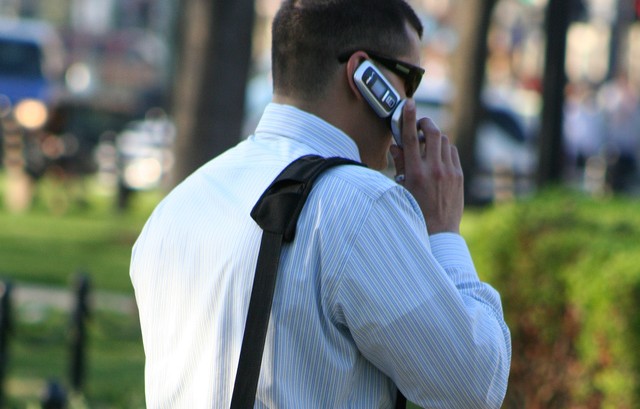
  • The World Health Organization has a new study out that says cell phones are possibly carcinogenic to humans — they're in the same class as lead, engine exhaust and chloroform. They based their findings on a number of peer-reviewed studies on cell-phone safety. Long-term effects from cell phone radiation remain unknown, but research suggests that cell phone radiation is non-ionizing — similar to a very low-powered microwave. "What microwave radiation does in most simplistic terms is similar to what happens to food in microwaves, essentially cooking the brain," notes Dr. Keith Black, who leads the neurology department at Cedars-Sinai Medical Center in Los Angeles. He notes that beyond brain cancer, this could also cause memory problems because we hold cell phones close to the memory temporal lobes. Looks like it's time to break out the earbuds. (photo via ElvertBarnes' Flickr page) source

Posted by Justin Jones • Permalink

May312011W

World: Smokers of the world, quit! Today is "World No Tobacco Day"

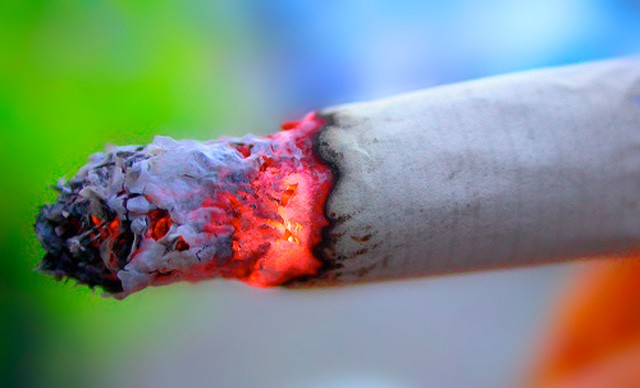
  • Never a bad time: The new, concerning report on cell phone use isn't the only place you'll hear the word "carcinogenic" being used today; May 31st is World No Tobacco Day, a cause that could probably benefit from a slightly less clunky title. The World Health Organization estimates that some 6 million people die each year from tobacco-related illness. Anti-smoking measures within the U.S. have blossomed over the last decade, with smoking bans in public places, restaurants, and bars becoming more and more prevalent across the states — check here for a list of smoking bans applicable in your area. source

Posted by Chris Tognotti • Permalink

May172011W

World: Will the U.S. destroy its stockpile of the smallpox virus?

  • NO they'll keep the smallpox, due to fear of bioterrorism source
  • » Smallpox keeps on kicking: Presently the U.S. has 451 samples of the smallpox virus, under the care of the Center for Disease Control (CDC), while Russia has just 120 in storage in a town somewhere in Siberia. Some would like to see these samples destroyed outright, in a bid to eradicate the virus from the world altogether. Dr. Donald Henderson, for one, who helped with in eradication efforts throughout the 70s, argues in favor of destroying the samples, but Kathleen Sibelius, Secretary of Health and Human Services, disagrees, saying that destroying the samples would be a "symbolic" act that would make it harder to vaccinate a population in the event of a terrorist attack utilizing the highly lethal virus.

Posted by Chris Tognotti • Permalink

Mar212011W

World: Food-borne radiation detection prompts call for ban, general fears

  • worrisomeRadiation has been detected in milk and spinach from areas surrounding the Fukushima Daiichi nuclear plant, causing World Health Organization officials to call for a ban on food coming from that area.
  • zealous An upscale restaurant in Taiwan known as Peony, which specializes in Japanese cuisine, has gone to some length to prove their culinary purity: diners are offered radiation meters to check their food. source

Posted by Chris Tognotti • Permalink

Jun42010W

World: Did the World Health Organization overhype swine flu?

  • Two new reports suggest they did. Last year, swine flu, or H1N1, was treated as the second coming of the black plague. A couple of new reports suggest the people making the recommendations to WHO had ties to the drug industry, and those recommendations led to governments wasting millions of dollars on H1N1 vaccines that would never actually get used. "We are left wondering whether major public health organizations are able to effectively manage the conflicts of interest that are inherent in medical science," one report says. So, who's the swine now? source

Posted by Ernie Smith • Permalink