
Read a little. Learn a lot. • Now Mullenweg-free! • Since 2009
☰

Tag: regulation

41 posts

Nov12013t

The killer of free market innovation is regulation.

nprfreshair:

nprbooks:

Paris is known and loved for its independent bookstores full of rare, dog-eared novels and cozy nooks ripe for l’amour. But how have so many of them survived while their U.S. equivalents crumble under the ubiquity of Amazon and big box bookstores?

Eleanor Beardsley, reporting for All Things Considered, says French law may be responsible: Book discounts of more than 5 percent are illegal and a new bill, pending Senate approval, would prevent Amazon from offering both a discount and free shipping.

For more on how the book industry has changed since the days of You’ve Got Mail, you can read or listen to the full story here.

(Photo: Christine Zenino/Flickr)

Will discounts on Amazon be the end of the independent bookstores? Hear more about Amazon’s business strategy here.

The killer of free market innovation is regulation. This situation shows two economic forces fighting against one another. Which one’s better and which one’s worse?
Posted by Ernie Smith • Permalink

Aug152012t

British bank settles with New York over money-laundering tied to Iran

  • $250 billion the amount Standard Chartered Bank is accused of helping the Iranian government launder from the U.S. between 2001 and 2007
  • $350 million the amount the company paid to help get that situation settled so that they would could get New York’s financial regulator off their back source
  • » Why did they settle? Well, to put it simply, it was starting to turn into a PR crisis. While they disagreed with the state of New York’s portrayal of the situation, the regulatory body had some pretty decent ammo against the bank, including an exec saying this: "You (expletive) Americans. Who are you to tell us, the rest of the world, that we’re not going to deal with Iranians.“ (There are U.S. sanctions on Iran.) The bank will take corrective measures to prevent this from happening again. (EDIT: As the WSJ’s Samuel Rubenfeld points out below, the deal does not preclude a settlement from federal regulatory bodies. That’ll happen separately.)

Posted by ShortFormBlog • Permalink

Aug292011W

Politics: House Republicans plot major deregulatory push

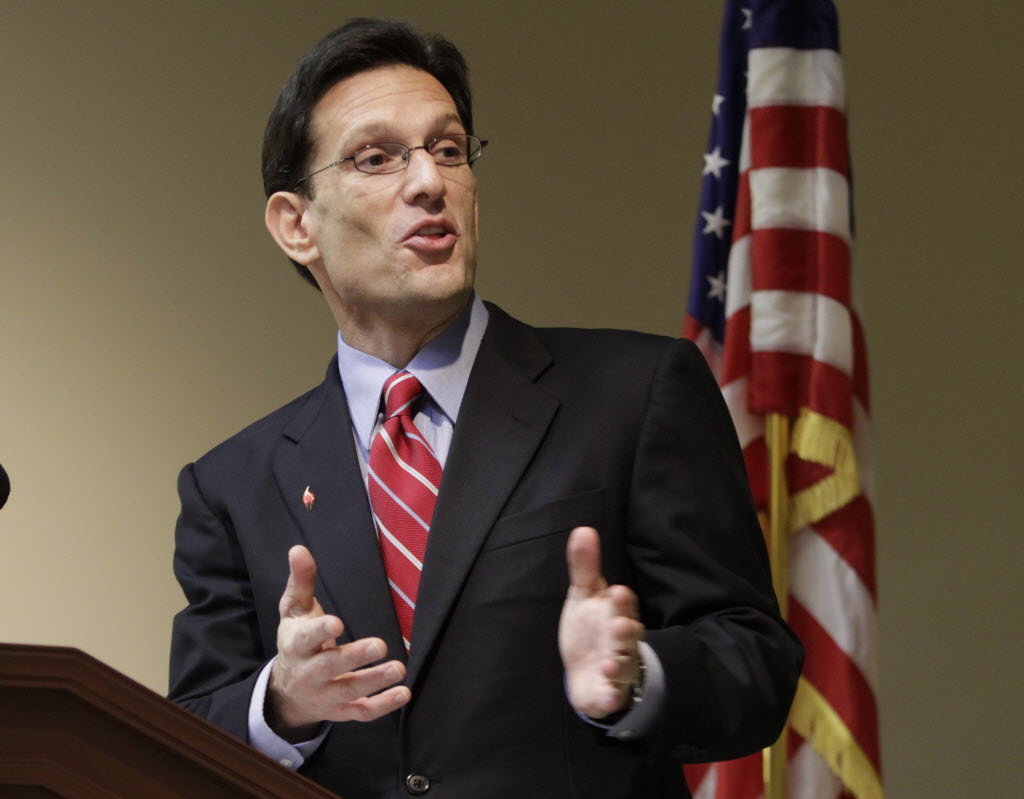
  • Deregulation = jobs: A memo obtained by ShortFormBlog contains details of an upcoming Republican effort to push massive deregulatory legislation through the House of Representatives, in hopes of unshackling "costly bureaucratic handcuffs" faced by businesses. The letter, sent today by Eric Cantor to the House Republican caucus, details the “Top 10 Job-Destroying Regulations,” and how Republicans plan to address them. "By pursuing a steady repeal of job-destroying regulations," Cantor wrote, "we can help lift the cloud of uncertainty hanging over small and large employers alike, empowering them to hire more workers." Some key proposals:
  • Weakened emission limits The TRAIN (Transparency in Regulatory Analysis of Impacts on the Nation) Act, along with the EPA Regulatory Relief Act, would delay implementation of EPA standards intended to limit air pollution.
  • Limiting union power The Protecting Jobs From Government Interference Act would limit the National Labor Relations Board’s power, rescinding its ability to influence relocation of manufacturing plants.
  • Farm dust for all The Farm Dust Regulation Prevention Act would, as expected, restrict the federal government’s ability to regulate farm dust, allowing it to do so only within state and local regulations. source
  • » In keeping with Republican orthodoxy, Cantor also proposes to two tax cuts (one for government contractors, another for small businesses), and the repeal of unspecified provisions of the Affordable Care Act. What do you all think of Cantor's plan? Read the whole thing at the link. (AP Photo)

Posted by Seth Millstein • Permalink

Mar242011W

U.S.: NRC findings on nuclear regulation is stomach churning

  • 28% of nuclear plants don't report equipment defect source
  • » Loopholes in all the wrong places: So, here's the deal. A report by the Nuclear Regulatory Commission landed on that rather startling percentage you see above. The reason, it seems, is that the law relating to nuclear regulation states both that they need to report defects that can cause a loss of safety function, and that they need only to report actual losses of safety function. The NRC didn't downplay the implications of this, saying "a substantial safety hazard" could arise as a result of these failures in disclosure. As it seems to bear mentioning, we'll reiterate a humble plea: quit skimping on nuclear safety, and yes, regulation. The industry's great job in recent years polishing up their image is being betrayed by what we're now learning about some of the rot that lies beneath.

Posted by Chris Tognotti • Permalink

Mar212011W

U.S.: Diablo Canyon nuclear plant called a "near-miss"

  • 18 months until staff found a safety flaw in a CA nuclear plant source
  • » So, here's the deal: The Diablo Canyon nuclear reactor in California is situated in what's widely known as a rather earthquake prone area (as we illustrated a few days ago — Diablo Canyon is the reactor closest to the edge of the Pacific Ocean). Which is why it comes as such an unwelcome surprise that their emergency valves, designed to automatically pump water into the reactor core if systems fail, were flawed and would have done no such thing in such a crisis. This deficiency went undetected for eighteen months before being discovered, a lapse in the plant's emergency response capabilities that, we imagine, the people of the surrounding area are none too pleased with.

Posted by Chris Tognotti • Permalink

Mar172011W

World: Some uninspiring anecdotes on Japan's nuclear record

  • one A Japanese nuclear plant had its workers mix uranium by hand in buckets, instead of using machines as it was supposed to. This somewhat predictably exposed hundreds to increased radiation, and two later died.
  • two Kei Sugaoka, now in California, used to be a plant engineer. He recalls being told to cut out video of the plant's steam-leaking pipes before sending it for review. He told this to TEPCO, but no action was taken until he went public. source

Posted by Chris Tognotti • Permalink

Dec222010W

Politics: Mitch McConnell is a jerk who's clouding the net neutrality issue

This would harm investment, stifle innovation, and lead to job losses. As Americans become more aware of what’s happening here, I suspect many will be as alarmed as I am at the government’s intrusion.

Senate Minority Leader Mitch "I don't know what the hell I'm talking about" McConnell • Talking about net neutrality, which proves that he doesn't know what the hell he's talking about. If only Ted Stevens were still alive to remind Mitch that the 'net is a series of tubes. What happens to your own personal Internet when an obstructionist jerk like McConnell tries to favor large corporations over consumers? It won't be like a dump truck. It'll be like your own busted series of tubes that you're paying out of the wazoo for. All because McConnell wants you to think that all government regulation is bad, even when it's not bad. While this net neutrality policy is kinda weaksauce, it's better than letting AT&T and Comcast regulate usage. source

Posted by Ernie Smith • Permalink

Dec202010W

Tech: FCC could compromise on net neutrality policy this week

  • In case you're concerned about this net neutrality mess, you might want to keep an eye out this week. See, the FCC is about to decide on a compromise proposal which would force network providers to accept all traffic, while conceding that it's OK for them to manage network congestion and charge users more based on their usage. This policy would have the support of the three Democratic members on the FCC's board, but the two Republican members would prefer that the Internet remain free of regulation. Which we, by the way, seriously don't understand. This is one of those cases where, if the government doesn't step in, consumers will seriously get trampled on. source

Posted by Ernie Smith • Permalink

Nov302010W

U.S.: Lame-duck Senate passes food-safety bill with bipartisan love

  • good A food-safety regulation bill, made necessary in the wake of multiple salmonella crises, passed the Senate with bipartisan support.
  • bad The bill may not benefit organic or small-scale farmers, who could be treated to similar levels of scrutiny to the agricultural giants.
  • worse The bill was held up for months by GOP Senator Tom Coburn, who apparently thinks you should eat contaminated peanut butter. source

Posted by Ernie Smith • Permalink