Read a little. Learn a lot. • Now Mullenweg-free! • Since 2009
☰

Tag: unemployment

197 posts

May 19 2014t

In New York City, there are about 323,900 people who are out of work, labor statistics show, enough to…

In New York City, there are about 323,900 people who are out of work, labor statistics show, enough to populate a sizable metropolis. They are your neighbors, your fellow congregants, some of the men and women crammed beside you on the subway or bus. Day in and day out, they are coping with upended lives, struggling to squeeze back into a work force that has squeezed them out.

— Nine Months Later, Still Working to Find a Job - NYTimes.com (via rubenfeld)

Posted by Ernie Smith • Permalink

Tags for this post

Jan 27 2014t

A bailout for jobless millennials? | Al Jazeera America

In the shadow of the Great Recession lies a deep depression: Youths in their 20s and early 30s are hitting new lows. Compared with older workers who have lost their jobs, young people face more complex and layered hardships that could last most of their lives. They are experiencing disproportionately high unemployment, stretching indefinitely into the future, in an increasingly unequal and uncertain social landscape. And just when they are most in need of social support, the recession has led lawmakers to erode the welfare and employment programs that youths need to move themselves — and the economy they have inherited — toward recovery.

For young people in the United States and Europe, there is an emotional layer to this economic malaise. According to a recent U.K. survey of 2,161 people ages 16 to 25 by nonprofit advocacy group the Prince’s Trust, the unemployment epidemic is driving a mental-health crisis. While overall happiness levels for the surveyed youths stayed about level over the past year, reported emotional health fell significantly for the segment that is out of the workforce and not in school or job training. These young people experienced feelings of despondency and hopelessness at a higher rate than their peers. Chronically unemployed youths were more likely to have experienced panic attacks, engaged in self-harming behavior or felt suicidal. Mental-health problems struck 4 in 10 jobless young people “as a direct result of unemployment,“ according to the Prince’s Trust.

A well-argued point that isn’t made enough.

Posted by Ernie Smith • Permalink

Dec 27 2013t

Unemployment benefits 101: What's happening Saturday?

The Christian Science Monitor breaks down the forthcoming drop in benefits for the long-term unemployed:

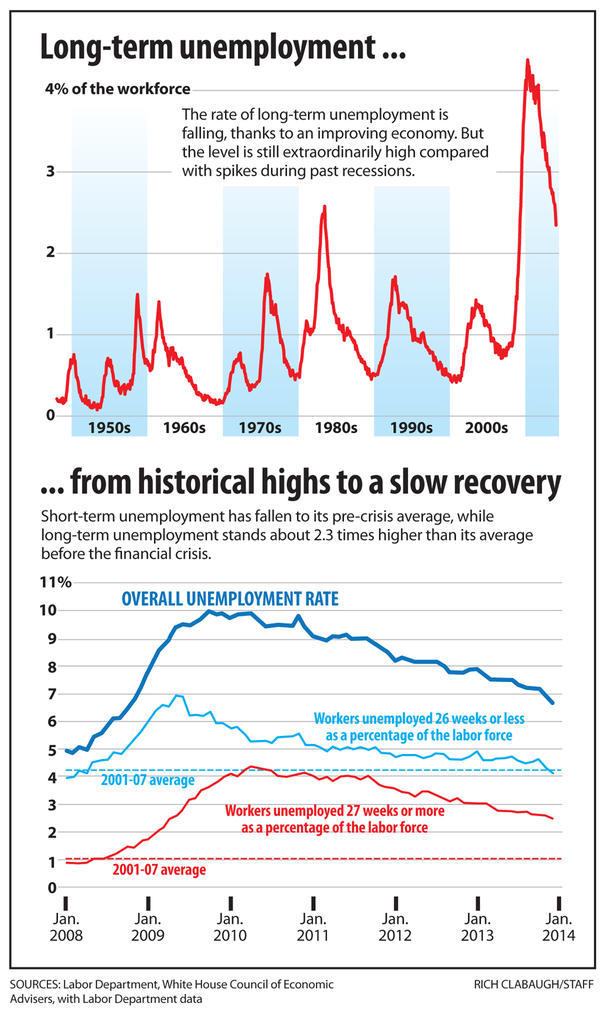
Some 4.9 million jobless workers will have lower unemployment benefits during 2014 if policymakers don’t revive [Emergency Unemployment Compensation (EUC)], according to an estimate by the left-leaning Center on Budget and Policy Priorities, drawing on Labor Department and White House data.

That figure includes about 1.3 million jobless workers who will be affected immediately. They have been receiving the emergency payments, which are scheduled stop starting the week of Dec. 29.

In addition, an estimated 1.9 million people now receiving 26-week state unemployment insurance payments will exhaust them and not have the EUC payments to fall back on. Another 1.6 million people, the center projects, will lose jobs during the first half of 2014, exhaust their regular state benefit, and receive no further benefits.

Note: The number of Americans affected is larger than the nearly 5 million or so who might be direct beneficiaries of the lengthened benefits. In many cases, for example, the jobless benefits are helping to support families.

While there’s hope that a fresh unemployment benefits bill will pass soon, the House GOP might make that difficult.

Posted by Ernie Smith • Permalink

Dec 7 2013t

Unemployment at five-year low

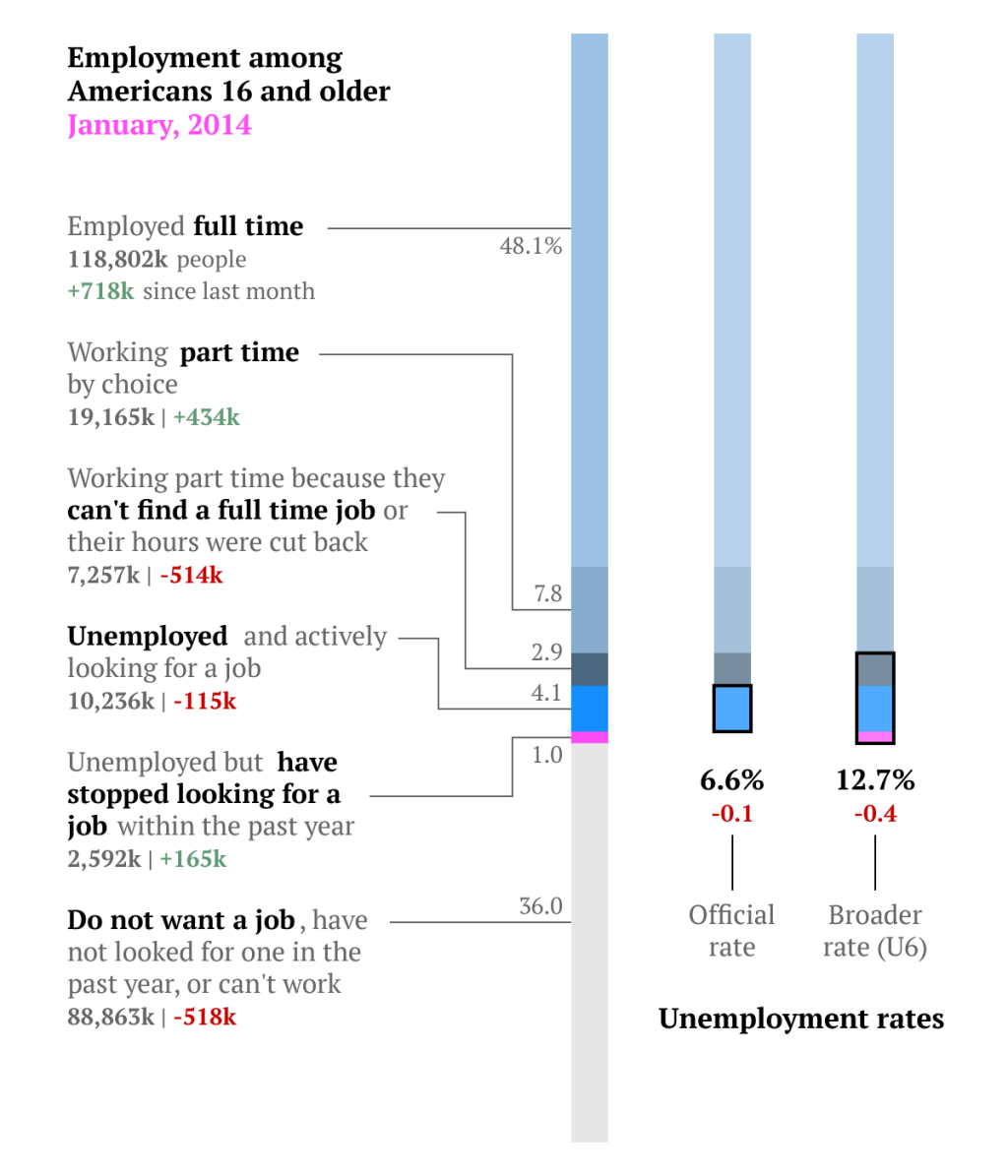
  • 7.0 percent unemployment in November, per the latest jobs numbers. That’s the lowest unemployment rate since November 2008. Some of the positive aspects in the report owed in part to the re-opening of the government after the shutdown in October, but others — a healthy hiring rate, higher wages and more hours for workers — imply that the economy is, at the very least, not getting worse.

Posted by Seth Millstein • Permalink

Nov 9 2013t

Stuff you may have missed: November 8, 2013

On the death-by-poison-at-the-hands-of-government beat, Pablo Neruda wasn’t poisoned by the Chilean government in 1973, but Yasser Arafat may have been poisoned by the Israeli government in 2004. (Though, then again, a Russian report throws cold water on that idea.)

Despite the government shutdown, job growth actually increased in October. Alas, so did the unemployment rate.

Can the HPV vaccine cause infertility? Doctors are skeptical, but these two sisters are suing over that very issue.

Gogo Internet is adding a “Talk and Text” capability to its in-flight Wi-Fi system. Awesome.

Patrick Ewing, surprise head coach.

Posted by Ernie Smith • Permalink

Oct 17 2013t

Computer glitches likely to blame for slightly reduced jobless claim numbers

  • 358K Americans filed jobless claims last week, down roughly fifteen thousand from the six-month peak reported last week, but more than twenty thousand claims higher than the 335,000 that analysts were expecting. Worse, the number could rise, as California is currently struggling with a series of computer woes that have slowed the state’s ability to process new applications. The four-week moving average also rose by nearly 12K to 336,500 weekly claims.

Posted by Scott Craft • Permalink

Jul 12 2013t

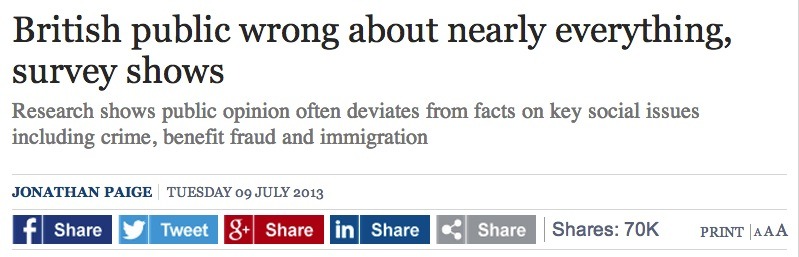
This is undoubtedly an amusing headline,

This is undoubtedly an amusing headline, but it actually touches on a serious issue in democracies: How can policymakers sell and implement necessarily policy when the general public is almost comedically misinformed about what policy is needed? The poll cited showed that Britons believe that 24% of jobless benefits are fraudulently claimed (the actual number is .7%); that violent crime is rising (it’s falling); that immigrants comprise 1/3 of the population (more like 13%); and that teen pregnancy is roughly 26 times higher than it actually is. “Politicians need to be better at talking about the real state of affairs of the country, rather than spinning the numbers,” said one of the pollsters involved. In addition, “the media has to try and genuinely illuminate issues, rather than use statistics to sensationalise.” So, in other words, the incentives structure of politics and the media needs to do a complete 180 from where they are now. Awesome, that should be a quick fix. source

Posted by Seth Millstein • Permalink

Feb 2 2013t

Jobs created, but unemployment increases in January

  • 157Kjobs created in January, thanks primarily to strong showings in the construction, retail, hotel and food industries. The gains in construction specifically seem hopeful, especially in relation to a strengthening home-buyers’ market, but one solid month does not a panacea make, sadly — the U.S. unemployment rate nonetheless ticked upwards last month, from 7.8 to 7.9.

Posted by Chris Tognotti • Permalink