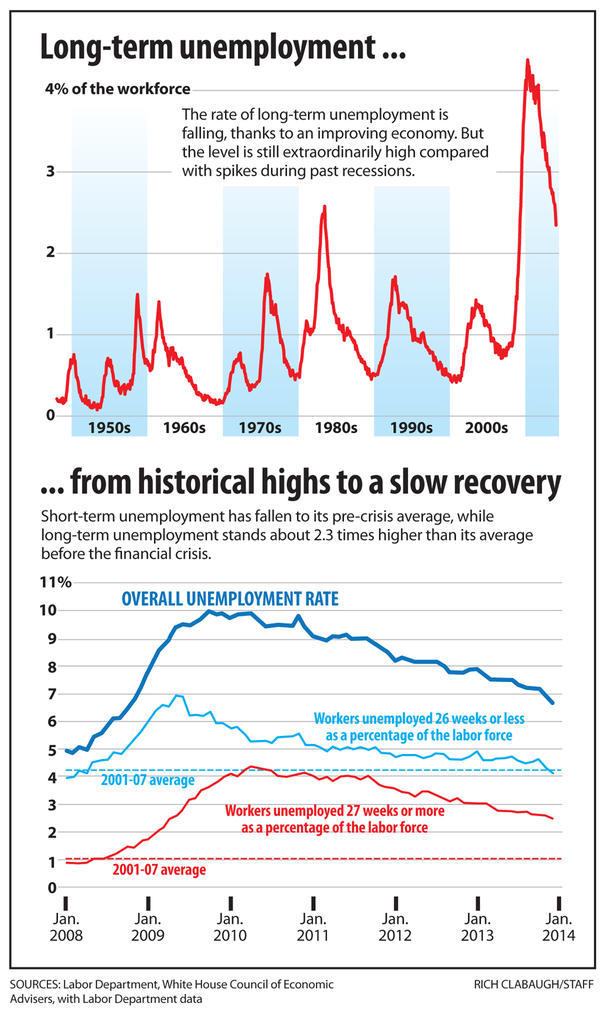
Can long-term unemployed find work in improving US economy? There’s hope.
Our current point is nearly the same as the peak of long-term unemployment in the 1980s. Think about that.
 ShortFormBlogRead a little. Learn a lot. • Now Mullenweg-free! • Since 2009
3 posts
Can long-term unemployed find work in improving US economy? There’s hope.
Our current point is nearly the same as the peak of long-term unemployment in the 1980s. Think about that.
Posted by Ernie Smith • Permalink
» Editor’s note: And because this comes up EVERY SINGLE MONTH, the unemployment rate above is the U3 unemployment rate, the standard that the Bureau of Labor Statistics uses. If you use the U6 unemployment rate (which includes people unemployed but not currently looking for work, or working part-time for economic reasons), it jumps to 14.9 percent, which is up from last month.
Posted by ShortFormBlog • Permalink
Posted by Ernie Smith • Permalink