Read a little. Learn a lot. • Now Mullenweg-free! • Since 2009
☰

Tag: privacy

126 posts

Aug 7 2012t

Louisiana charter school tells pregnant girls to choose between home-schooling and expulsion. Wait, what?

In a Louisiana public school, female students who are suspected of being pregnant are told that they must take a pregnancy test. Under school policy, those who are pregnant or refuse to take the test are kicked out and forced to undergo home schooling.

Welcome to Delhi Charter School, in Delhi, Louisiana, a school of 600 students that does not believe its female students have a right to education free from discrimination. According to its Student Pregnancy Policy, the school has a right to not only force testing upon girls, but to send them to a physician of the school administration’s choice. A positive test result, or failure to take the test at all, means administrators can forbid a girl from taking classes and force her to pursue a course of home study if she wishes to continue her education with the school.

Charter school or not, this seems like a pretty open violation of what should be an obvious example of a person’s right to privacy.

Posted by ShortFormBlog • Permalink

Aug 2 2012t

FTC wants to update restrictions on child-privacy rules online

  • what The Federal Trade Commission is looking to change some of the standards intended to protect children online: The Children’s Online Privacy Protection Rule, a 1999 rule based on the Children’s Online Privacy Protection Act. Both COPPA and COPPR were meant to allow for parental notifications and privacy standards on sites.
  • why The internet has changed dramatically in the decade-plus since COPPA and COPPR took effect — as have the rise of third-party sites and add-ons. The FTC hopes to rewrite COPPR to reflect modern phenomenons like the Facebook Like button and ads with tracking codes, both of which are common on kids’ sites. source

Posted by ShortFormBlog • Permalink

Jul 26 2012t

Malte Spitz’s presentation,

German politician’s TED talk on mobile data goes viral

  • Malte Spitz’s presentation, "Your Phone Company Is Watching", explores just how much can be extrapolated from the information collected by his cell phone carrier as a result of the EU’s Data Retention Directive. Working with ZEIT Online, Spitz used 35,830 lines of data to create a downloadable, interactive map chronicling his daily life during a six month period. “If you have access to this information, you can see what society is doing,” says Spitz, adding, “If you have access to this information you can control your society." source

Posted by ShortFormBlog • Permalink

Jul 16 2012t

Yikes. A rare Skype bug forwards conversation snippets to random contacts. But how?

Skype has confirmed that — under “rare circumstances” — parts of instant message conversations made over the chat service may be forwarded to an unintended recipient.

How devastating is this issue?

A Skype spokesperson didn’t elaborate beyond a pre-written statement, but based on user comments in the official Skype support forums, we can piece together what happens if you’re one of the unlucky few affected by this bug.

Let’s say that User A and User B are exchanging instant messages over Skype today. Tomorrow, User A might log on and find a message from User C — one of his or her contacts — asking about something that was said in that conversation. The message User C received, without any action by User A or User B, would’ve been a line or two from the conversation the two had.

It’s no massive password leak, but we’re pretty sure that most Skype users are big fans of their personal privacy. Let this also serve as a reminder of why important/private business should never be discussed via instant message.

Posted by ShortFormBlog • Permalink

Jul 13 2012t

Think having your internet blocked is bad?

sunfoundation:

Internet content blocking travels downstream, affects unwary users

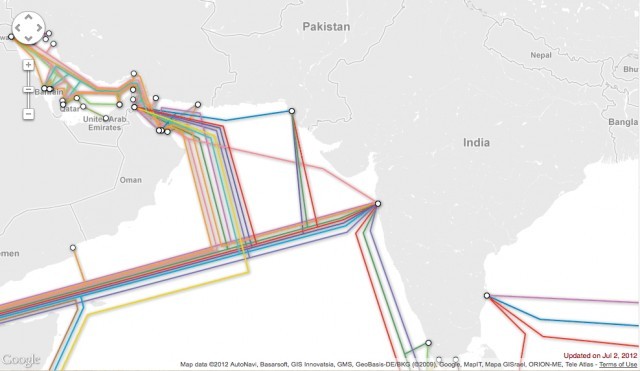
A team of Canadian researchers have uncovered an unusual new example of “upstream filtering,” where online content in one country is blocked in another country due to filtering that happens in transit.

Researchers at the Citizen Lab at the Munk School of Global Affairs at the University of Toronto, revealed that some Oman Internet users using the Omantel ISP are also being subjected to Indian content restrictions because of traffic flowing through India.

Think having your internet blocked is bad? Try having it blocked indirectly.

Posted by ShortFormBlog • Permalink

Jul 12 2012t

Security Alert: Yahoo and Formspring report massive password leaks

  • 450,000 Yahoo accounts were compromised, along with large quantities of database information that hacker group “DD3Ds Company” say they found completely unencrypted
  • 420,000 Formspring username and password hashes leaked this week, forcing the company to reset the passwords of all 28 million registered users in an effort to protect users’ data source
  • » It hasn’t been a great summer for cyber-security, particularly when you consider how many well-known companies keep getting caught with lackluster security in place. So, how many more of these stories do you think it will take before major corporations quit storing user data in plain-text format?

Posted by ShortFormBlog • Permalink

Jul 9 2012t

Government cell phone record requests hit all-time high in 2011

  • 1.3 million requests sent to the “Big Four” mobile carriers source
  • » And at least one congressman is angry: “We cannot allow privacy protections to be swept aside with the sweeping nature of these information requests, especially for innocent consumers,” said Rep. Edward Markey, who released the data Monday.

Posted by ShortFormBlog • Permalink

Jul 2 2012t

You might want to uninstall the Facebook app

Uh-oh: Facebook mobile apps modifying users’ address books

  • You might want to uninstall the Facebook app: There are reports that Facebook’s iPhone, Android and Blackberry apps are infiltrating the address book that comes preinstalled on these devices, erasing contacts’ email addresses, and replacing them with their Facebook address (you know, the [name]@facebook.com email address that everyone’s given and many don’t use). This is bad enough, but to make matters worse, the @facebook.com addresses —which are supposed to redirect to users’ Facebook inboxes — apparently aren’t working all that great. The end result is that emails sent by many well-intentioned mobile users are disappearing into the abyss, irretrievable by their intended recipients. Presumably, affected users are also losing the real email addresses of their friends. This is, to put it lightly, completely inexcusable, and it doesn’t take too much thinking to conjure up many, many disastrous scenarios that could result from a reckless policy like this. (Photo: AP; Clarification: the iOS danger is specifically related to version 6, which is in beta, though if you have an Android or Blackberry device, this is an issue now. Thanks to ligerxx for reaching out.) source

Posted by ShortFormBlog • Permalink

Jul 2 2012t

Judge rules Twitter must turn over data on arrested Occupy protestor

In May, Twitter sought to quash a subpoena for Occupy Wall Street protestor Malcolm Harris’s tweets, location, and other data over a 90-day period flanking his October 1st arrest for disorderly conduct on the Brooklyn Bridge. On Saturday, Judge Matthew Sciarrino Jr. upheld an earlier ruling that Harris himself had no standing to contest the subpoena, ruled that Harris had no expectation of privacy in a public tweet, and denied Twitter’s claim that the subpoena constituted an unreasonable burden on the company.

In short, only Twitter can fight a criminal court subpoena for user information, and for most requests for once-public information, the company will be expected by the court to hand it over. Unlike a privately sent email, “[t]here can be no reasonable expectation of privacy in a tweet sent around the world,” writes Judge Sciarrino Jr.

Sciarrino also makes it clear that in his opinion, the logic and implications of the ruling are not limited to Twitter alone, but all forms of social media.

It’s not the first time Twitter fought against giving away its users’ data in court.

Posted by ShortFormBlog • Permalink

Jun 25 2012t

You might want to check your Timeline,

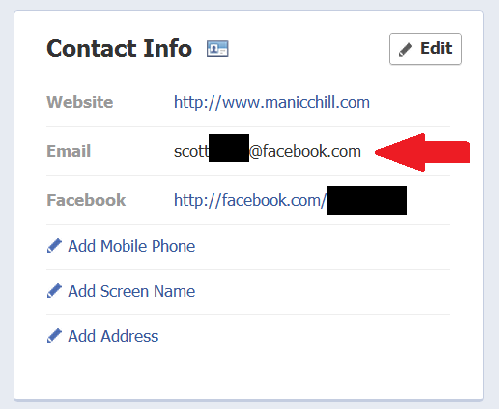
Check your e-mail: Facebook may have changed it without asking

  • You might want to check your Timeline, and make sure that your listed email address(s) is the one you actually use. Without warning, or apparent reason outside of possibly trying to force Facebook e-mail adoption, the social networking giant altered many users’ profiles to display the Facebook e-mail address they’ve never used, which redirect to a user’s inbox and chat functionality. The company has not released any information on the change, and has yet to acknowledge what happened. Either way, now might be a good time to review the information you have posted, particularly if you run a business or want to ensure your privacy. source

Posted by ShortFormBlog • Permalink