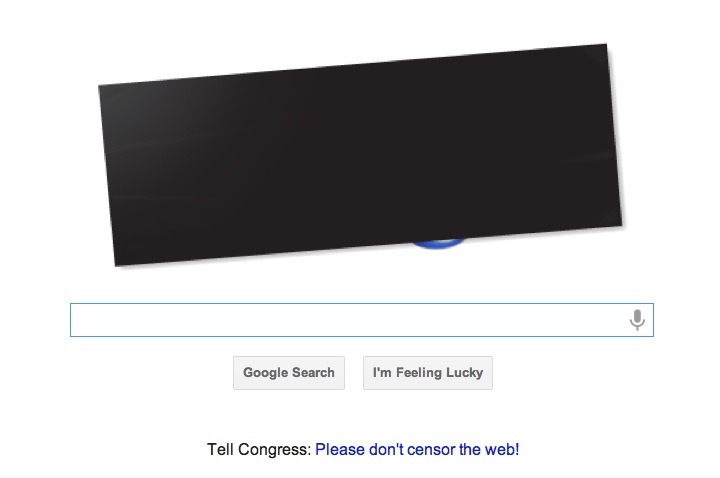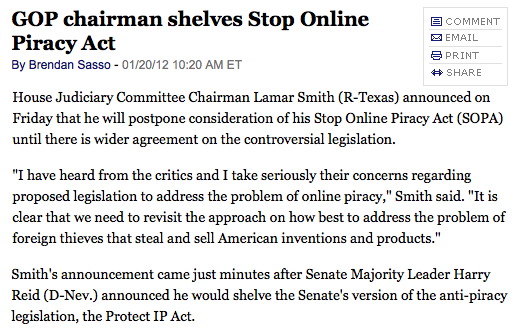
Sorry I’m not sorry, Lamar Smith.
(the hill)
While that’s not a total death blow to the idea, it seems that us Internet types led the two bills to get a nice, long vacation. Adios, mofo.
 ShortFormBlogRead a little. Learn a lot. • Now Mullenweg-free! • Since 2009
41 posts
Sorry I’m not sorry, Lamar Smith.
(the hill)
While that’s not a total death blow to the idea, it seems that us Internet types led the two bills to get a nice, long vacation. Adios, mofo.
Posted by ShortFormBlog • Permalink
The Federal Bureau of Investigation moved against a group of suspected online pirates Thursday, targeting the popular file-sharing website megaupload.com a day after Washington lawmakers were besieged by complaints about legislation designed to crack down on the online sharing of pirated copies of music, movies and other material, people familiar with the matter said.
Investigators said there was no connection between arrests in their two-year investigation and the political firestorm that erupted this week over a pending vote on the Stop Online Piracy Act.
This is a big deal, and even if it’s not related to SOPA, the timing certainly does a lot to put it on the minds of those worried about the law.
Posted by ShortFormBlog • Permalink
Posted by Chris Tognotti • Permalink
You don’t say.
Personal feeling: It’s probably not even for corporate reasons. It’s probably a matter of it being a difficult topic to describe properly in three minutes. And as the story’s never crept up to the top of the news cycle, they’ve likely had no reason to describe it at any major depth. Not that it’s an excuse, just a reason for it to get ignored. However, one thing to keep in mind is that it’s entirely possibile that the stories got played during the day — Media Matters used Lexis-Nexis reports, which don’t cover daytime cable.
EDIT: In case you want to see an example of a media outlet doing it right, see this Bloomberg interview with a Reddit co-founder.
Posted by ShortFormBlog • Permalink
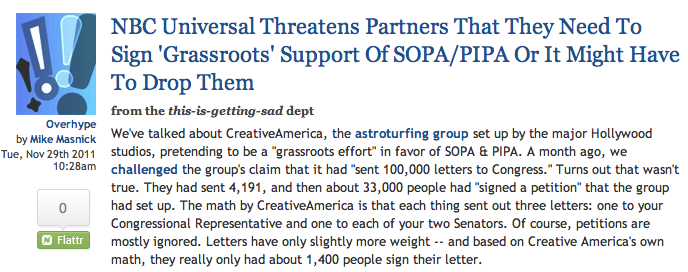
So, it appears TechDirt picked up that letter that leaked from NBC Universal trying to strongarm its suppliers into supporting SOPA. We spent a few days researching that one.
Posted by ShortFormBlog • Permalink
Decades of evidence from around the globe all show the same thing: making copyright law or enforcement stricter does not work. It does not decrease infringement at all — and, quite frequently, leads to more infringement.
— From TechDirt’s article on PROTECT-IP and SOPA, titled “The Definitive Post On Why SOPA And Protect IP Are Bad, Bad Ideas.” If you had to cut down the entire argument to two sentences, these two are the ticket. By the way, in case you missed it the other night, there’s a letter floating around, allegedly sent by NBC Universal to its suppliers, attempting to strongarm them into supporting SOPA. Chew on that while you’re eating your breakfast of turkey and stuffing.
Posted by ShortFormBlog • Permalink
Posted by ShortFormBlog • Permalink
Posted by Ernie Smith • Permalink
Media Piracy in Emerging Economies, an academic report on pricing and copyright infringement in poor countries, comes to the conclusion that high media prices (as measured against the average wage in poor countries) are responsible for piracy — that is, when you control for social attitudes towards copying, enforcement differences, and so on, the largest predictor of whether a country will have rampant copyright infringement is whether the media in that country is priced high relative to peoples’ earning power.
Fun fact: A lot of media also costs too much in the first world for a lot of people. You know, for example, they could stop all piracy of Photoshop if they made it $30, and as a result would benefit from economy of scale. Apple is figuring this out too, because they’ve cut the prices of most of their pro apps as they’ve moved to the App Store model.
Posted by ShortFormBlog • Permalink