Read a little. Learn a lot. • Now Mullenweg-free! • Since 2009
☰

Tag: magazines

22 posts

Aug242013t

My main takeaway is that these are all essentially car magazines. They feature money shots of various guns…

My main takeaway is that these are all essentially car magazines. They feature money shots of various guns, plenty of product reviews, and geeky, unbridled enthusiasm for their subject matter. They rarely stray into politics. If you don’t own a gun, there’s no real reason for you to read them. But, in the interest of science, I read them cover to cover all the same.

— Slate writer Justin Peters • Discussing the popularity of gun magazines, which have actually seen an increase in sales in the first six months of 2013. Peters did some research and here are his takeaways.


Posted by Ernie Smith • Permalink

Mar72013t

How Time Warner slowly but surely split into a bunch of little parts

  • Time-Life Not nearly as big as the other parts, but people recognize the name, right? The book and music marketing arm of the company, named after the two magazines which made Time Inc. famous, was spun off in 2003 and had to start running a disclaimer that said ”not affiliated with Time Warner Inc. or Time Inc.” Sounds about right.
  • Time Warner Cable The first big chunk to fall, the cable company was spun off partly because it was seen as having more potential to grow under a structure different from that of a pure content company. The split, which took place over a four year period, was finalized in March 2009. (Conversely, Comcast in recent years has taken the opposite approach, buying out NBC Universal from General Electric to become a top-down cable and entertainment empire.)
  • AOL The digital arm of Time Warner, which was once so massive that AOL bought Time Warner in 2000, ultimately became a drag on both companies after it became clear that there weren’t enough 70-year-olds to keep the legacy AOL service at a high level of profitability forever. In December 2009, the company, whose value had declined significantly in the period that Time Warner owned it, was spun off to its own space on the stock market. It eventually made a pure-content play, which has recently brought it success.
  • Time Inc. While the magazine industry came first, it would not remain the key part of Time’s empire, and after a failed merger of some of the magazines with the Better Homes and Gardens-owning magazine chain Meredith, Time Warner announced it was spinning off all of its magazines into a single company on Wednesday.
  • Time Warner So, here’s what’s now left—the cable channels (including HBO, TNT, TBS and CNN), the film studios (New Line Cinema, Warner Bros.), and the other entertainment arms. So, really, it’s just Warner and the remains of Ted Turner’s corporate empire. Synergy doesn’t last forever, right?

Posted by Ernie Smith • Permalink

Dec132012t

It’s here!

thepoliticalnotebook:

somersaultmag:

It’s here! Click through on the photo of the cover of Somersault’s Volume 1, Issue 1 to read our magazine in full (for free). The cover art is Paul in Paris by Gregory Muenzen.

Stay tuned: we’ll be posting the pieces individually on our website as well so that you can share and comment.

And here it is, all ready to be read.

One of the coolest Tumblr projects in a long while, in editorial form.

Posted by Ernie Smith • Permalink

Jul162012t

It happened once. Can it happen again?

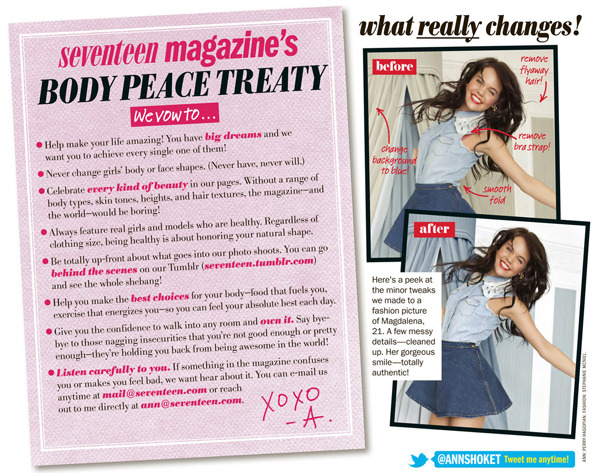
Seventeen Magazine and the Body Peace Treaty: Building on a victory

  • Here’s the second entry in our weekly post series, “The Pitch.” This post, written by our very own Sami Main, analyzes the broader impact of Seventeen Magazine’s recent “Body Peace Treaty.” Find her on Twitter over here.
  • It happened once. Can it happen again? It’s the stuff of really great TV shows: A few months ago, 14-year-old Julia Bluhm led a petition against Seventeen, a magazine whose audience is primarily young girls. She wanted editors at the magazine to adopt healthier Photoshopping habits and to use models that look more “realistic” to actual people. What happened next (hint: look at the picture above) has some wondering if Bluhm may have started a real trend. ShortFormBlog’s Sami Main analyzes the cultural impact of Bluhm’s simple idea with a wide reach. Read more after the jump.

A simple petition, a big impact

  • 84,000 signatures on Bluhm’s petition
  • » The end result: The magazine’s editor-in-chief Ann Shoket effectively gave into the petition — while claiming “we never alter the way the girls on our pages really look,” the person in charge of the magazine made a promise to her readers. “Our Body Peace Project is one of the cornerstones of our mission,” she wrote in a note responding to the petition. “We want every girl to stop obsessing about what her body looks like and start appreciating it for what it can do! And while we work hard behind the scenes to make sure we’re being authentic, your notes made me realize that it was time for us to be more public about our commitment.”

The reaction to the message

  • Now, it’s great that Seventeen has come forward, after some pressure, in order to be more open and honest about its policies. (It’s also a big victory for an activist group, SPARK, which has been fighting to limiting sexualized images of young girls in mainstream culture.) Magazines that have a younger audience have more of a responsibility to their readers who are still developing their self-image. Overall, reaction to the message has been positive, though some cultural commentators disagree with the motivations behind the idea. “If you want to use ‘real girls,’ Shoket, go for it,” argues Slate writer Hanna Rosin, citing the model used in the photo accompanying the “Body Peace Treaty” image. "That might make for a really cool photo shoot. But this is not it.“

Previous cultural context, in Barbie form

While Barbie’s trademark nipple-less, mountainous, hard-plastic breasts are being cut down to size and that itty-bitty waist is getting bigger, her hips are also set to slim down with the new model, making her not so much more healthy and realistic as simply pubescent.

Mother Jones writer Lisa Jervis • Discussing a 1997 change to Mattel’s iconic Barbie dolls, which changed their waists and bust size. But the changes Mattel made didn’t come from the same motivations as Seventeen Magazine’s recent changes: Mattel’s change to conform to the “reality of fashion,” where Seventeen’s change came more from a place of compassion and understanding. source

The next target: Teen Vogue

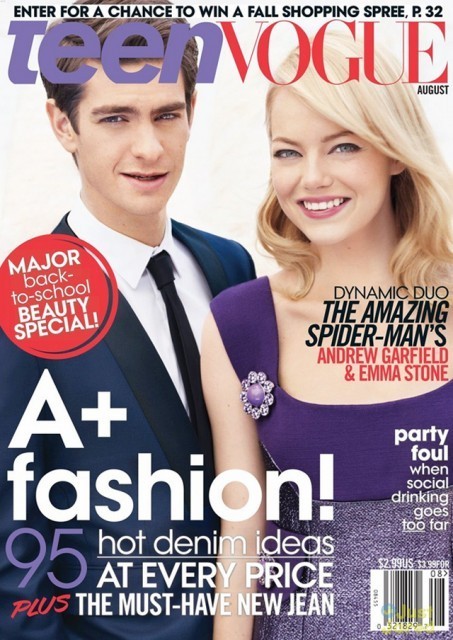
  • Next up? Another magazine: With one victory past them, another petition was started by Carina Cruz and Emma Stydahar, two of Bluhm’s friends, against Teen Vogue. “It’s time for an end to the digitally enhanced, unrealistic ‘beauty’ we see in the pages of magazines,” reads the petition. “We are demanding that teen magazines stop altering natural bodies and faces so that real girls can be the new standard of beauty.” Teen Vogue, however, might be a tougher nut to crack.
  • 32,000 signatures on the newest petition source
  • » The magazine’s reaction: It looks like Teen Vogue might be a tougher nut to crack. "Teen Vogue makes a conscious and continuous effort to promote a positive body image among our readers. We feature healthy models on the pages of our magazine and shoot dozens of non-models and readers every year and do not retouch them to alter their body size,” Erin Kaplan, the magazine’s PR rep, said to AdWeek. Some media outlets, like Gawker’s female-oriented Jezebel, reacted to the magazine’s statement negatively.

So what’s the next step, anyway?

  • One step forward, one step back. It seemed like there was a good amount of momentum toward a healthier age of magazines when Seventeen announced its support. Teen Vogue may not be as body conscious as other publications, but young readers still look to its pages for advice and guidance; that’s something that shouldn’t be taken lightly. The fact that it has ignored such a request from its readers is a little disheartening. Maybe once it sees the effects of the positive press Seventeen received, Teen Vogue will change its tune. Beyond the magazine world, is there something popular culture can learn from Seventeen?

Sami Main is a ShortFormBlog staff writer who’s big on BuzzFeed. Contact her @samimain.

Posted by ShortFormBlog • Permalink

Jul62012t

Shop’s been dropped

Seventeen Magazine signs a “Body Peace Treaty” with its readers

  • Shop’s been dropped: Seventeen magazine’s editor-in-chief Anne Shoket, bowing to the pressures of fourteen-year-old Julia Bluhm’s 84,000-signature petition, agreed to stop photoshopping the girls featured in her magazine. The new “Body Peace Treaty” makes a pledge to diversity within the magazine regarding body shape, size and skin color. In an interview with NPR, Shocket assured listeners Photoshop would only be used to fix errant strands of hair or acne blemishes to “make you look like you would on your best possible day.” Excellent work, Julia. source

Posted by ShortFormBlog • Permalink

Jun52012t

GOOD Magazine finally gave a longer update/explanation as to why they laid off most of their editorial…

We’ve had to make some big and difficult decisions, perhaps the biggest and most difficult of which involved letting several members of our editorial team go last Friday. These were great people who contributed a lot to GOOD. We wish them the best and expect that they will do great things.

GOOD has always been a work in progress, and even as creating and spreading awesome content by amazing people will continue to be a critical part of what we do, this was a step we felt was important to take as we pursue a refined strategy to inform, connect, and empower the community of people who give a damn.

“Refined strategy” sounds like corporate-speak for cutting back. A number of really awesome employees got laid off in a really lame way last week, getting pushed out a day after a party in honor of the magazine’s latest issue.

Posted by ShortFormBlog • Permalink

Jun12012t

GOOD Magazine lays off much of its editorial staff, Poynter reports.

pbump:

Update on the GOOD layoffs: the fantastic Cord Jefferson was also let go. If he’s unemployed for more than 10 minutes, the world is broken.

Also on the list, among others: Ann “EditorRealTalk” Friedman and Amanda Hess (who previously worked at torn-asunder-too-soon noble experiment TBD). A major sadface was made across the Internet.

Posted by ShortFormBlog • Permalink

Nov272011t

Does Time water down its story coverage in the U.S.?

Tumbl-zine cover

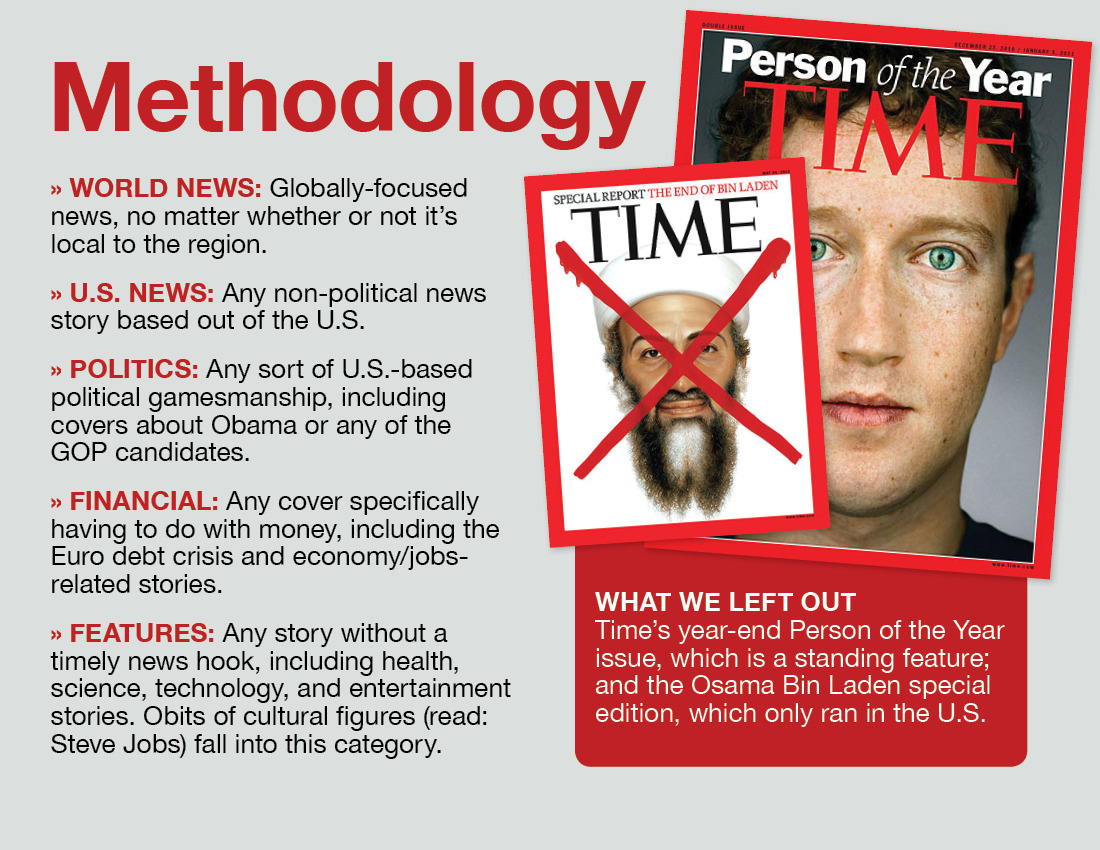
The methodology

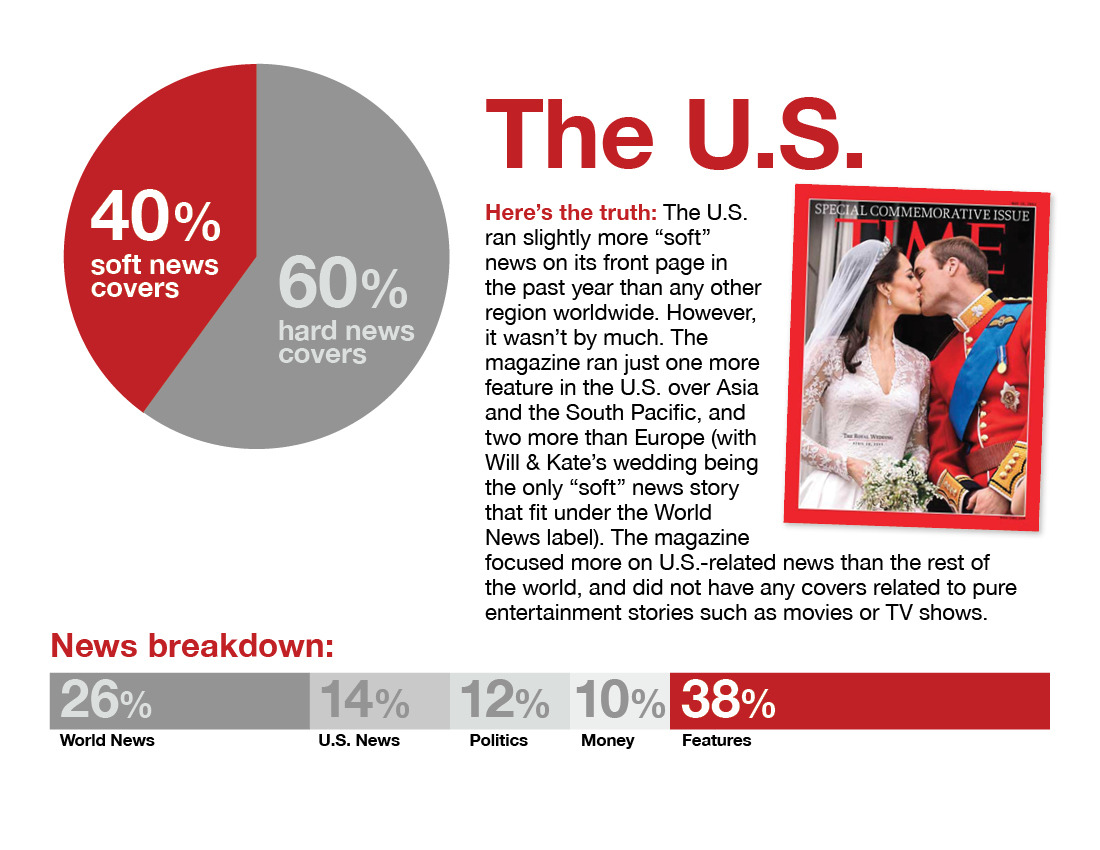
U.S. edition

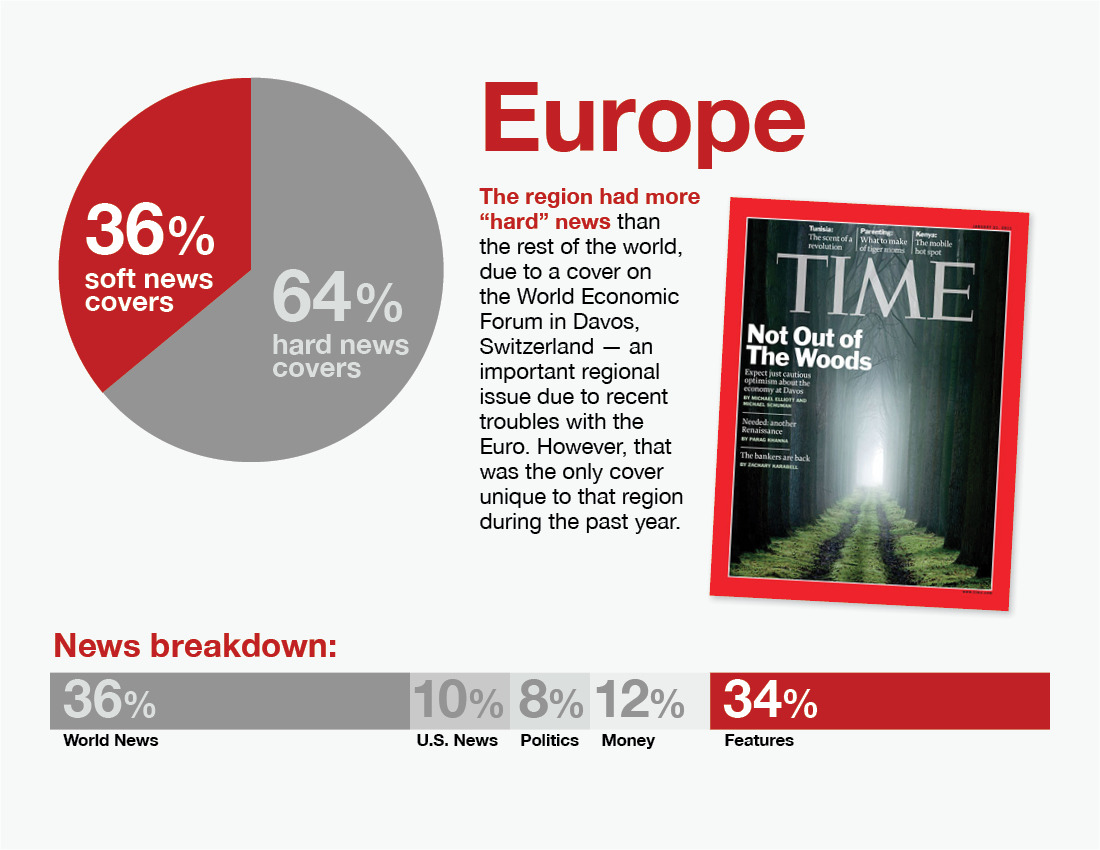
Europe edition

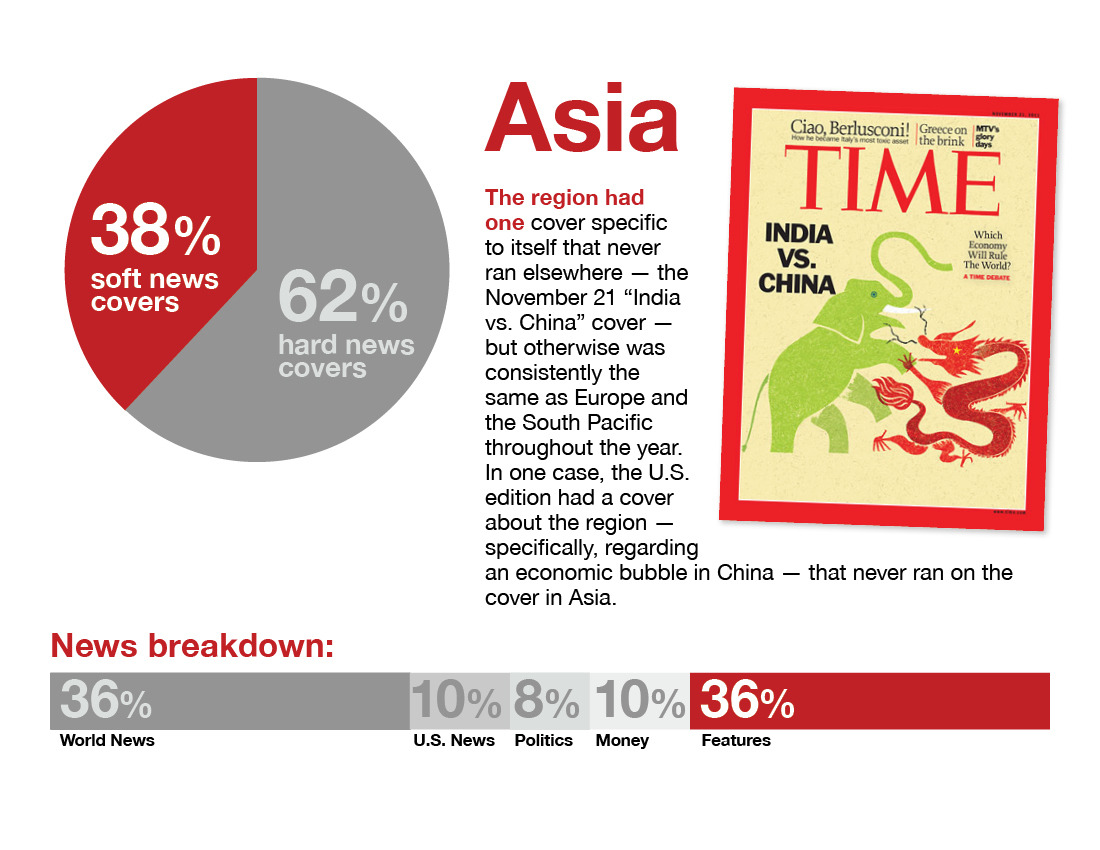
Asia edition

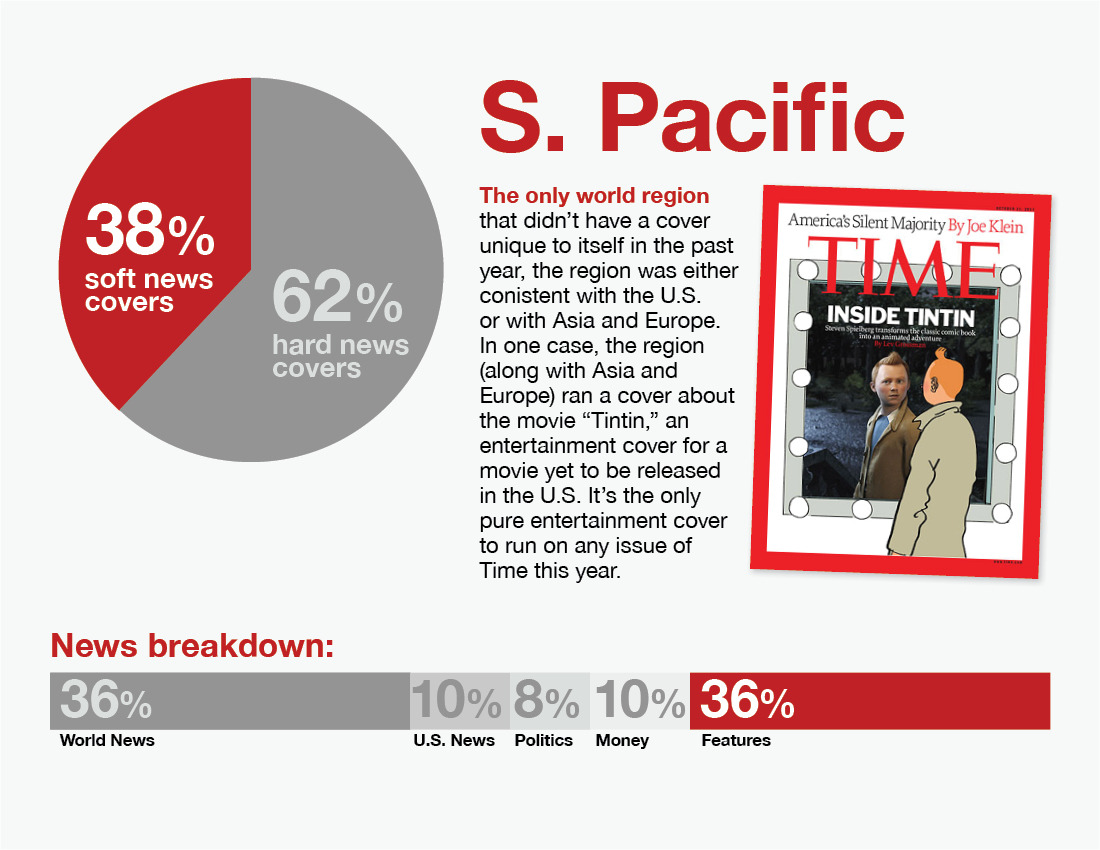
South Pacific edition

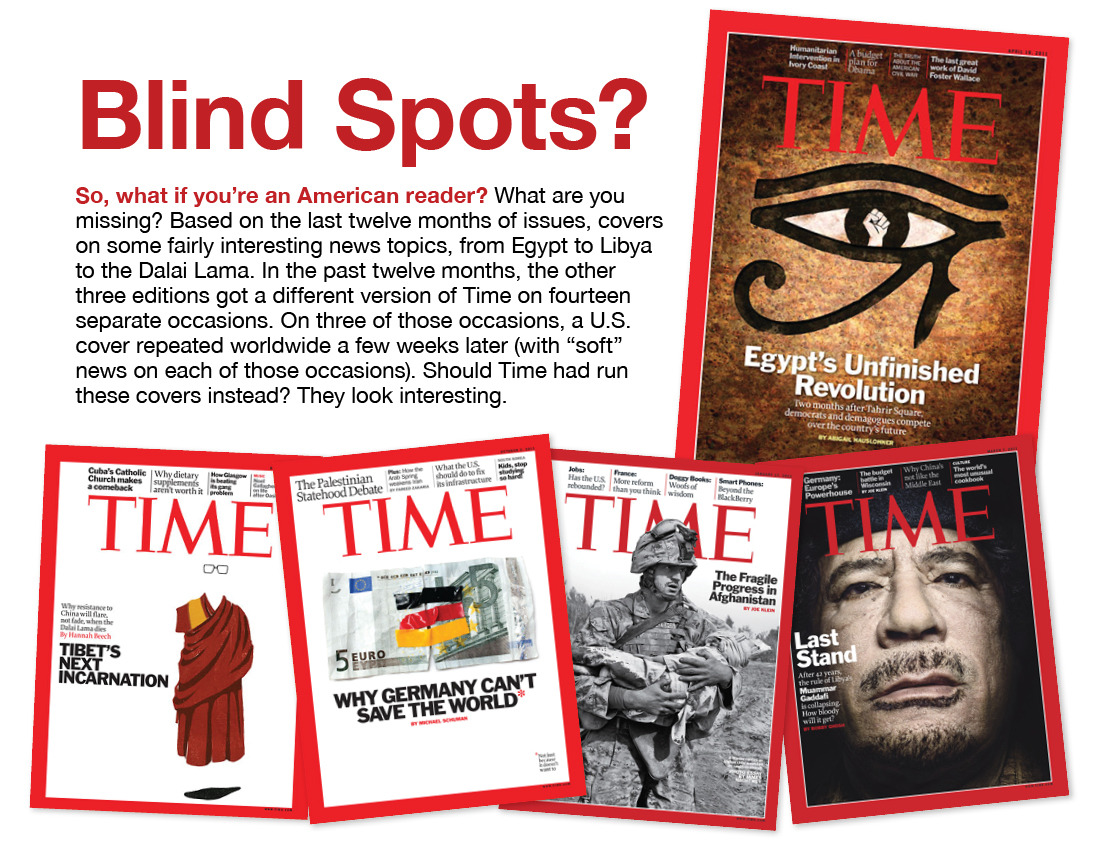
What you've missed in the U.S.

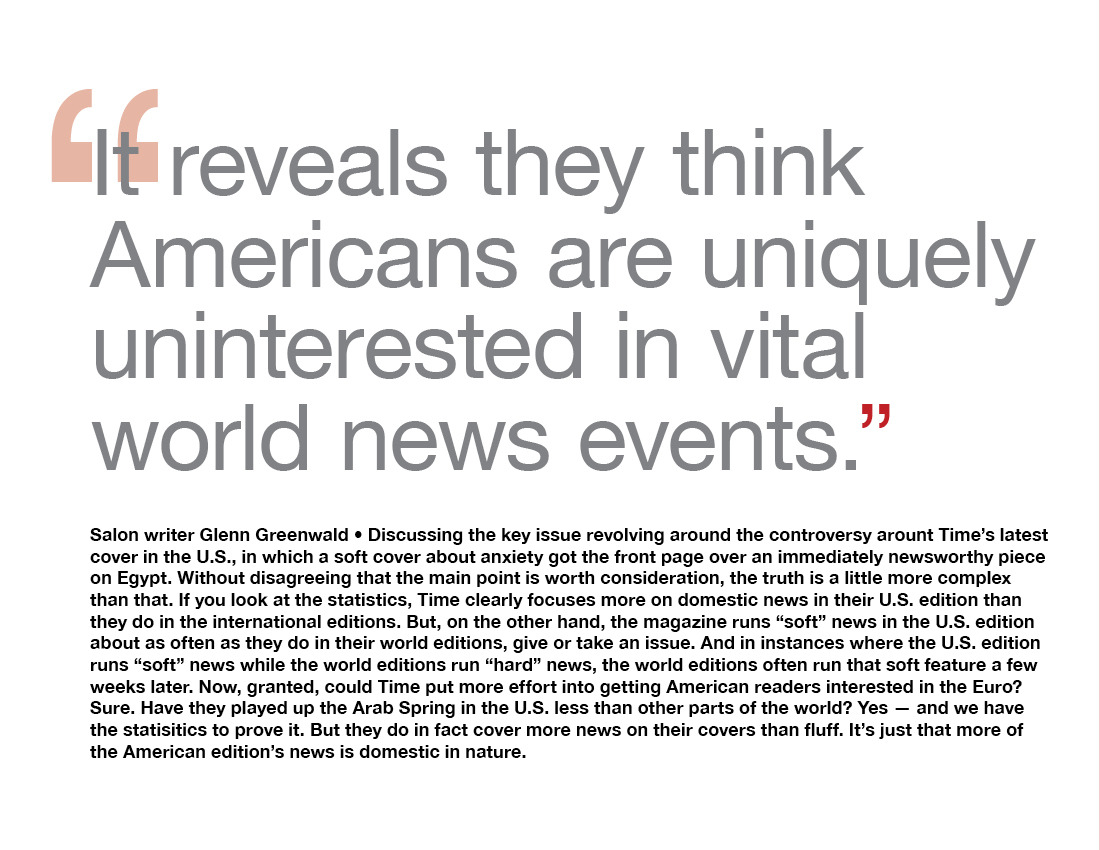
Round-up quote from Glenn Greenwald

Contact us!

Tumbl-zine: On Time Magazine and differing international story play

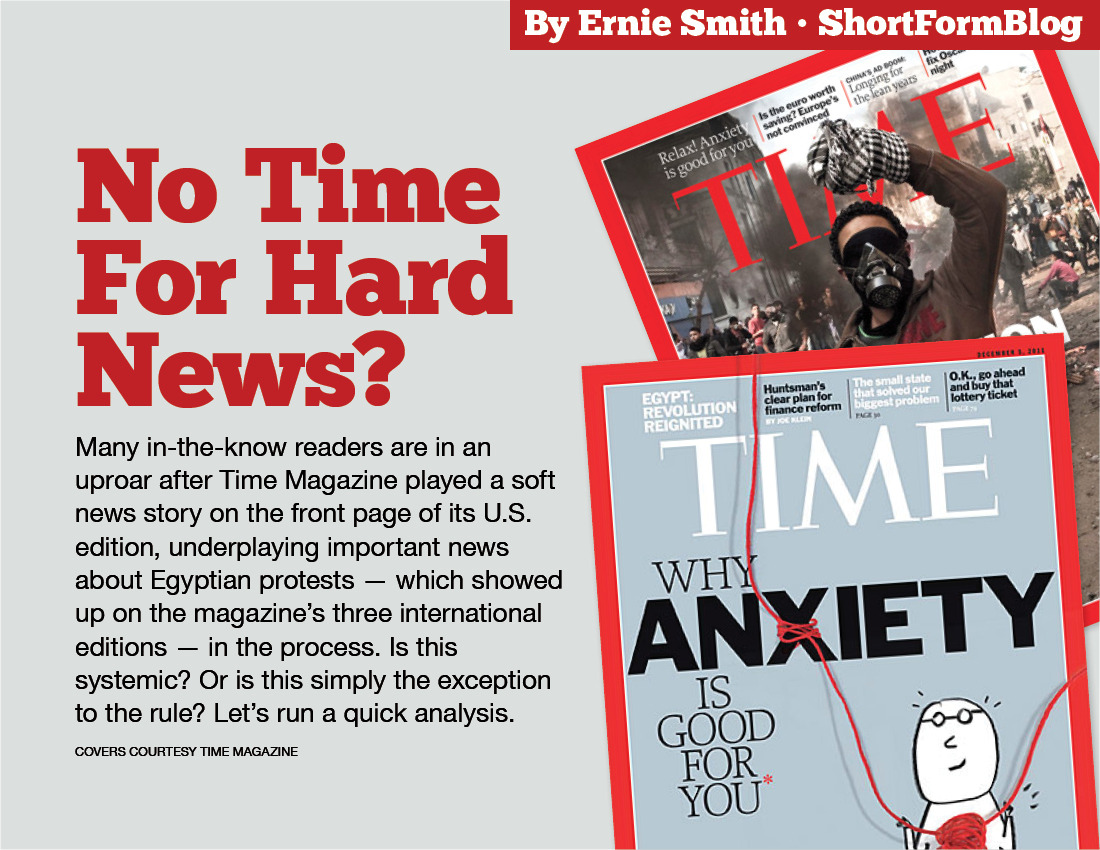
Does Time water down its story coverage in the U.S.? That’s a question which has been floating around the interwebs since yesterday, when the internet hivemind figured out that Time ran a soft feature in this week’s U.S. edition, while the rest of the world got a much more important story about Egypt. (Fellow Tumblr Jessica Binsch did a Storify breakdown of the online reaction.) Most of us can agree Time probably blew this cover choice. However, we’d like to offer another argument here: That the magazine is merely playing to different markets, rather than blatantly dumbing down its U.S. coverage. Our latest Tumbl-zine (it’s been a while, we know) breaks down the past year in Time covers, by region and type of content. Here’s what we found.

Clarification: Any cover in this list that didn’t run in the U.S. does not necessarily mean the story attached to the cover didn’t get played in the U.S. edition of the magazine. Any commentary is specifically in regards to the covers themselves, not the stories.

Update: Time responds!

Posted by ShortFormBlog • Permalink