Read a little. Learn a lot. • Now Mullenweg-free! • Since 2009
☰

Tag: journalism

694 posts

Feb 14 2011W

Politics: FoxNation.com thinks they may have video proof of apocalypse

  • journalism? "The Fox Nation is committed to the core principles of tolerance, open debate, civil discourse, and fair and balanced coverage of the news," says the mission statement at FoxNation.com, an online arm of the Fox News Channel.
  • nope! "Is this the Fourth Horseman of the Apocalypse?" So asks Clayton Morris, a Fox News weekend anchor, whose ludicrous claim of end-times evidence was then reblogged by FoxNation.com. (big hat tip to Mediaite on this). source

Posted by Chris Tognotti • Permalink

Feb 14 2011t

From Friday's Ventura County Star: Note the headline, then note the deck. Especially note the deck. This is…

  • From Friday’s Ventura County Star: Note the headline, then note the deck. Especially note the deck. This is the A1 lead story that day. Journalism should be proud. omg, omg, omg, omg, omg, omg, omg, omg! (thanks Adam Griffiths for the heads-up)

Posted by ShortFormBlog • Permalink

Feb 10 2011t

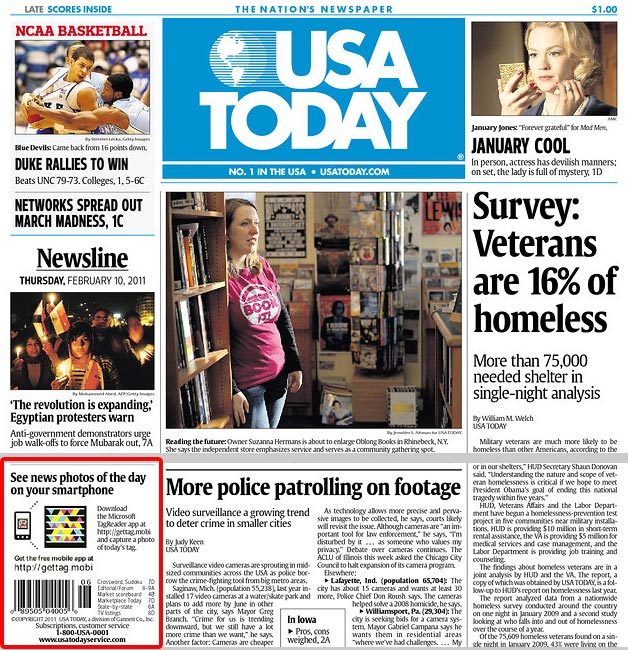
We’re not ones to criticize innovation but we’re also fans of general usability. And as USA Today tries to…

futurejournalismproject:

We’re not ones to criticize innovation but we’re also fans of general usability. And as USA Today tries to make the paper digitally relevant, they’re making it all sorts of confusing.

The newspaper, for all its flaws, has an impressive user interface. Tried and true even.

But USA Today wanted to introduce some digital pizzaz so it’s introduced printed data tags that readers can use to get augmented and/or supplemental material online. The tag is essentially a bar code.

Take it away, Fast Company:

Essentially the paper is trying to add bonus content to its dead-tree edition, bolting on the kind of additional data, real-time dynamic, moving images and dynamic advertising that’s been the provenance of web newspapers for some time—a bridge, if you will, between the paper newspaper and USA Today’s web presence. It seems like a good idea.

But it’s kind of flawed. To access the additional content, readers will have to have a smartphone or laptop with webcam handy—they’ll point the device’s camera at the Tag, and then get surfed to the bonus link encoded in the Tag itself. But if a user already has a web-enabled smartphone or laptop handy, then they may as well be reading the digital edition of USA Today, and the fuss of fishing out your smartphone or laptop while struggling with three square feet of newsprint will put many users off right from the start. Then they’ll have to download a special app from Microsoft, which, though free, is yet another barrier to consumer interaction.

So, thumbs up for the attempt. Thumbs down for the execution.

We sort of agree, but mostly disagree. We think that it’s an interesting evolution of the once-derided Cuecat model to use newspapers with cell phones, but to criticize newspapers for daring to be useful with cell phones – just because they have another product that does something similar – seems like the wrong answer to take from this. And let’s face it – while the experience of the iPhone is nice, it’s not exactly the same thing as a newspaper proper. Just think if the NYT did something like this to extend a really cool package to something on your phone that allowed you to do multimedia or dig into data?

And plus, does that make ads with these tags on them useless? Because there are a lot of ads with QR codes nowadays. Just because an alternative exists (a USA Today app!) doesn’t mean it is or does the same thing.

I agree with you on the laptop bit. Seriously, the experience with the standard Web is much closer and it is much easier to type a URL into a keyboard than a phone.

Posted by ShortFormBlog • Permalink

Tags for this post

Feb 9 2011W

Biz: Did the TV guys win? How fast-flying TBD got its wings clipped

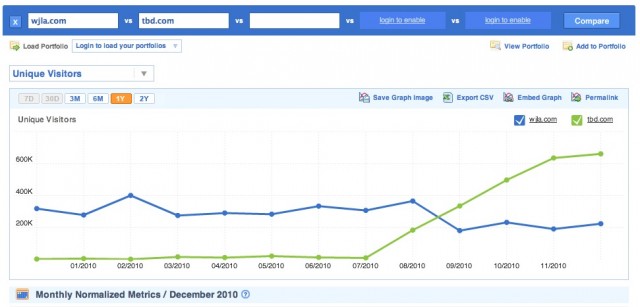
  • Above is a quick Compete.com chart comparing DC media outlets Wjla.com to TBD.com through December. See something notable here? Yeah, we do too. WJLA.com has slightly lower traffic than it did six months ago. But TBD has come out of nowhere to effectively triple the amount of traffic WJLA was getting. Which is pretty amazing, if you think about it – an effective rebranding greatly expanded Allbritton's reach. (Both are effectively dwarfed by The Washington Post, but the Post has a national reach whereas the Allbritton-owned sites skew local.) And TBD's editor Erik Wemple says January was the site's best month ever. Despite this, though, WJLA effectively won the battle for media presence in Allbritton's corporate structure. How did this happen?
  • HoW TBD BECAME TBD Allbritton, which also owns Politico, said it planned to launch a local news site last year. They brought on Jim Brady, a former Washington Post and AOL guy, who crafted a vision of a local news brand that worked across the board – in broadcast, on cable TV and online. It launched six months ago to much industry attention for its HuffPo-like approach to local news.
  • The visionary, out Unfortunately, corporate culture hurt the site right off the bat. Only a year after Brady started with Allbritton, he was out, a victim of a debate over aggregation (which TBD is really good at) vs. original reporting. "As we talked about the next phase of our growth, it seemed clear to Jim and I both that we had some stylistic differences," wrote publisher Robert Allbritton.
  • Did The TV Guys win? Now, just six months after TBD launched, it appears that the folks at WJLA control TBD's destiny. The TBD TV component (on cable) is effectively going away. WJLA.com, the former site, is coming back alongside TBD. And WJLA's general manager, Bill Lord, will be taking over as head of each of the local news entities. It appears the old-schoolers won. source
  • » Bloodletting on Twitter: Jim Brady, an active tweeter, has been ripping his old company over the last day or so over the decision to restructure. In his harshest tweet, he offered this sentiment: "At good companies, the people who resist necessary change are pushed aside. At bad companies, they are put in charge. RIP, the old TBD." There is a degree of universal-ness to what he has to say, and many have been made their feelings known about the matter on Twitter today. While it's certainly not the worst decision a company has made, TBD's restructuring reflects a debate happening in newsrooms around the world: Is change needed? Or is the status quo more effective? Allbritton appears to have chosen the latter route, despite, you know, the chart above.

Posted by Ernie Smith • Permalink

Jan 30 2011W

World: Yay dead trees: Egypt's newspapers still going strong amid protests

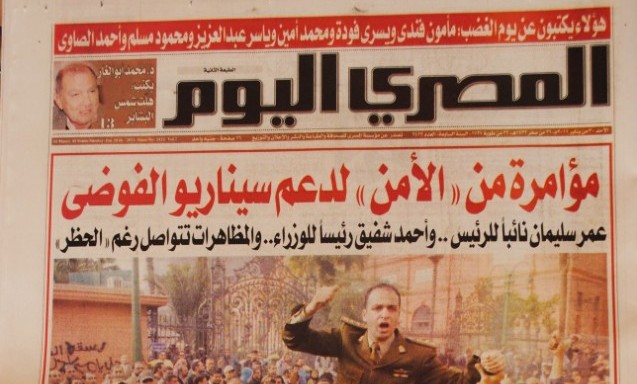
  • If you're like us, you're utterly curious about how news outlets in Egypt are covering some downright historic news for them – and with most other outlets out of commission, they're playing an immensely important role in keeping Egyptian citizens informed. Fortunately for us, The Economist is all over this, with copies of a number of newspapers in the region. Above is Al Masry Al Youm, an independent newpaper known for being critical of the Mubarak regime. Since we're guessing you don't read Arabic, that headline says "Conspiracy amid security forces to support chaos." They have a bunch of others, if you're curious. source

Posted by Ernie Smith • Permalink

Jan 28 2011W

World: Al-Jazeera: How the network became the Arab world's conscience

The notion that there is a common struggle across the Arab world is something Al Jazeera helped create. They did not cause these events, but it’s almost impossible to imagine all this happening without al-Jazeera.

George Washington University Middle East Studies professor Marc Lynch • Describing the role in popular uprisings that al-Jazeera has had over the years. It's a role that's clearly becoming more apparent this week as protests and popular uprisings become more widespread. While many praise the Qatar-based network for this role (we certainly do), others note that its coverage often seems biased or plays favorites – particularly favoring Hezbollah and Hamas. That said, al-Jazeera hasn't played such a central role as the conscience of the Arab world since the heady days of the Iraq War in 2003. Especially considering scenes like this one. source

Posted by Ernie Smith • Permalink