Read a little. Learn a lot. • Now Mullenweg-free! • Since 2009
☰

Tag: internet

215 posts

Mar 31 2012t

Clemency for Garry T. Allen

kohenari:

The National Coalition to Abolish the Death Penalty is taking to Twitter to urge Oklahoma’s Governor Mary Fallin to follow the recommendation of the Oklahoma Pardon and Parole Board to grant clemency to Garry T. Allen:

It is very rare for the Oklahoma Pardon and Parole Board to recommend clemency for a person facing execution, but they did exactly that by a vote of 4 to 1 in the case of Garry T. Allen, who is scheduled to be executed by the State of Oklahoma on Thursday, April 12, 2012 for his murder of Gail Titsworth. The many reasons for granting clemency that attracted four votes of the pardon and parole board, including that of a former prosecutor who consistently votes to deny clemency in almost all cases, have only grown over time.

Governor Fallin has stated that she won’t grant clemency to Mr. Allen. NCADP is urging people to sign this petition that urges her to reconsider and then to tweet this to their Twitter followers:

#Oklahoma P&P Board rarely recommends mercy, but it did for 4/12 execution of Garry Allen. http://bit.ly/GZ4H2w 2 take action! #deathpenalty

More information about the case, along with the petition to Governor Fallin, can be found here.

Clemency has been recommended for Allen already; the governor doesn’t want to follow through however. Think this is a mistake on the governor’s part? Get involved.

Posted by ShortFormBlog • Permalink

Mar 16 2012t

AOL has fired 40 employees in charge of AOL Instant Messenger’s development.

theweekmagazine:

AOL has fired 40 employees in charge of AOL Instant Messenger’s development. Only basic maintenance and customer service staff will remain. AOL reassures that they “are not killing instant messenger.”But skeptics say the layoffs are the beginning of the end for AIM. If the service that gave life to LOL and BRB fades away, will anybody miss it?

Ironically, the team behind the most recent iteration of AIM was about to shut down its prior app, Brizzly.

Posted by ShortFormBlog • Permalink

Mar 2 2012W

World: Pakistan's building a controversial wall around its internet access

  • $10 million to build a "great firewall" around Pakistan's interweb source
  • » And they're being open about it: Unlike China and other countries that have national internet censorship policies, Pakistan is discussing the issue openly, going so far as to take proposals to build a wall and putting ads in the country's newspapers. It's drawn a lot of controversy, however, partly as a result of the ads. “The authorities here are big fans of China and how it filters the Internet,” said Sana Saleem of the activist group Bolo Bhi. “They overlook the fact that China is an autocratic regime and we are a democracy.”

Posted by Ernie Smith • Permalink

Feb 27 2012t

60 seconds on social media by David Fung

soupsoup:

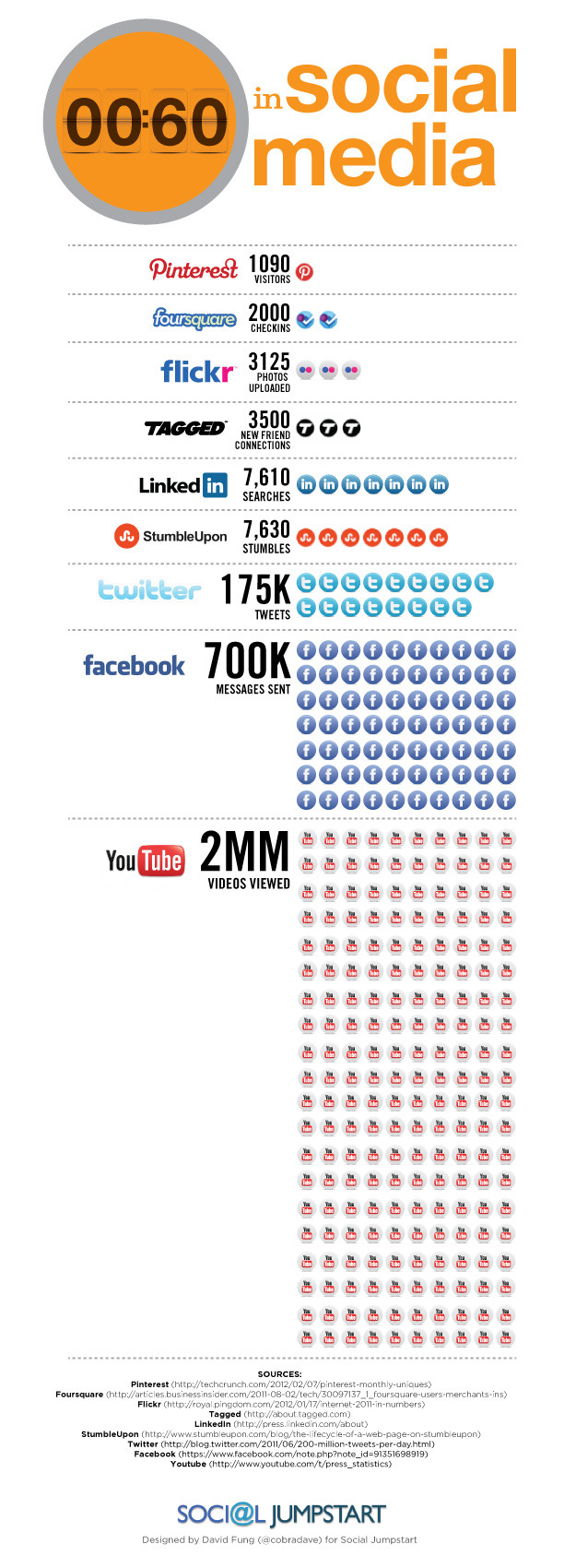
60 seconds on social media by David Fung

This informative, and somewhat staggering, chart displays how many interactions occur every sixty seconds on various “social” sites. We might caution against using these numbers for comparative purpose;,is there really an equivalency, for example, between viewing a YouTube video and sending a message on Facebook? Still, the overall thrust of the image is well-taken: Those of us with unfettered access to the Internet spend a whole lot of time on it. Also notable (or maybe not) is the exclusion of MySpace.

Posted by ShortFormBlog • Permalink

Feb 9 2012t

Big news on patent troll front: Eolas Technologies, which has long claimed to own patents on the…

An eight-member federal jury in East Texas deliberated Thursday for just a few hours before concluding that all of Eolas’ asserted claims of ownership to technology allowing access to the interactive web were invalid. That means the three upcoming trials that were scheduled to rule on infringement and damages, for Google, Yahoo and other companies, have been canceled. The eight defendant companies who resisted the lawsuits won’t pay anything to Eolas or its partner, the University of California, for using the web.

Eolas maintained its patents entitled the company to royalty payments from just about anyone running a website with “interactive” features, like rotating pictures or streaming video. The chief issue in the case was whether the first computer program that allowed access to an “interactive web” was created by the little-known Chicago biologist Doyle, who runs Eolas out of Chicago. Or was it one of the web pioneers put on the stand by the defendant companies — such as Pei-Yuan Wei and his Viola browser, or Dave Raggett and his tag?

This is a big deal, because Eolas basically put its headquarters in East Texas to file lawsuits because they knew the federal district was patent-troll-friendly. Props to that jury for smacking them down. As Ars Technica noted yesterday, this could’ve really screwed the Web. Eolas, which famously won a patent case against Microsoft nine years ago, was already planning to sue a ton of companies, many (including Staples and J.C. Penney) who had nothing to do with interactive Web technologies other than that they used them on their sites.

Posted by ShortFormBlog • Permalink

Dec 20 2011t

Earlier this week,

How Congress reads your e-mails

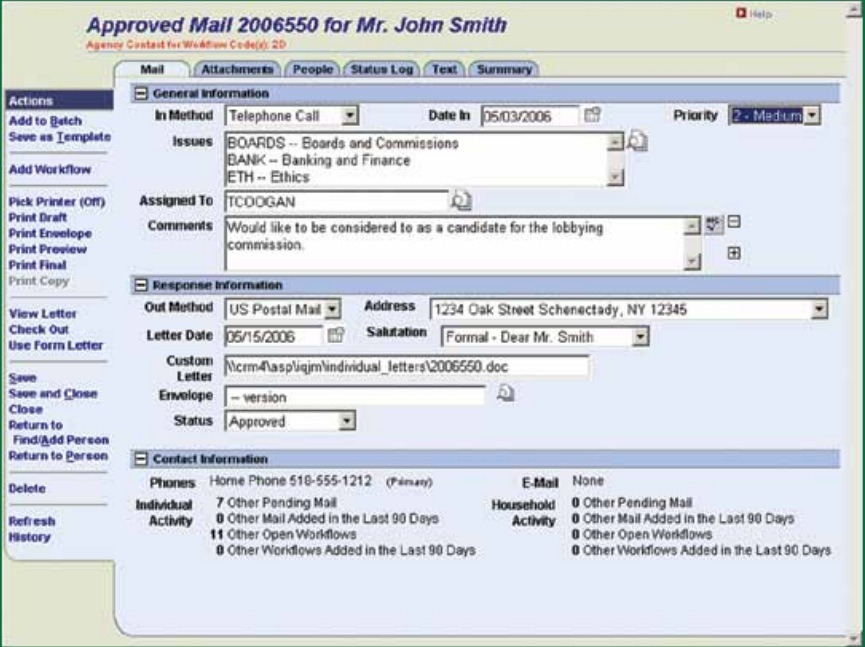
Earlier this week, we posted this wonderful Vice Magazine piece called “Dear Congress: It Is No Longer OK To Not Know How the Internet Works,” which took Congress to task for not understanding the ramifications of SOPA and bending too quickly to lobbyists. But a funny thing happened on the way to ripping Congress a new one: Clay Johnson wrote a brilliant response titled “Dear Internet: It’s No Longer OK to Not Know How Congress Works,” in which he points out the structural problems that might cause Congress to focus more on lobbyists than actual constituents. “Lobbyists can manage the attention of our Representatives because they have the time and the resources,” Johnson writes. “But I’ve never met a member of Congress who liked constantly begging for money so that they could get re-elected. Nobody wants that.” He points out that this horrifically-designed software above, a Lockheed Martin product called Intranet Quorum, is how Congress reads constituent letters, and that contracts prevent them from going with something else. Not nearly as sexy as Gmail, is it? No wonder lobbyists get more mindshare than voters, right? There is a huge lesson here to take from BOTH articles. Read them both, if you haven’t. (EDIT: We got a good response to this, which we wrote back to.)

Posted by ShortFormBlog • Permalink

Dec 17 2011t

The fact that there was any debate over whether to call in experts on such a matter should tell you something…

The fact that there was any debate over whether to call in experts on such a matter should tell you something about the integrity of Congress. It’d be one thing if legitimate technical questions directed at the bill’s supporters weren’t met with either silence or veiled accusations that the other side was sympathetic to piracy. Yet here we are with a group of elected officials openly supporting a bill they can’t explain, and having the temerity to suggest there’s no need to “bring in the nerds” to suss out what’s actually on it… The chilling takeaway of this whole debacle was the irrefutable air of anti-intellectualism; that inescapable absurdity that we have members of Congress voting on a technical bill who do not posses any technical knowledge on the subject and do not find it imperative to recognize those who do.

This used to be funny, but now it’s really just terrifying. We’re dealing with legislation that will completely change the face of the internet and free speech for years to come. Yet here we are, still at the mercy of underachieving Congressional know-nothings that have more in common with the slacker students sitting in the back of math class than elected representatives. The fact that some of the people charged with representing us must be dragged kicking and screaming out of their complacency on such matters is no longer endearing — it’s just pathetic and sad.

— Joshua Kopstein, Dear Congress, It’s No Longer OK To Not Know How The Internet Works (via drinkyourjuice)

This friends, is the most important article you’ll read today.

Posted by ShortFormBlog • Permalink

Nov 25 2011t

Decades of evidence from around the globe all show the same thing: making copyright law or enforcement…

Decades of evidence from around the globe all show the same thing: making copyright law or enforcement stricter does not work. It does not decrease infringement at all — and, quite frequently, leads to more infringement.

— From TechDirt’s article on PROTECT-IP and SOPA, titled “The Definitive Post On Why SOPA And Protect IP Are Bad, Bad Ideas.” If you had to cut down the entire argument to two sentences, these two are the ticket. By the way, in case you missed it the other night, there’s a letter floating around, allegedly sent by NBC Universal to its suppliers, attempting to strongarm them into supporting SOPA. Chew on that while you’re eating your breakfast of turkey and stuffing.

Posted by ShortFormBlog • Permalink