Read a little. Learn a lot. • Now Mullenweg-free! • Since 2009
☰

Tag: innovation

35 posts

Aug262012t

The Missourian’s change to a pay model is consistent with industry trends; its method, with everything free…

The Missourian’s change to a pay model is consistent with industry trends; its method, with everything free for the first 24 hours of publication, is experimental and reflects a core mission of this newspaper to test innovative practices for the news industry.

— Tom Warhover, executive editor of the Columbia, Mo. Missourian • Regarding the paper’s interesting take on paywalling its content — everything will be free for the first 24 hours, but after the one-day mark, you hit a paywall. (The model corresponds with a suite of new digital apps for the publication.) This is a relatively untried model — most outlets in recent years have preferred to, instead, follow the New York Times’ successful metered paywall model. But the Missourian, which is run by the University of Missouri and staffed by J-school students, is the perfect testbed for an experimental model. The paper was one of the first newspapers to go online, and has a long tradition of trying new things. So it’ll be interesting to see what they do.

Posted by ShortFormBlog • Permalink

Jul272012t

A brilliant new take on New Yorker cartoons

themonkeysyouordered:

120409

We put these skeletons together to make it look like they’re dancing.

In the “ideas we wish we’d thought of” department: This blog is devoted to taking New Yorker cartoons, stripping out the captions, and replacing them with dialogue that describes, in the most literal fashion possible, what is happening. This is our favorite thing since Garfield Minus Garfield.

Posted by ShortFormBlog • Permalink

Jul192012t

Here’s the problem: while ‘I’m buying a dream’ makes a certain amount of sense for a $1 lottery ticket, it…

Here’s the problem: while ‘I’m buying a dream’ makes a certain amount of sense for a $1 lottery ticket, it makes much less sense for $100 vaporware. Just speaking for myself, if I’m spending $100, I want significantly more than just a dream. That’s more money than I’ve spent on lottery tickets in my lifetime.

— Reuters’ Felix Salmon takes on the idea that Kickstarter’s business model is “selling dreams,” i.e., marketing ideas which may or may not actually happen. Salmon, jumping off commentary by Fast Company’s Ian Bogost, agrees with Bogost (in part) that Kickstarter is like QVC when it first launched — an innovative approach to marketing that’s very social and mixes multiple conceits. But there’s more going on than that, he notes. “Kickstarter neatly wraps that charitable impulse in a commercial transaction, which makes it easier to ask for — and receive — more money than either approach would yield on its own.” Salmon wonders aloud if a handful of high-profile failures might take the whole thing down a few pegs. To those who have donated to Kickstarter projects, was it worth it in the end?

Posted by ShortFormBlog • Permalink

May242012t

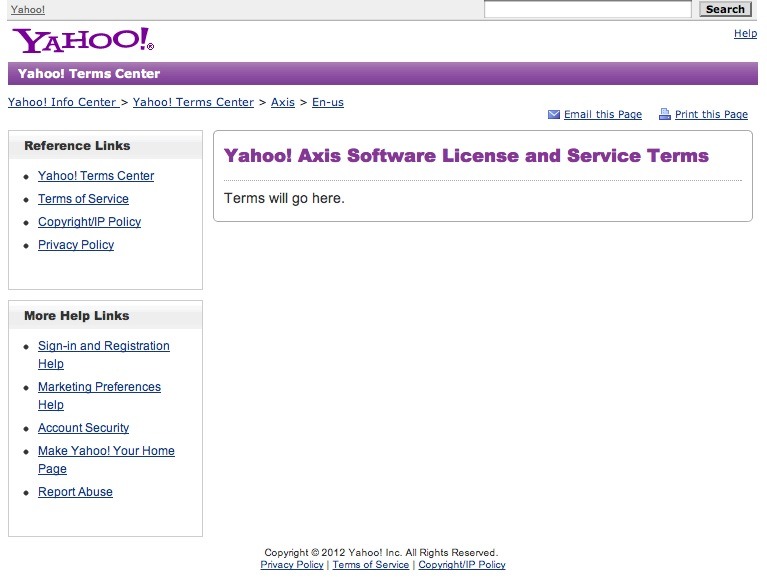
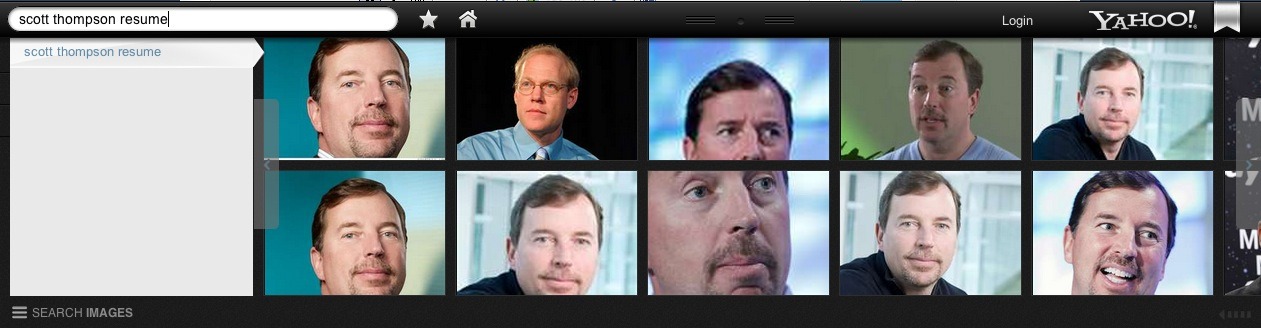
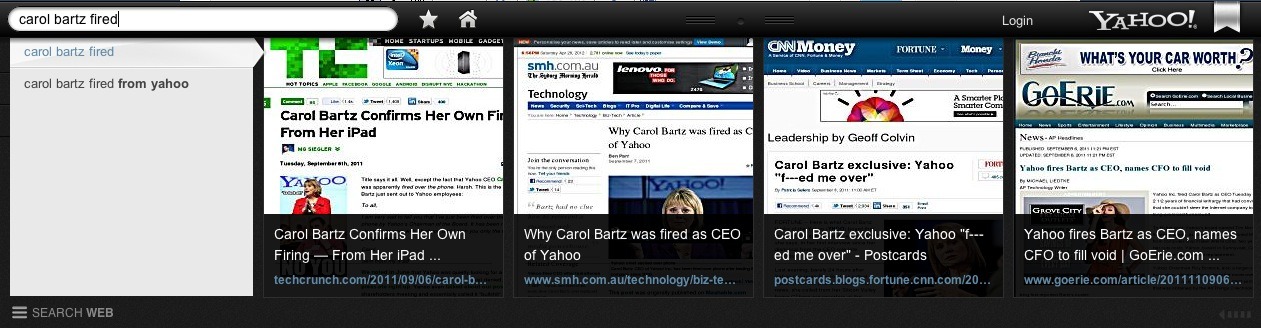
Playing with Yahoo Axis

Search for "Carol Bartz Fired"

Yahoo Axis front page

Terms of service search

Image search for "Scott Thompson Resume"

Playing with Yahoo Axis: Nice for looking up info on awesome bands, I’ll give ‘em that. The killer feature here appears to be that you can keep browsing whether or not you’re on your desktop, iPhone or iPad. Searching without leaving the page is cool, too, though the persistent search bar falls apart on popup windows. But we didn’t need search to find out the best feature of Yahoo Axis — it currently, as of this moment, has no terms of service. Go wild, guys!

Posted by ShortFormBlog • Permalink

May32012t

Is this the future of journalism?

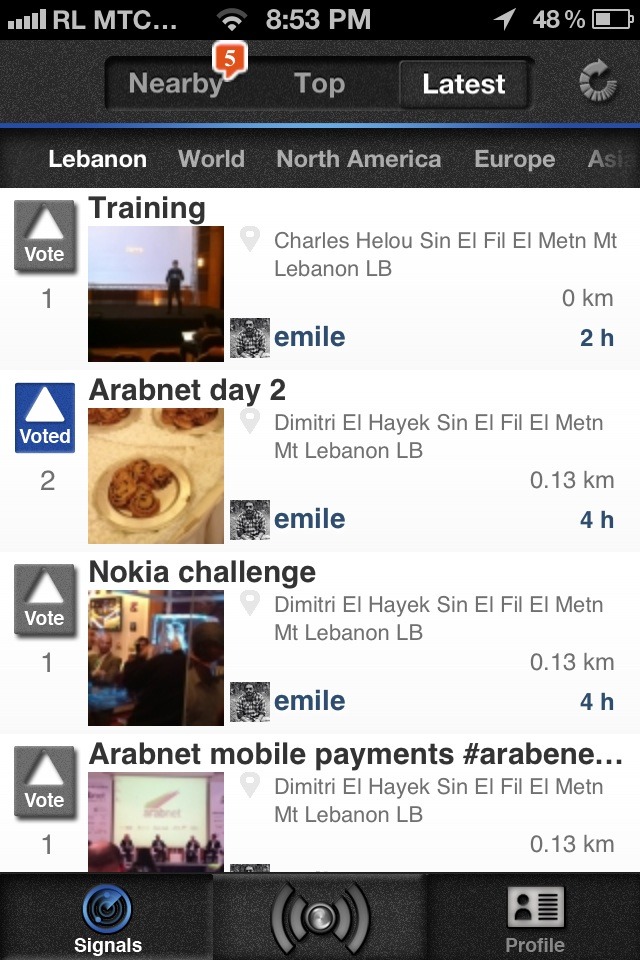
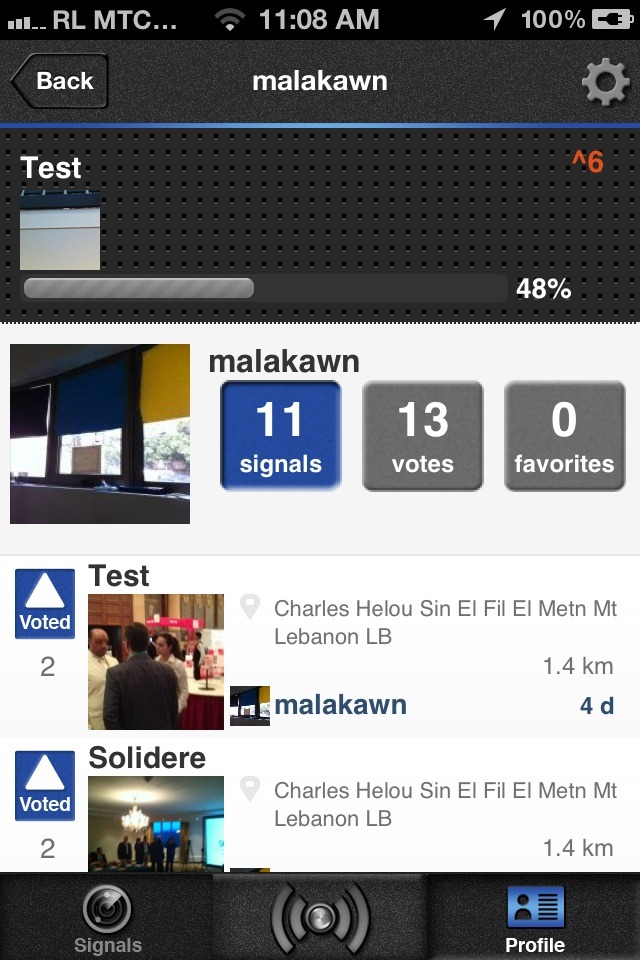
Is this the future of journalism? The currently-in-private-beta iOS app Signal wants to bring a little geolocation, quick sharing, Reddit-style voting and right-place-right-time-ness to the world of citizen journalism — with hopes of making it as simple as Instagram. It looks like a sweet little app, and it’s one that intends to focus less on who is publishing the news, and more on what the news is, wherever it is in the world. When it comes out, we wonder if people will see why.

Posted by ShortFormBlog • Permalink

Apr192012t

Don't Like the News? There's a Button for That

futurejournalismproject:

Norway’s second largest tabloid is offering readers a button at the top of its Web site that will remove all articles about Anders Breivik, the man who went on a murder rampage in Norway last July, and now stands trial.

As Journalism.co.uk points out, this is similar to a Guardian experiment last year when they too had a button to remove articles. In that case, the offending media frenzy readers sought refuge from was the royal wedding.

Any story you’d like to see removed from the news sites you read?

Posted by ShortFormBlog • Permalink

Mar132012t

By enabling the connection of everyday devices we are pushing the edge of the internet out. By connecting…

By enabling the connection of everyday devices we are pushing the edge of the internet out. By connecting rooms or motors to the internet, you could significantly reduce the amount of energy consumed worldwide.

— Arm Holdings director Gary Atkinson • Discussing the company’s new “Flycatcher” chip, which intends on stretching out the ways in which the internet could be used. The less than 1mm square chip, officially called Cortex-M0+, brings 32 bits of processing power to devices that may have never had it before — well-suited for devices that use radio or Bluetooth signals to connect. And on top of that, the chips are designed to use very little battery life (with a very low-leakage sleep mode), allowing them to survive months or years on a single charge. So what does that mean for you, average citizen? Basically, devices that before would’ve never used internet access — say, parking meters, traffic lights, stethoscopes or fridges — might get online, too. Neat.

Posted by ShortFormBlog • Permalink

Mar112012t

Meet Clarence. He was made homeless by Hurricane Katrina.

Meet Clarence. He was made homeless by Hurricane Katrina. In some cities, the homeless hawk newspapers as a way to raise income. With the help of the charitable arm of advertising agency BBH New York, Clarence is selling 4G wireless access at SXSW — $2 for 15 minutes. And in case you need said access to follow you while you’re doing something, he’ll follow along and even keep you company. This is cool and kinda innovative.

EDIT: As one or two folks raised concerns about the idea, we asked the Homeless Hotspots folks via Twitter what sort of response they’ve gotten. Here’s what they had to say:

@ShortFormErnie The few concerns (there’ve been some) are from people who haven’t seen 1st hand. Activists & experts generally v positive!

— Homeless Hotspots (@HHSXSW) March 11, 2012

Second EDIT: Please hop over here to see some more of our thoughts on this issue. Ultimately, the key thing is that this is a difficult issue, and difficult issues are prone to debate.

Posted by ShortFormBlog • Permalink