Read a little. Learn a lot. • Now Mullenweg-free! • Since 2009
☰

Tag: innovation

35 posts

Feb 9 2012t

Inside Breaking News: BreakingNews at Social Media Week

breakingblog:

Attention New Yorkers: BreakingNews’ Lauren McCullough will be joining a panel of colleagues at Social Media Week New York on Feb. 16 at noon for a candid discussion about ways traditional news organizations can incubate innovation in their culture.

The panel, “Creating Start-Ups…

If you’re within shouting distance of NYC, this is the Social Media Week session you wanna go to. (This one too, but sadly it’s sold out.) If you’re not, there are hundreds of others around the world. Take a couple hours off from work next week. Expand your brain.

Posted by ShortFormBlog • Permalink

Jan 30 2012t

“There are a lot of rich people in the world. There are very few people who have the privilege of getting to…

There are a lot of rich people in the world. There are very few people who have the privilege of getting to invent things that billions of people use.

— Interview: David Karp, founder of Tumblr, on realising his dream (via joshuanguyen)

A quote like that shows the kind of pride he takes from this crazy thing. Props to him.

Posted by ShortFormBlog • Permalink

Dec 20 2011W

Tech: Clothing with a twist: Smartphones could gain a couple wearable friends

Years ago, researchers envisioned these tiny computers transmitting information to the Internet. It wasn't what we envisioned, but it happened. It's called the smartphone.

Yael Maguire, a visiting scientist at M.I.T. and Harvard • On the advancement of phone technologies in more wearable directions. Secret projects led by Google and Apple could allow users to carry around lightweight, connected devices that fit in with what you're already wearing — think a bracelet-style iPod with the ability to talk to Siri whenever you want. All of this is possible thanks to the invention of the smartphone, which is kind of a wearable computer already. We bet these toys will work perfectly with mock turtlenecks. source

Posted by Sami Main • Permalink

Nov 2 2011t

In case you needed a reminder, Bill Gates isn't Steve Jobs. That doesn't get any more obvious than the story…

At one point during that meeting in early 2010 at Gates’ waterfront offices in Kirkland, Wash., Gates asked Allard how users get e-mail. Allard, Microsoft’s executive hipster charged with keeping tabs on computing trends, told Gates his team wasn’t trying to build another e-mail experience. He reasoned that everyone who had a Courier would also have a smartphone for quick e-mail writing and retrieval and a PC for more detailed exchanges. Courier users could get e-mail from the Web, Allard said, according to sources familiar with the meeting.

But the device wasn’t intended to be a computer replacement; it was meant to complement PCs. Courier users wouldn’t want or need a feature-rich e-mail application such as Microsoft’s Outlook that lets them switch to conversation views in their inbox or support offline e-mail reading and writing. The key to Courier, Allard’s team argued, was its focus on content creation. Courier was for the creative set, a gadget on which architects might begin to sketch building plans, or writers might begin to draft documents.

“This is where Bill had an allergic reaction,” said one Courier worker who talked with an attendee of the meeting. As is his style in product reviews, Gates pressed Allard, challenging the logic of the approach.

It’s not hard to understand Gates’ response. Microsoft makes billions of dollars every year on its Exchange e-mail server software and its Outlook e-mail application. While heated debates are common in Microsoft’s development process, Gates’ concerns didn’t bode well for Courier. He conveyed his opinions to Ballmer, who was gathering data from others at the company as well.

While Steve Jobs was releasing the iPad, Steve Ballmer was killing the Microsoft Courier, possibly the most innovative product concept ever to come out of Redmond. Ballmer was on the fence about the Courier until he talked to Bill Gates. Not long later, the exec behind the idea, J Allard, left the company (though he claims this wasn’t the reason). This is a corporate culture that prints money, but when presented with an amazing idea, kills it. Our heart sinks.

Posted by ShortFormBlog • Permalink

Oct 20 2011t

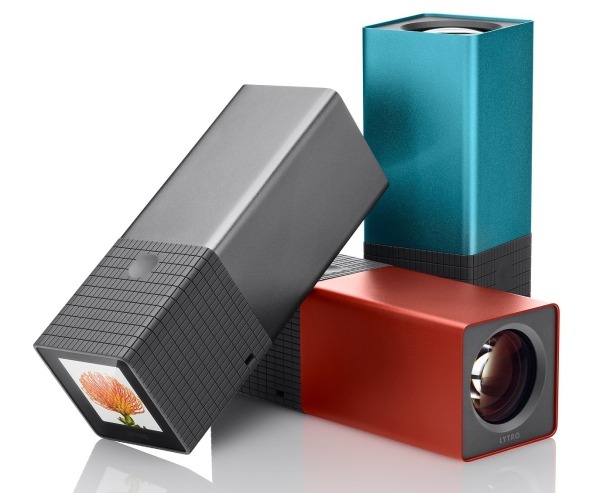
Speaking of fairly innovative things, the Lytro — launched in full today after a tease a few months back that…

Speaking of fairly innovative things, the Lytro — launched in full today after a tease a few months back that got people excited — just turned the idea of a camera totally on its head. Those long, rectangular things? That’s the camera. No need to put it up to your eye, because, being a light-field camera, it can focus the shot after the fact. And the price point? A fairly cheap $399. That’s what we call radical reinvention, friends. Is this company the Kodak of the 21st century, or something else? We’re totally curious.

Posted by ShortFormBlog • Permalink

Jun 12 2011t

Steel is what we would call a ‘mature technology.’ We’d like to think we know most everything about it. If…

Steel is what we would call a ‘mature technology.’ We’d like to think we know most everything about it. If someone invented a way to strengthen the strongest steels even a few percent, that would be a big deal. But 7 percent? That’s huge.

— Ohio State professor and engineer Suresh Babu • Discussing a Detroit-based DIY dude’s method of creating a stronger type of steel. The technology, called Flash Bainite, was made by Gary Cola, a metal hacker who managed to figure out a way to cook really strong steel in a matter of seconds — ten to be exact. Babu was skeptical, as you might guess. "The process that Gary described – it shouldn’t have worked,“ he said. "I didn’t believe him. So he took my students and me to Detroit.” We expect Apple to use this technology in their next iPhone, just because.

Posted by ShortFormBlog • Permalink

Jun 2 2011W

Tech: Windows 8 in action: Microsoft gives the mothership a shake-up

  • A refresh of "Start Menu" dynamics: Microsoft's upcoming refresh of Windows is a bold reboot of an OS way-better known for its incremental updates. WIth an interface that's closer to Windows Phone 7 than anything that the desktop OS has done, the GUI appears to be touch-first, mouse-second, but done in such a way that doesn't necessarily turn off the mouse crowd. Honestly, this is the most-impressive GUI we've ever seen from Microsoft, if for no other reason than that most of their operating systems have been terrible, in our humble opinion. The ball's in your court, Steve Jobs — whaddya got for us at WWDC? source

Posted by Ernie Smith • Permalink