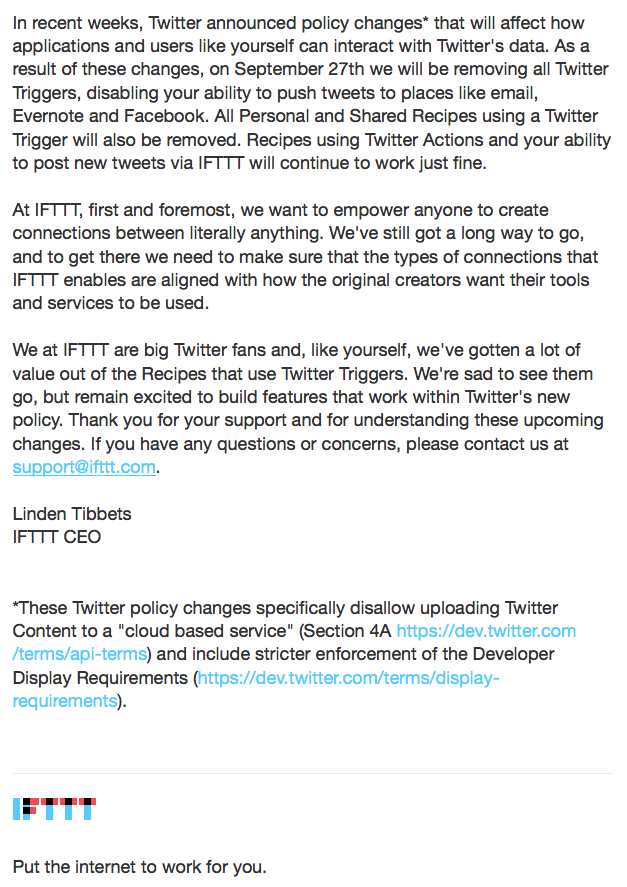
The next victim of Twitter’s API policy? The great IFTTT, which may be forced to change its name to “If This Then Nothing” in regards to Twitter. (via e-mail)
 ShortFormBlogRead a little. Learn a lot. • Now Mullenweg-free! • Since 2009
6 posts
The next victim of Twitter’s API policy? The great IFTTT, which may be forced to change its name to “If This Then Nothing” in regards to Twitter. (via e-mail)
Posted by Ernie Smith • Permalink
Twitter really, really, really wants people to stay inside Twitter because it really, really, really wants advertising money.
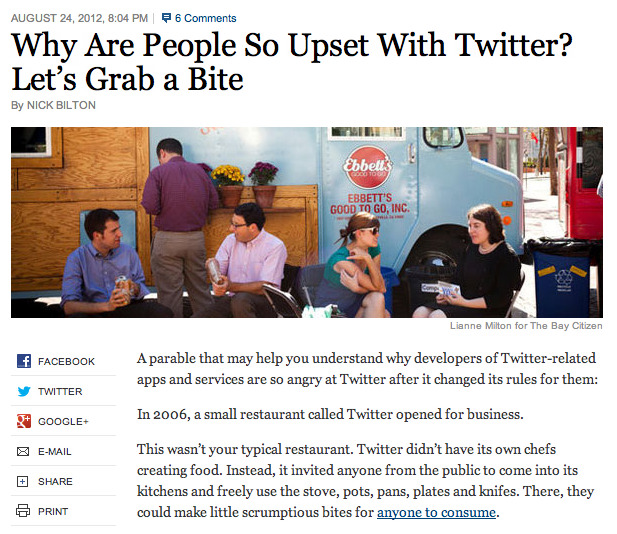
In related news: TweetBot had to take down the alpha of its Mac app because Twitter was counting beta users against the 100,000-user total they implemented just after the alpha was released.
Dear Twitter: I will give you $50. Just give me access to the API and let me do what I want.
Posted by ShortFormBlog • Permalink
Posted by ShortFormBlog • Permalink
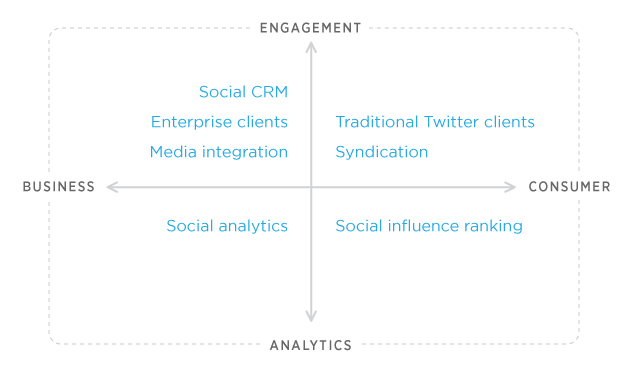
A couple of hours ago, the company's Michael Sippey writing a blog post about the company’s API which wants to discourage certain types of apps from growing. What types of apps, you ask? Basically, anything described in the upper-right quadrant of this graphic. What types of apps are those? Well …
In the upper right-hand quadrant are services that enable users to interact with Tweets, like the Tweet curation service Storify or the Tweet discovery site Favstar.fm.
That upper-right quadrant also includes, of course, “traditional” Twitter clients like Tweetbot and Echofon. Nearly eighteen months ago, we gave developers guidance that they should not build client apps that mimic or reproduce the mainstream Twitter consumer client experience.“ And to reiterate what I wrote in my last post, that guidance continues to apply today.
As we pointed out recently, the Twitter alternative App.Net came to being out of reaction to some decisions Twitter was making about the company’s ecosystem. By actively discouraging development of these kinds of apps — stuff that front-facing consumers use — and enforcing limits on the size of developer apps (100,000 users or, if you’re already huge, 200 percent of your current userbase) Twitter may force the hand of certain developers to leave the service. Now, to be clear, Twitter can allow some of these apps to further expand, but based on this document, they may just say no. So to put it simply, if truly innovative things like Storify can’t grow in this model anymore, Twitter encourages them to leave. This is an incredibly poorly-considered decision and will cost them in the long term as a platform.
Posted by ShortFormBlog • Permalink
Don’t build Twitter clients; but more specifically, don’t build any features for the non-business Twitter user, the average consumer. Twitter is still very much experimenting and optimizing in that arena, and the company doesn’t want to have to crush you when they launch a feature that duplicates the entire functionality of your app. But they will.
— Twitter’s advice to developers in its ecosystem, from @jolieodell
(via felixsalmon)
The rub about building your product around another company’s API.
Posted by ShortFormBlog • Permalink
Twitter platform team leader Ryan Sarver • Revealing that the company, which built itself on the back of third-party clients, will no longer allow new ones to crop up. However, the ones there can still operate – well, that is, as long as they uphold high standards set by the company. Hear that? That's the chirp of a bird that got really arrogant after it learned how to fly. We're sorry – third-party clients basically built this platform and for Twitter to change the game now seems completely uncool. source
Posted by Ernie Smith • Permalink