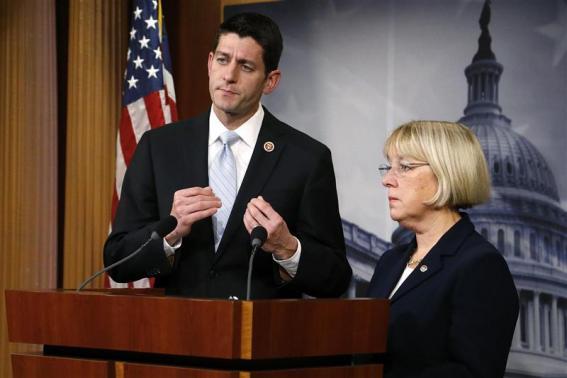
So the House and Senate actually came up with a bipartisan budget. Props to our boy Paul Ryan and his Senate counterpart Patty Murray for working together on a plan (which they actually called The Bipartisan Budget Act of 2013) to roll back most of the toughest sequestration cuts. But not everyone’s impressed.
Tag: sequestration
15 posts
These Nobel Prize in Physiology or Medicine winners would like you to know how federal funding cuts are…
James Rothman, 62, professor of biomedical sciences at Yale University; Randy Schekman, 64, professor of molecular and cell biology at the University of California, Berkeley; and Thomas C. Suedhof, 57, a physiology professor at Stanford University, yesterday won the prize for detailing how chemicals produced by cells are shuttled from one place to another. The work has led to new production methods for insulin and opened new avenues for treating disease.
The U.S. government shutdown, now in its second week, brought a halt to basic research at the National Institutes of Health. The agency also suspended grant applications. On March 1, President Barack Obama ordered the NIH to cut $1.55 billion, or 5 percent, of its 2013 budget. Science funding is “imperiled,” Suedhof said yesterday during a conference call.
“Particularly now people need to be reminded that that investment is being eroded and suspended because of government inaction,” Schekman said in an interview.
Not surprising, just depressing.
Posted by Ernie Smith • Permalink
The real impact of sequester is that our programs don’t have the ability to expand to meet the growing need.
— Meals on Wheels Association of America President and CEO Ellie Hollander • Discussing the effects that sequestration have had on the Meals on Wheels program’s ability to offer hot foods to senior citizens. Such programs are being forced to cut as many as 364 meals per week, on average, due to federal cuts.
Posted by Ernie Smith • Permalink
On the downside, no more fancy Blue Angels
REUTERS/U.S. Navy/Mass Communication Specialist 2nd Class Andrew Johnson/Handout
The U.S. Navy’s renowned flight demonstration squadron has cancelled its flying season due to federal spending cuts.
On the downside, no more fancy Blue Angels for you fans of fancy air shows. On the upside, a little peace and quiet come Fleet Week time for the rest of us.
Posted by ShortFormBlog • Permalink
Sequestration forces White House to tighten its belt, too
- 480 White House staffers will be required to take unpaid days off as a result of the sequestration which took effect on March 1, according to White House press secretary Jay Carney. White House officials have also apparently scaled back staff travel expenses, delayed filling open positions, and stopped using mobile Internet cards.
Posted by Scott Craft • Permalink
Feels like everyone’s heads have been spinning,
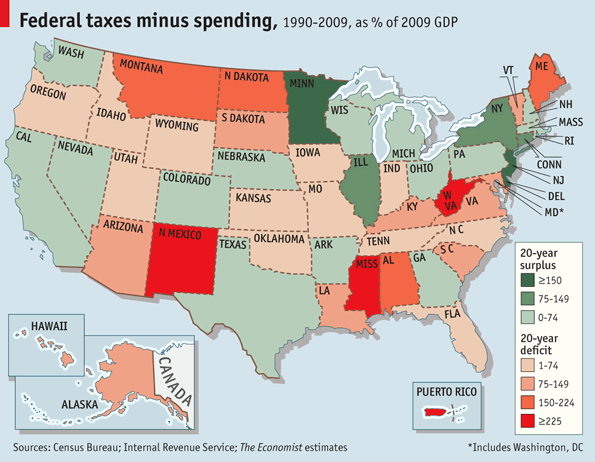
“America’s fiscal union: The red and the black” | The Economist
The sequester is here! And this map is probably a good indication of what it means for you. The “redder” your state, the most likely you’ll be negatively affected by the sequester. Why? Because “redder” states get more money from the federal government than they send back in taxes.
I currently live in Mississippi. We’re going to be hit especially hard. Because, as this map shows, Mississippi runs a 254% deficit (as of 2009) in federal transfers. The state gets an estimated $2.47 for every federal dollar sent.
Basically, think of the “redder” states as on a form of federal-to-state welfare. And since the cuts are going to all kinds of programs and services, they’ll likely hit those state hard. That means states like Mississippi will have two options: 1) Kick in more state revenue to make up for cut programs. 2) Lose the benefits of those programs. Since the many of the “redder” states are poorer than the “bluer” states (e.g. the median household income in Mississippi is $36,656 compared to $69,272 in Maryland), option #2 would simply mean falling further behind in terms of poverty, education, and health. But option #1 means collecting more taxes to make up the differences. And since states collect taxes less efficiently than the federal government, often through less progressive taxes, and will have to negotiate prices for goods and services from a weaker position, the pocketbook impact of taxes would be high.
So let’s get our sequester on! Let’s find out just how little federal government voters really want.
Feels like everyone’s heads have been spinning, to the point of fatigue, on the matter of the budget sequestration that went into effect with President Obama’s signature Friday night. It’s a nice change of pace, instead of arguing political benefits and machinations, to start getting some practical information about what sequestration will mean for the states.
Posted by ShortFormBlog • Permalink
Instead of directing his cabinet secretaries to trim waste in their departments, he’s going to go after first…
Instead of directing his cabinet secretaries to trim waste in their departments, he’s going to go after first responders. And teachers. And almost any other sympathetic constituency you can think of. And he’ll arbitrarily close parks and monuments too – all to force Americans to accept higher taxes. He’ll claim his hands are tied.
— Senate Minority Leader Mitch McConnell • Throwing tough words at President Obama regarding the sequestration deadline, which passed at midnight without a deal in sight. House Speaker John Boehner, while calling the cuts “not smart,” instead pointed out that his own party was on the hook to find a solution … but it hadn’t.
Posted by Ernie Smith • Permalink
Obama calls a
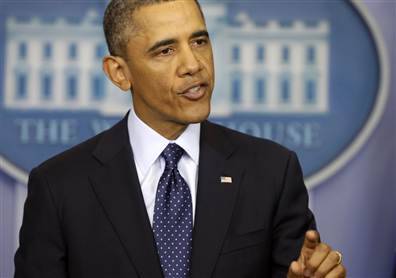
Obama calls automatic spending cuts ‘dumb’; blames GOP NBC News: President Barack Obama said the “dumb” automatic across-the-board cuts going into effect today are the fault of Republican resistance to a reasonable deal to avert the sequestration’s budget reductions.
“I know that this has been some of the conventional wisdom that’s been floating around Washington,” Obama told reporters after meeting with congressional leaders. “Even though most people agree that I’m being reasonable, that most people agree that I am presenting a fair deal — the fact that [Republicans] don’t take it means that I should somehow do a Jedi mind meld with these folks and convince them to do what’s right,” he said.
Earlier, Obama met with House Speaker John Boehner, Senate Majority Leader Harry Reid, Senate Republican leader Mitch McConnell and House Democratic leader Nancy Pelosi.
In a brief statement to reporters after the meeting, Boehner reiterated that Republicans will continue to oppose Democratic proposals to raise new revenues to offset the cuts.
Photo: President Barack Obama speaks to reporters in the White House briefing room in Washington, Friday, March 1. (Charles Dharapak/AP)
Doesn’t sound like anyone’s in a compromisin’ mood.
Posted by Ernie Smith • Permalink
Democratic Rep. Keith Ellison was on “Hannity” tonight,
Democratic Rep. Keith Ellison was on “Hannity” tonight, and man, was it the best talking-heads-yelling-at-each-other session we’ve seen in a long time. Ellison called Hannity “the worst excuse for a journalist I’ve ever seen.” Hannity called Ellison “a total waste of time.” And Hannity finally kicked Ellison off. High quality bad TV right here, folks.
Posted by Ernie Smith • Permalink
With one newspaper cover,

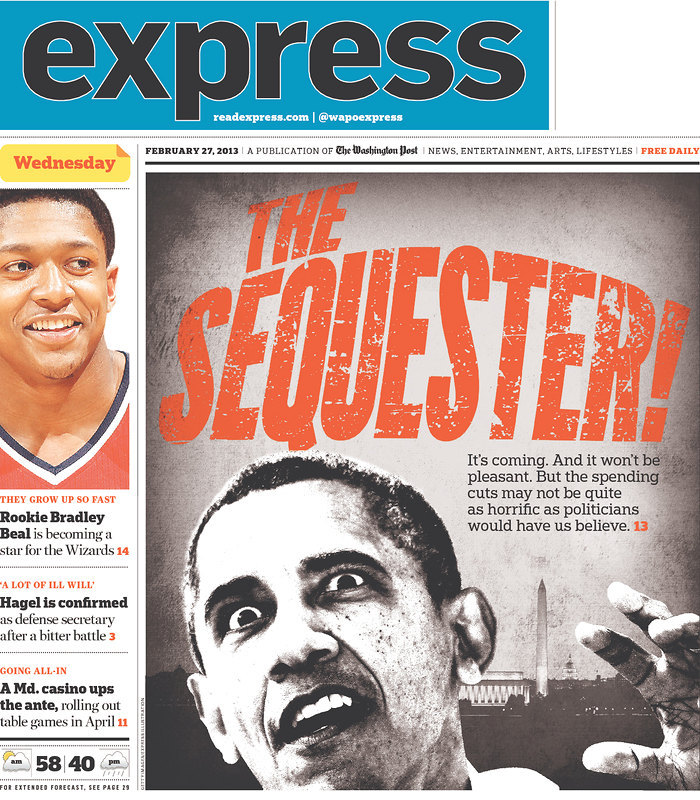
With one newspaper cover, The Washington Post Express wins sequestration. (via Newseum)
Posted by Ernie Smith • Permalink