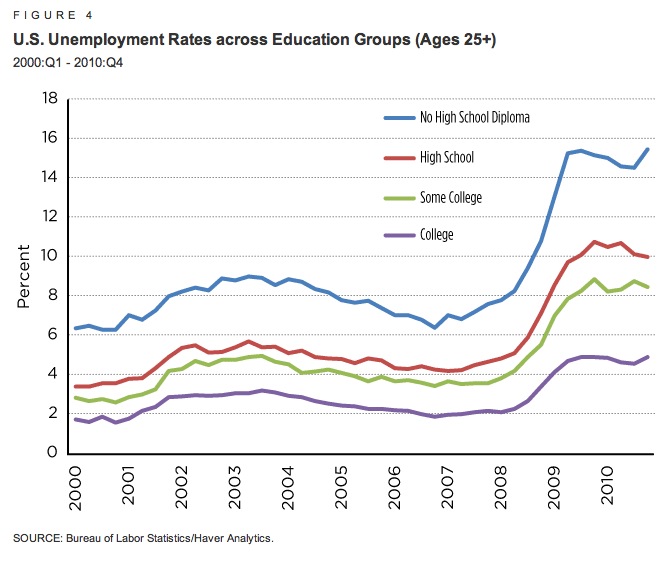
This is why they tell you to stay in school, kids. Seriously, look at that discrepancy! Of course, the usual causation-correlation disclaimer is in effect here; maybe the kids who graduated college were the ones naturally more predisposed to keeping a job anyway? Nevertheless, this should give pause to any high schoolers considering dropping out. (source: Federal Reserve Bank of St. Louis)source
threenumber of weeks the government will likely put a new budget on layaway to prevent a shutdown source
» Oh yeah: The next temporary deal could include restrictions that limit how and when the budget can be used – such as, for example, no money spent on the new health care law. Hrm.
8.9%the unemployment rate in February, the lowest it's been in over two years
192kthe increase in nonfarm payrolls – the biggest monthly leap since May
58kthe jump in January's payroll numbers in revised estimates source
» Why this jump is a pretty big deal: Simply put, this is all private-sector growth, meaning that business are hiring again. It's not nearly as quick as economists want it, but the growth is promising, so they'll take it. Also worth noting – the jump in jobs last May was due to the Census, which means that those were here-today-gone-tomorrow-type jobs. This is actual, real growth. Hopefully it keeps up.
8.9%the unemployment rate in February, the lowest it’s been in over two years
192kthe increase in nonfarm payrolls – the biggest monthly leap since May
58kthe jump in January’s payroll numbers in revised estimates source
» Why this jump is a pretty big deal: Simply put, this is all private-sector growth, meaning that business are hiring again. It’s not nearly as quick as economists want it, but the growth is promising, so they’ll take it. Also worth noting – the jump in jobs last May was due to the Census, which means that those were here-today-gone-tomorrow-type jobs. This is actual, real growth. Hopefully it keeps up.
6.4million people not counted in the "labor force" want jobs now
8.9%the percentage of people the U.S. government says are unemployed, according to traditional figures which have been caressed with great care to look as good as possible
12.6%the percentage of people who the government says want a job, but are unable to get one – a number that includes, but extends BEYOND the unemployed source
$700Bthe amount the U.S. spent on the Troubled Asset Relief Program back in 2008
$341Bthe amount it looked like taxpayers were going to lose on the bailout deal back in mid-2009
$25Bthe amount it looks like we'll lose on TARP; this is because we gave the money to banks source
» Not all is rosy in Bailoutville: One of the biggest issues we still face are the dual sinkholes of Fannie Mae and Freddie Mac, which have reportedly cost taxpayers $150 billion and we like to think of as dual sinkholes. And some legislators feel that the effect has set us up for having to bail out unsuccessful companies in the future.
13%drop in income tax payments since Bush's last year in office
33%decrease in taxes paid by corporations since 2008; that's a big drop
1950the last time taxes (as a percentage of the entire US economy) were this low source
» But don't get too excited. While lower taxes may sound nice on paper, the real reason for this drop isn't as much due to policy changes as it is the recession. See, people (and corporations) are making a whole lot less money than they were a few years ago; hence, they're paying less in taxes. And that sucks for just about everybody involved. However, Senator Kent Conrad of North Dakota places a lot of the blame on our nation's tax code itself, calling it a "simply indefensible" policy that's "hemorrhaging revenue." Still, our primary focus should probably be on pulling our economy out of the toilet. Then we can fix the tax code.
 ShortFormBlog