Read a little. Learn a lot. • Now Mullenweg-free! • Since 2009
☰

Tag: publishers

7 posts

Sep 29 2012t

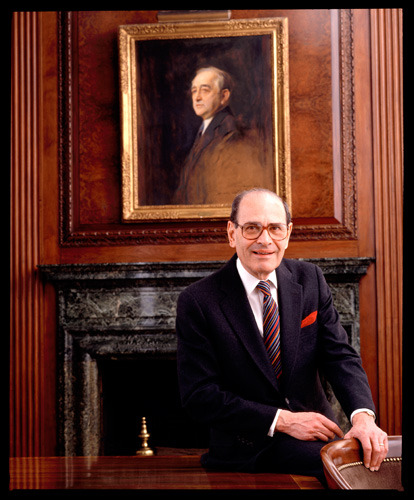
Former New York Times publisher Arthur O. Sulzberger,

Former New York Times publisher Arthur O. Sulzberger, who led the paper as its publisher for 29 years (between 1963 and 1992), and was the company’s chairman until 1997, has died. He was 86 years old. To give you an idea of his impact on the paper: He introduced the paper’s incredibly popular (and widely-imitated) feature sections, and also played a role in the paper’s deciding to print the Pentagon Papers in 1971. During this period, the paper grew to be one of the largest and most-well-regarded in the world. An important journalistic figure who will be missed.

Posted by Ernie Smith • Permalink

Oct 16 2011W

Biz: Publishers freak out because Amazon's cutting into their territory

  • cause Amazon, with its growing clout as an e-book outlet and ability to work around the traditional system, has made significant inroads as a publisher of books, with at least one bestseller to its name. They will publish 122 books this fall in electronic and physical form.
  • reaction Large publishers and agents are starting to freak out. In one case, Hawaiian writer Kiana Davenport angered the publisher of a forthcoming book and got sued because she dared use Amazon to self-publish an old anthology no publisher wanted. source

Posted by Ernie Smith • Permalink

Feb 15 2011W

Tech: Steve Jobs on subscriber service: We won't always take 30 percent

Our philosophy is simple - when Apple brings a new subscriber to the app, Apple earns a 30 percent share; when the publisher brings an existing or new subscriber to the app, the publisher keeps 100 percent and Apple earns nothing.

Steve Jobs (who's still on medical leave) • In a statement announcing the new App Store subscription service, which reveals a pretty awesome financial path for publishers of all stripes. Apple will take their 30 percent revenue share if they lead to the subscription; if the publisher does it, they keep 100 percent. One interesting thing to note is the way that the service handles consumer information. Many magazine publishers make money by using consumer information from their subscriber base – a move somewhat at odds with Apple's App Store model. In a compromise move, Apple will allow consumers to say how much information they want to give out. The overall model is similar to that of The Daily, which launched last month to general praise. source

Posted by Ernie Smith • Permalink

Feb 20 2010W

Tech: Authors all scared eBooks about to ruin the book economic model

I’ve got news: It takes about a year to write a book, you have to travel extensively, you have to do a lot of fact-checking. What Amazon and Apple are trying to do is significantly decrease the amount of money that publishers, and specifically authors, can make.

The Register writer Dan Goodin • Regarding the possibility of making profits off of eBooks via Kindle or iPad. We think the point he's trying to make is pretty weak. Why's that? Well, it completely discounts the things that eBooks make obsolete: The high costs of printing and distribution, which are no longer an issue. We're not geniuses, but we're guessing that if you take those two things out of the equation, it more than makes up for the $5 less that an eBook version of your average novel costs. Not convinced. Blame publishers for damaging the model by taking more than their fair share of the pie, not e-readers. source

Posted by Ernie Smith • Permalink

Apr 26 2009W

U.S.: Barbara A. Ringer, the queen of fair use in copyright

The basic human rights of individual authors throughout the world are being sacrificed more and more on the altar of … the technological revolution.

Barbara A. Ringer • In a 1975 speech discussing the rights of authors in the use of content. It's crazy, by the way, because it seems her comments would be even more relevant now than they were 34 years ago. Ringer, by the way, is the author behind the Copyright Act of 1976, which both gave copyright-holders more rights in retaining copyright and established the very fair use that allows us to quote this article from The Washington Post. She's kind of our hero, and makes the Library of Congress seem vaguely awesome. source

Posted by Ernie Smith • Permalink

Apr 7 2009W

Politics: Dear Associated Press: You're not the only game in town

  • The dispute The Associated Press, one of the most-quoted and most-highly-regarded wire services, wants to battle Web sites who use their content – even under commentary and fair use standards – head-on. "We can no longer stand by and watch others walk off with our work under some very misguided, unfounded legal theories," said AP chair Dean Singleton, who we cited directly from an insightful AP article on the topic.
  • Our suggestion The wire service currently is still debating how to do this, but here's how we think they should handle it. They should set up a satellite, AP-1, put it into orbit, implant mind chips into their audience and whenever someone even thinks about reading a newspaper article anywhere besides a newspaper, they'll get a small, corrective electric shock. Sound idiotic, malformed and unrealistic? That's because it is, just like this stupid idea.
  • We'll just use Reuters If this crazy idea that a bunch of out-of-touch newspaper publishers conjured up gains legs, it's OK. There are lots of other places to gather content. And to blame this on blogs and Google News, this is beyond unwise; you could speed up the very road to irrelevancy that you're trying to prevent with a move like this. Only people who don't understand the Internet would suggest this idea. Good job screwing it up, old guys. source

Posted by Ernie Smith • Permalink