Read a little. Learn a lot. • Now Mullenweg-free! • Since 2009
☰

Tag: online

54 posts

Sep172019t

To be able to expand your experience, to become a more whole person by being able to try and fail, this is…

To be able to expand your experience, to become a more whole person by being able to try and fail, this is what teaches us who we are and who we want to become. This is what’s denied to the rising generation. They’re so ruthlessly and strictly identified in every network they interact with and by which they live. They’re denied the opportunities we had to be forgotten and to have their mistakes forgiven.

— Someone needs to get Edward Snowden a Tumblr account.

Posted by Ernie Smith • Permalink

Feb22013t

The Web-Deprived Study at McDonald's

Joshua sometimes does his homework at a McDonald’s restaurant—not because he is drawn by the burgers, but because the fast-food chain is one of the few places in this southern Alabama city of 4,000 where he can get online access free once the public library closes.

Cheap smartphones and tablets have put Web-ready technology into more hands than ever. But the price of Internet connectivity hasn’t come down nearly as quickly. And in many rural areas, high-speed Internet through traditional phone lines simply isn’t available at any price. The result is a divide between families that have broadband constantly available on their home computers and phones, and those that have to plan their days around visits to free sources of Internet access.

That divide is becoming a bigger problem now that a fast Internet connection has evolved into an essential tool for completing many assignments at public schools. Federal regulators identified the gap in home Internet access as a key challenge for education in a report in 2010. Access to the Web has expanded since then, but roughly a third of households with income of less than $30,000 a year and teens living at home still don’t have broadband access there, according to the Pew Research Center.

An important reminder that even as far as technology has come, for many, students especially, the digital divide is still very much real.

Posted by ShortFormBlog • Permalink

May312010W

U.S.: Companies trying to "Slapp" out online criticism with lawsuits

  • SLAPP means "strategic lawsuit against public participation." The whole theory behind it is that people complain in public about a company's service, and the company sues to get them to shut up. In prior eras, this may have meant speaking out at a city council meeting. Now, it means tweeting about bad service or putting up a Facebook group. Here's the fate one guy met.
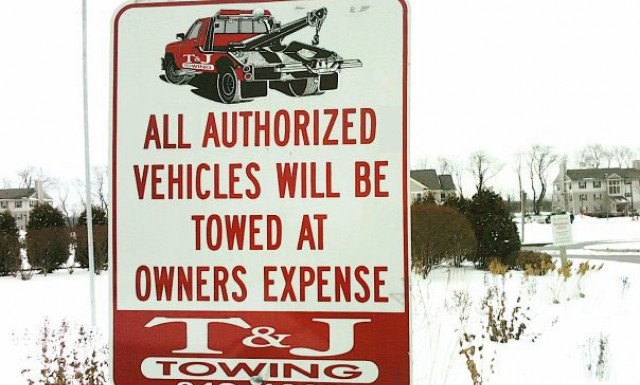
  • $118 the amount Justin Kurtz had to pay after a towing company wrongly towed his car from his own apartment complex
  • 12k the number of people who joined “Kalamazoo Residents against T&J Towing”; 800 joined in the first two days alone
  • $750k the amount the towing company sued the Western Michigan University student for defamation source

Posted by Ernie Smith • Permalink

Mar12010W

Biz: News-reading habits: Online already tops newspapers, nearing TV

  • Ah, studies! The things we love! The Pew Internet and American Life project just released a really interesting study about readership habits, with the key point being that online news is a huge chunk of readership nowadays. Here are a few key numbers and points, because we know that you guys like it when we do that for you:

The overall key number from this study:

  • 59%like getting news on AND off the Web

We like mixing mediums:

  • 92% get their news from multiple media platforms daily (as many as six)
  • 2% get their news solely online – we call these people early adopters

Who reads what, where?:

  • 78% like to get news from a local TV station
  • 61% like getting their news on the Internet
  • 50% still like reading news in a local newspaper

Online usage habits:

  • variety Most people don't have favorites. 65 percent don't have a preferred site for their information.
  • national Local news isn't read so much online – weather and national news are much more popular.
  • social Talkers are a big driver of news – three-quarters of people get news via e-mail or social media.

Lessons to take:

  • » Newspapers need to focus on local: Many newspapers already do so. It's their bread and butter, and the journalism they offer is still valuable. Readers agree, which is why they still prefer newspapers and TV for local news.
  • » Can't stop the Web: Online news is already ingrained into the public consciousness, and much of it is grabbed through social media. And it's decentralized reading too. No point trying to plug it up at this point. In fact, it's grabbing a massive hold on mobile phones, too.
  • » People like talking about news: 72 percent of news-readers say that journalism is a social experience – they read because they like talking about it. Online, this means that social media needs to be a huge part of news-distribution efforts. source

Posted by Ernie Smith • Permalink