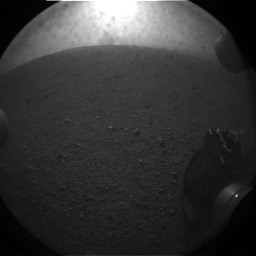
Reuters: From the Gale Crater on Mars, NASA’s Curiosity rover sends back its first image of the Martian surface after it lands successfully, it now begins a 2-year mission to search for remnants of life on the red planet’s surface.
Photo: NASA/Curiosity Rover
Just touching the surface. Literally. Dudes, this is so cool.
Ahead of the Mars Curiosity Rover’s planned landing next week, NASA has released a new introductory video featuring narration from William Shatner and Wil Wheaton. The four-minute video explains the steps involved in the gigantic rover’s landing, and what NASA hopes to accomplish during Curiosity’s time on Mars. The Wheaton-narrated version of the video can be found here. (Video via CoconutScienceLab)source
Mars is a very challenging destination. It has a very thin atmosphere — too much of an atmosphere to ignore, but not enough for us to do the things we would at other planets. That was our motivation about nine years ago when we started doing this stuff. …We want to go to higher latitudes at that mass, or use this technology for larger payloads, such as humans.
— Neil Cheatwood, principal investigator of NASA’s IRVE-3 (Inflatable Re-entry Vehicle Experiment 3), an inflatable heat shield that he believes may have future application in transporting humans to Mars. In the short term, though, the goal is to make it easier to transport space vessels or rovers onto higher latitudes on the Martian surface. Cheatwood also mentioned that the shield could be used to off-load garbage left at the International Space Station and return it to Earth.
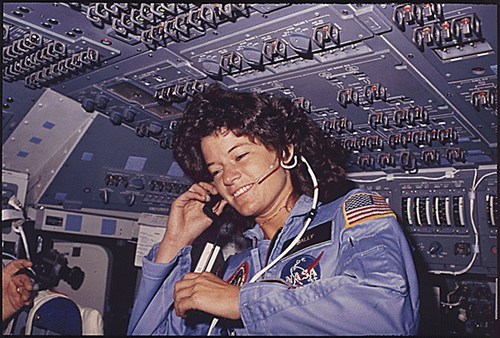
RIP: Sally Ride, at 61: Sally Ride, the first American woman to fly in space, has died after a 17-month battle with pancreatic cancer. She was 61.
In addition to flying for NASA — “All adventures, especially into new territory, are scary,” she once said – Ride was a physicist and a science writer.
After retiring from space, she founded Sally Ride Science, an organization created to inspire young people, especially girls, to stick with their interest in science, and pursue careers in science and engineering.
Private spacecraft becomes 1st to visit International Space Station
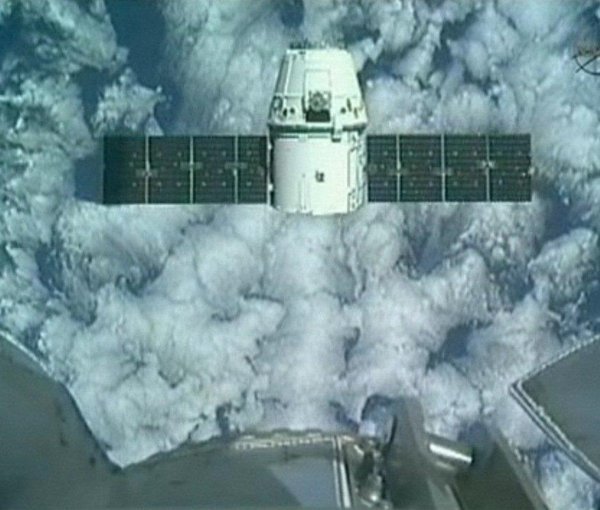
The International Space Station crew successfully captured the SpaceX Dragon capsule with the station’s robotic arm at 9:56 a.m. EDT, NASA says. This is the 1st time a commercial spacecraft has visited the International Space Station.
Photo: A camera on the International Space Station captures a view of SpaceX’s Falcon cargo spacecraft at a distance of 30 meters. (NASA TV via msnbc.com)
Admit it, it would’ve been funny if a private spacecraft just randomly showed up one day out of the blue with no fanfare.
From the terrestrial to the celestial, from the atomic to the tectonic, discovery is all about pursuing light in some way, isn’t it?
NASA has given us many gifts: Knowledge of this planet and many worlds beyond. At a time when many of their missions, and our sense of wonder and inspiration along with them, are in jeopardy … they remind us of how illuminating science can be.
Pursuit of Light is promotion for NASA, but it’s also promotion for thinking big, and embracing that “Ahhh” feeling. Full screen, HD, sound up.
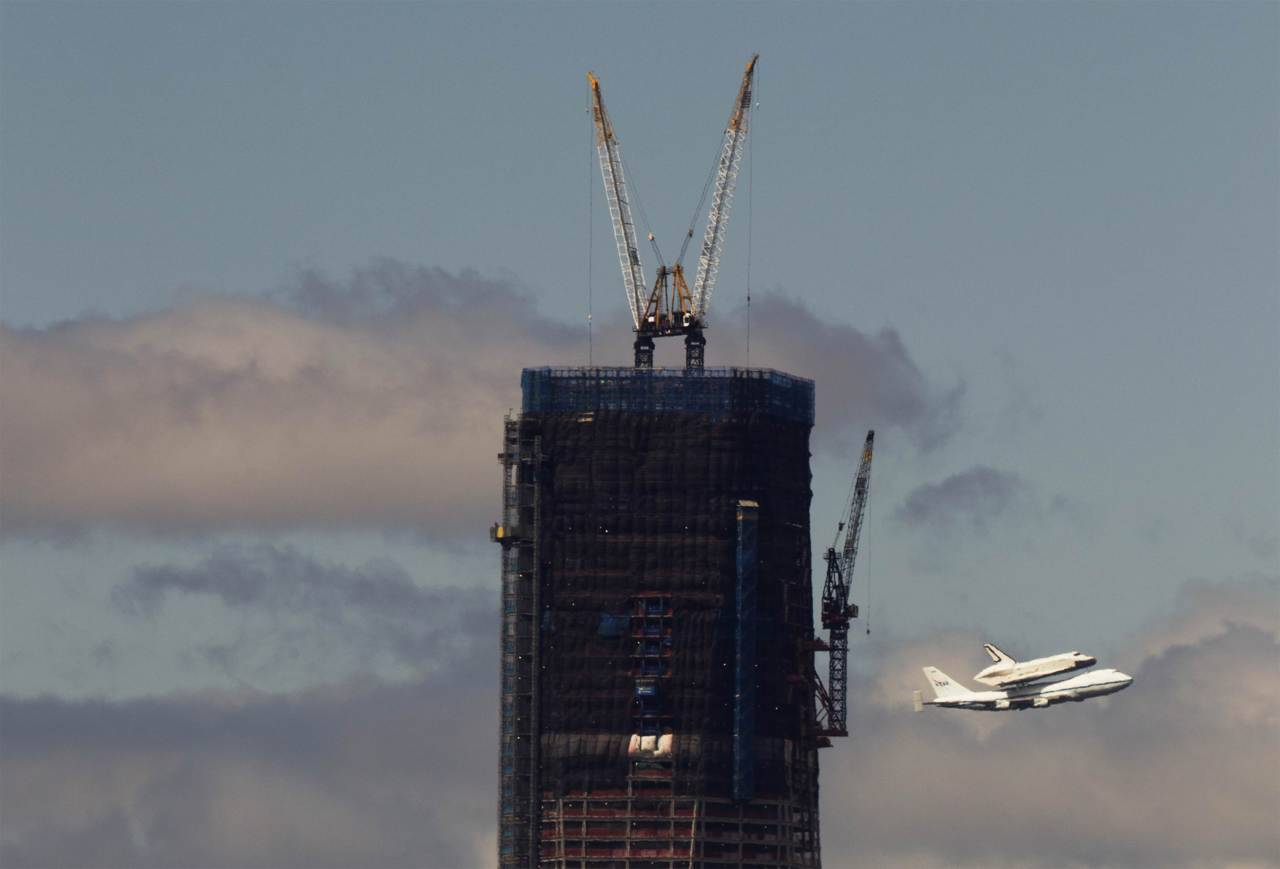
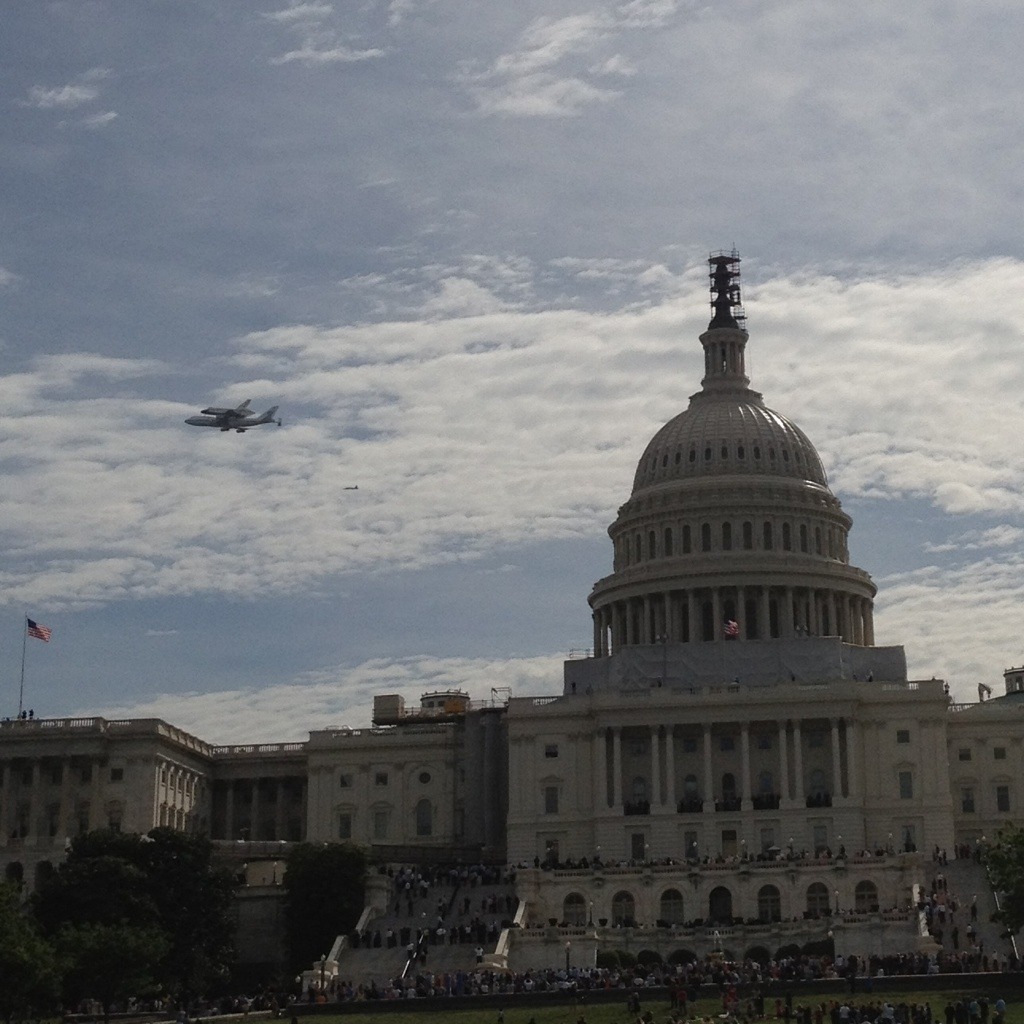
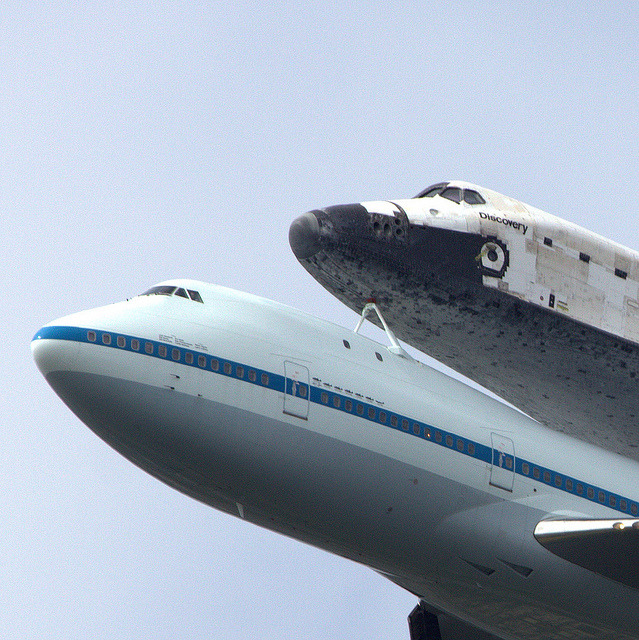
The Space Shuttle Enterprise rides atop a NASA modified 747 plane over New York April 27, 2012. The Space Shuttle Enterprise officially arrived in New York to be placed at the Intrepid Sea, Air and Space Museum, [REUTERS/Lucas Jackson]
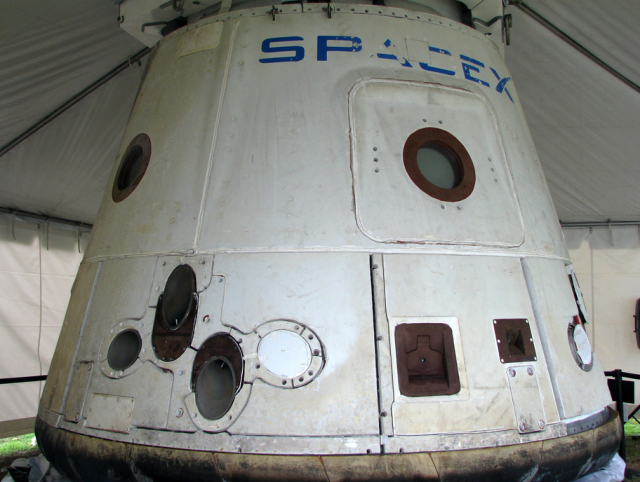
NASA says everything’s on schedule for SpaceX’s world-first commercial robotic flight to the International Space Station, currently scheduled for April 30. The flight is a test of sorts, for SpaceX’s Dragon spacecraft’s capabilities, and the company’s ability to deliver on the promise of unmanned transportation of goods to/from the ISS. If all goes to plan, SpaceX officials hope to begin regular deliveries for NASA by the end of 2012. (Photo by Robert Goodwin)source
 ShortFormBlog