Robots, valued for their speed and maneuverability, can serve as the first eyes on drug-smuggling tunnels that traverse the United States border with Mexico.
So… how should we feel about the fact that robots are now patrolling our borders?
 ShortFormBlogRead a little. Learn a lot. • Now Mullenweg-free! • Since 2009
94 posts
Robots, valued for their speed and maneuverability, can serve as the first eyes on drug-smuggling tunnels that traverse the United States border with Mexico.
So… how should we feel about the fact that robots are now patrolling our borders?
Posted by Patrick deHahn • Permalink
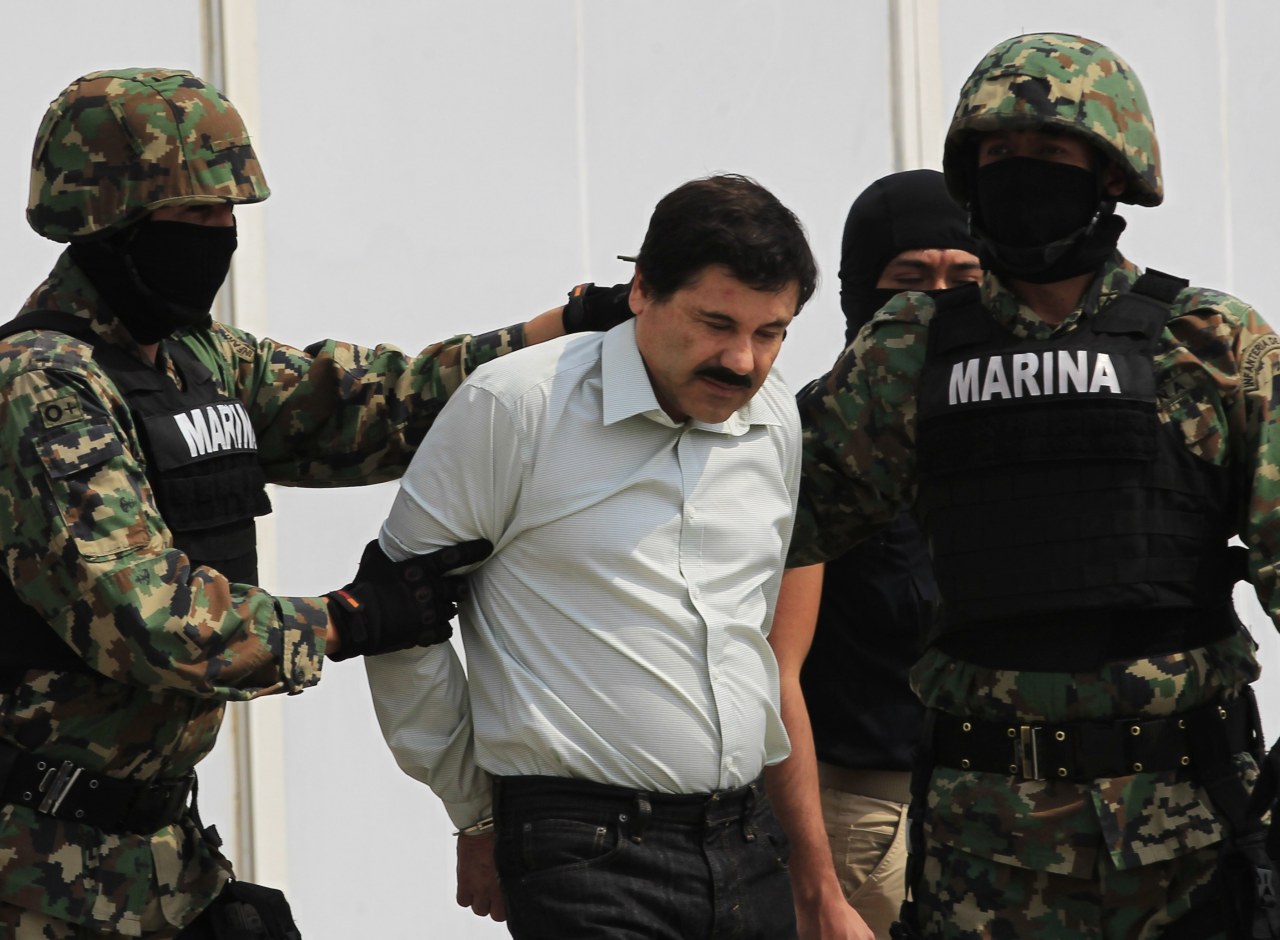
Meet Joaquin “Shorty” Guzman. Long considered one of the most dangerous men in Mexico and with a financial net worth so much that he’s been a common figure on Forbes richest people lists, the drug cartel kingpin and long-wanted man was arrested on Saturday, 13 years after the man escaped from prison. The U.S. helped.
Posted by Ernie Smith • Permalink
Interesting report on how Mexico is drilling for drinking water that the U.S. thinks is so difficult to attain that it allows companies to pollute it:
U.S. environmental regulators have long assumed that reservoirs located thousands of feet underground will be too expensive to tap. So even as population increases, temperatures rise, and traditional water supplies dry up, American scientists and policy-makers often exempt these deep aquifers from clean water protections and allow energy and mining companies to inject pollutants directly into them.
As ProPublica has reported in an ongoing investigation about America’s management of its underground water, the U.S. Environmental Protection Agency has issued more than 1,500 permits for companies to pollute such aquifers in some of the driest regions. Frequently, the reason was that the water lies too deep to be worth protecting.
But Mexico City’s plans to tap its newly discovered aquifer suggest that America is poisoning wells it might need in the future.
Posted by Ernie Smith • Permalink
In perhaps the easiest pinpointing of suspects ever, six people in Mexico were arrested for attempting to steal a truck that was carrying nuclear material. Why them? Well, they were all in the hospital for radiation poisoning.
When mass attacks such as Newtown happen, medics have traditionally moved in to help only after a scene has been secured. But that approach is changing, because experts think it could save lives.
In Ukraine, opposition leaders have a lofty goal for tomorrow: They want to build a million-strong protest in Kiev.
Bitcoin was having a good run, but then China had to get all cold feet about crypto-currency.
Number of runners hit by airborne deer this week: One.
Posted by Ernie Smith • Permalink
Posted by Scott Craft • Permalink
Posted by Scott Craft • Permalink
A person dressed as a clown took his life.
— Prosecutors in the state of Baja California Sur, Mexico • Discussing the death of Francisco Rafael Arellano Felix, a former Tijuana Cartel leader who was killed on Friday in a style befitting a Tarantino movie. Arellano Felix, who was captured in 1993 but released in 2008, was one of a number of family members in the Tijuana Cartel, a once-powerful illegal drug operation which slowly weakened as its members were arrested by Mexican authorities. It’s possible that the people involved in his death were also gang members.
Posted by Ernie Smith • Permalink
Posted by Scott Craft • Permalink
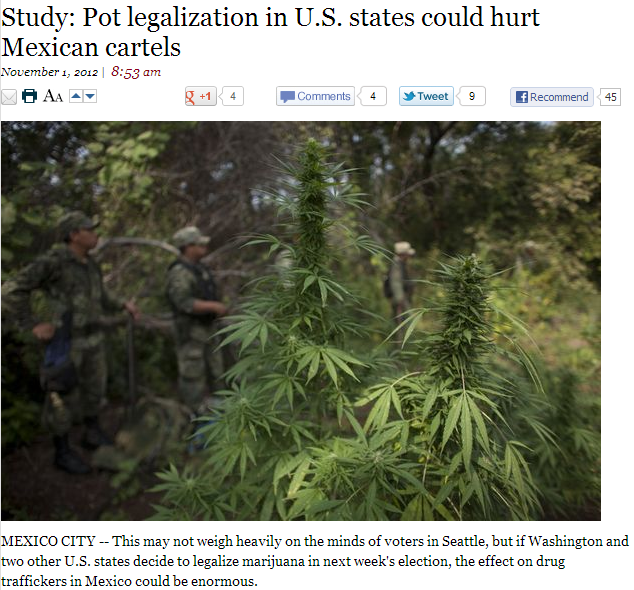
A new study from the Instituto Mexicano Para La Competitividad A.C. (Mexican Institute for Competitiveness) reveals potentially devastating consequences for a number of Mexican drug cartels should marijuana be legalized in a handful of the United States. The Mexican think thank believes the legalization measures on the ballot in Colorado, Oregon, and Washington could cut combined cartel profits by as much as 22 to 30 percent, and could severely cripple the infamous Sinaloa Cartel that operates in Western Mexico. source
Posted by ShortFormBlog • Permalink
Posted by Scott Craft • Permalink