Read a little. Learn a lot. • Now Mullenweg-free! • Since 2009
☰

Tag: long reads

25 posts

Aug 23 2012t

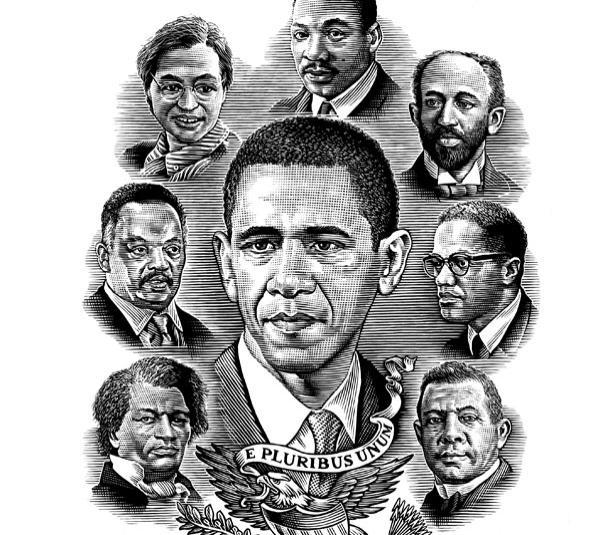
Fear of a Black President

brooklynmutt:

Fear of a Black President

As a candidate, Barack Obama said we needed to reckon with race and with America’s original sin, slavery. But as our first black president, he has avoided mention of race almost entirely. In having to be “twice as good” and “half as black,” Obama reveals the false promise and double standard of integration.

Read: The Atlantic

Three lines that really grab you in this piece:

1) “The moment Obama spoke, the case of Trayvon Martin passed out of its national-mourning phase and lapsed into something darker and more familiar—racialized political fodder. The illusion of consensus crumbled.”

2) "The president’s inability to speak candidly on race cannot be bracketed off from his inability to speak candidly on every­thing. Race is not simply a portion of the Obama story. It is the lens through which many Americans view all his politics.“

3) Regarding Shirley Sherrod: "In her new memoir, The Courage to Hope, she writes about a different kind of tears: when she discussed her firing with her family, her mother, who’d spent her life facing down racism at its most lethal, simply wept. ‘What will my babies say?,’ Sherrod cried to her husband, referring to their four small granddaughters. 'How can I explain to my children that I got fired by the first black president?’”

Posted by ShortFormBlog • Permalink

Jun 23 2012t

Continue reading…

mohandasgandhi:

Alan Turing’s Brother: He Should Be Alive Today

June 23rd is the centenary of the birth of Alan Turing, father of computer science and artificial intelligence, who committed suicide just shy of 42. In a shocking and frank memoir, his late elder brother John says Alan’s life might have turned out a lot better if his mother was not so nagging—and he recounts the details of his brother’s awful death.

Alan Turing, who was born 100 years ago on June 23, 1912, might not have invented the computer. (That honor goes to Charles Babbage and Lord Byron’s daughter.) But today’s computing would be unthinkable without the contributions of the British mathematician, who laid down the foundations of computer science, broke Nazi codes that helped win World War II at the famous Bletchley Park, created a secure speech encryption system, made major contributions to logic and philosophy, and even invented the concept of Artificial Intelligence. But he was also an eccentric and troubled man who was persecuted (and prosecuted) for being gay, a tragedy that contributed to his suicide just short of the age of 42 when he died of cyanide poisoning, possibly from a half-eaten apple found by his side. He is hailed today as one of the great originators of our computing age.

In 1959, four years after Alan Turing’s suicide just shy of the age of 42, his mother Sara published her biography Alan M. Turing. Shortly after, his elder brother John began his own alternative account, seeking to “put the record straight” and correct any inaccuracies or biases in his mother’s version. Although he worked on the essay throughout the ‘60s and ‘70s, John declined to release the account until after his mother’s death, and ultimately left it unpublished in his private papers. It was found in a drawer by his son John Dermot Turing, and finally included as part of the re-release of Alan M. Turing, in celebration of the centenary of his birth. The following is adapted from the book:

My brother Alan was born on 21* June 1912 in a London nursing home. At this, and at all other times, my father took all decisions of consequence in the family. Now, rightly or wrongly, he decided that he and my mother should return alone to India, leaving both children with foster parents in England. Alan and I were left with “the Wards”—always we referred to them as “the Wards.” We were the wards and they were our guardians but no matter—this was to be the centre of our existence for many years and our home from home. I believe it was here, perhaps in the first four or five years at the Wards, perhaps even in the first two, that Alan became destined for a homosexual. Has anyone mentioned it until now?

(Continue reading…)

Highly-recommended Saturday reading.

Posted by ShortFormBlog • Permalink

May 24 2012t

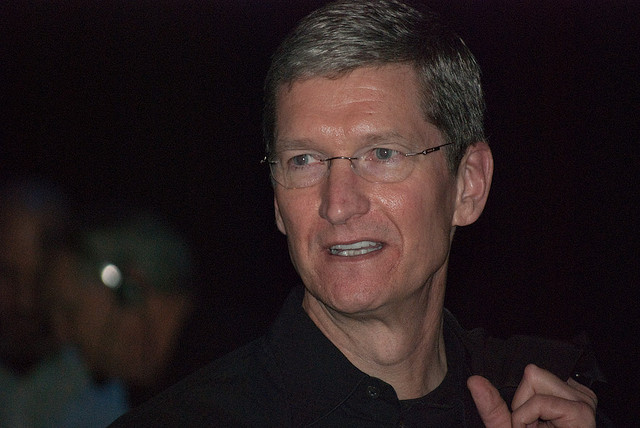
“I forgot he’s the CEO of Apple. And that was not my experience with Jobs.”

Fortune sheds light on the changes Tim Cook brought to Apple

  • “I forgot he’s the CEO of Apple. And that was not my experience with Jobs.” Looking for a good late-afternoon read? Check out Fortune’s new cover story on Apple head honcho Tim Cook. Senior Editor Adam Lashinsky takes an in-depth look at the changes Cook has brought to Cupertino, and Apple facilities around the world, during his first 10 months as CEO. Admit it, you love reading stuff like this. (Photo by lemagit) source

Posted by ShortFormBlog • Permalink

Feb 20 2012W

Politics: Koch thinks Walker recall is all that's standing between trade unions and Highlander status

If the unions win the recall, there will be no stopping union power.

Billionaire David Koch • Speaking about the Wisconsin recall efforts against Gov. Scott Walker. Koch made the comments during a recent speech after a benefit dinner, and were quickly backtracked by his spokeswoman, who clarified, "[Koch Industries thinks] the best workplace relationships are fostered when the employer works directly with its employees. It is a mischaracterization of our principles to say this means we oppose unions or want to dismantle all unions." The Koch brothers find themselves under ever-increasing scrutiny for supporting political causes around the country, most notably the recall campaign of Wisconsin Governor Scott Walker. source

Posted by Scott Craft • Permalink

Mar 9 2011t

NPR Amps Up: Can Vivian Schiller Build a Journalism Juggernaut? (2010)

longreads:

Schiller has animated the place with the energy of renewed ambition, a rededication to producing serious journalism. Her strategy rests on three pillars: expand original reporting at the national and local levels; provide free access to public media content regardless of platform; and serve audiences of all backgrounds and interests. To do all that, she wants to work in partnership with NPR’s member stations as well as independent producers and some of the new nonprofit journalism units springing up around the country.

By Jill Drew, Columbia Journalism Review

Well-timed, longreads. Well-timed.

Posted by ShortFormBlog • Permalink