“The sky is a deep black.”
Neil Armstrong describes his view of the heavens from the lunar surface in this rare interview with the BBC.
Could not imagine how mindblowing this interview was in 1970.
 ShortFormBlogRead a little. Learn a lot. • Now Mullenweg-free! • Since 2009
89 posts
“The sky is a deep black.”
Neil Armstrong describes his view of the heavens from the lunar surface in this rare interview with the BBC.
Could not imagine how mindblowing this interview was in 1970.
Posted by ShortFormBlog • Permalink
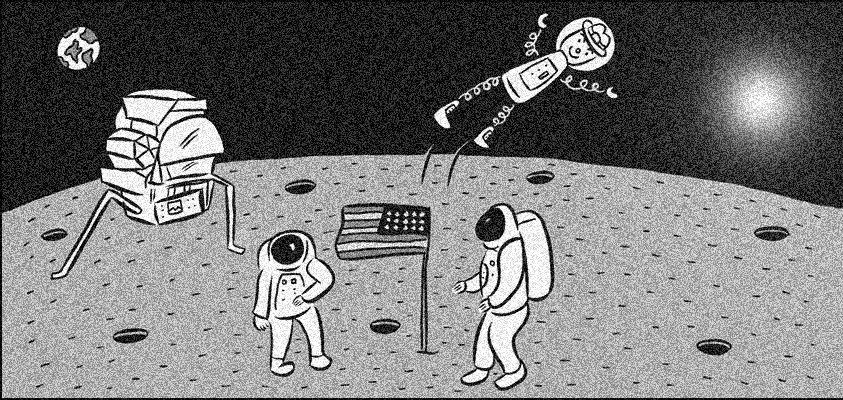
Some quick thoughts on Neil Armstrong: Earlier this year, we did a little tribute to the moon landing in our illustrated Facebook timeline. It’s still basically the coolest thing any individual’s ever done in modern history (and that includes inventing the iPad, Steve Jobs), and we’re sure it’ll seem quaint when people start tweeting pictures of themselves from moon colonies, but you know what, it’s still awesome. Neil Armstrong was a lucky guy for getting the opportunity, but on the other hand, he totally earned it. It was his feat (though he had NASA’s help) and he deserved the praise. We’re all sort of trying to find our own way to do something awesome with our lives, but Neil already outdid most of us. We’re just trying, in our own little ways, to get as close as we can to the moon. That’s what you should take from Neil Armstrong’s life — we may not ever step foot on the moon, but the important part is reaching for the prize. — Ernie @ SFB
Posted by ShortFormBlog • Permalink
Embedded media from c.brightcove.com is no longer available.
This is the only surviving footage of Mark Twain—and it was filmed by Thomas Edison.
And just for kicks, let’s just say it was converted to a digital file format by Bill Gates and uploaded to the internet by Steve Jobs. (seriously, though, this is rad)
Posted by ShortFormBlog • Permalink
Ancestry.com has discovered that John Punch, the first African enslaved for life in America, was the 11th great-grandfather of President Obama.
CNNnotes researchers “found the new connection to the president’s African roots through an unlikely link, that of Obama’s Caucasian mother. President Obama’s African American roots had previously been tied to his father’s Kenyan birth. But as genealogists were pouring through documents tracing Stanley Ann Dunham’s ancestors, they found a connection to the Bunch family which had recently published DNA evidence that they had roots in sub-Saharan Africa.”
Interesting bit of genealogy here.
Posted by ShortFormBlog • Permalink
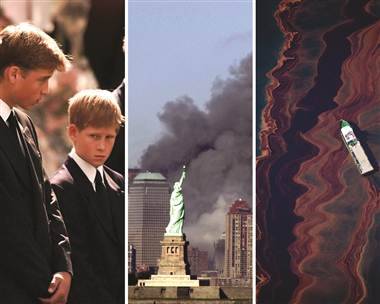
Sept. 11 and Katrina top TV’s most memorable moments LOS ANGELES — Watching news coverage of the Sept. 11 attacks, Hurricane Katrina disaster and the O.J. Simpson murder verdict proved to be the most impactful TV moments of the past 50 years in the United States, according to a study released Wednesday.
Which TV moment was most memorable for you?
Now seems like a good time to remind folks of the great September 11 reader memories thing the L.A. Times Tumblr did last year. Here’s my own; a number of others focused on the initial shock of seeing it on television.
Posted by ShortFormBlog • Permalink
Evan Henshaw digs through some ancient tweets to find the first usage of the now-ubiquitous @reply on Twitter.
The @reply was created on Thanksgiving day, November 23rd, 2006. One wonders if this was the first case of geeks using twitter to avoid their family on thanksgiving.
See also the first use of hashtags on Twitter. It’s funny that so many of the things that make Twitter compelling weren’t actually invented by Twitter but by the users and developers.
“wondering if there should be a pseudo-syntax for letting a Follower on twitter know you’re directing a comment at them.” The famous first words that led to Twitter’s @ symbol.
Posted by ShortFormBlog • Permalink

This is the First Photograph Ever Posted Online. (Seriously.)
And also the first Photoshopped image!
Posted by ShortFormBlog • Permalink
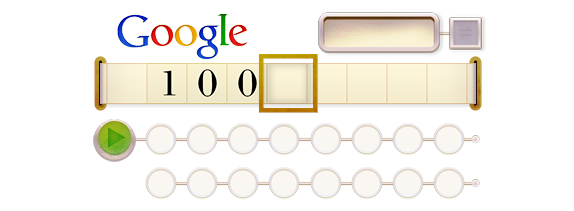
Alan Turing’s Brother: He Should Be Alive Today
June 23rd is the centenary of the birth of Alan Turing, father of computer science and artificial intelligence, who committed suicide just shy of 42. In a shocking and frank memoir, his late elder brother John says Alan’s life might have turned out a lot better if his mother was not so nagging—and he recounts the details of his brother’s awful death.
Alan Turing, who was born 100 years ago on June 23, 1912, might not have invented the computer. (That honor goes to Charles Babbage and Lord Byron’s daughter.) But today’s computing would be unthinkable without the contributions of the British mathematician, who laid down the foundations of computer science, broke Nazi codes that helped win World War II at the famous Bletchley Park, created a secure speech encryption system, made major contributions to logic and philosophy, and even invented the concept of Artificial Intelligence. But he was also an eccentric and troubled man who was persecuted (and prosecuted) for being gay, a tragedy that contributed to his suicide just short of the age of 42 when he died of cyanide poisoning, possibly from a half-eaten apple found by his side. He is hailed today as one of the great originators of our computing age.
In 1959, four years after Alan Turing’s suicide just shy of the age of 42, his mother Sara published her biography Alan M. Turing. Shortly after, his elder brother John began his own alternative account, seeking to “put the record straight” and correct any inaccuracies or biases in his mother’s version. Although he worked on the essay throughout the ‘60s and ‘70s, John declined to release the account until after his mother’s death, and ultimately left it unpublished in his private papers. It was found in a drawer by his son John Dermot Turing, and finally included as part of the re-release of Alan M. Turing, in celebration of the centenary of his birth. The following is adapted from the book:
My brother Alan was born on 21* June 1912 in a London nursing home. At this, and at all other times, my father took all decisions of consequence in the family. Now, rightly or wrongly, he decided that he and my mother should return alone to India, leaving both children with foster parents in England. Alan and I were left with “the Wards”—always we referred to them as “the Wards.” We were the wards and they were our guardians but no matter—this was to be the centre of our existence for many years and our home from home. I believe it was here, perhaps in the first four or five years at the Wards, perhaps even in the first two, that Alan became destined for a homosexual. Has anyone mentioned it until now?
Highly-recommended Saturday reading.
Posted by ShortFormBlog • Permalink
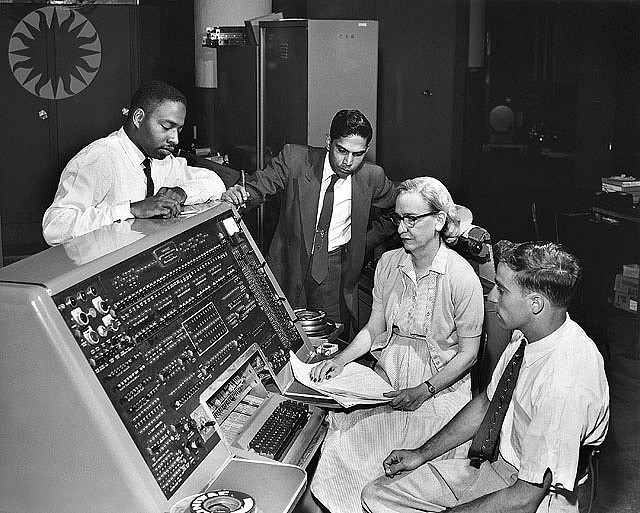
The Birth of UNIVAC
UNIVAC I was the first commercial computer in the United States. Without it, we wouldn’t have our precious little MacBooks or iPads.
Well, now that I think about it, some other Americans surely would have built a commercial computer if they hadn’t. So we would still have our gadgets, but it would be in a parallel universe and maybe in that universe having a Dell is like the coolest thing you can have and there’s a Zune in every pocket of every pair of parachute pants.
Anyway, the first UNIVersal Automatic Computer was delivered to the U.S. Census Bureau and dedicated on June 14, 1951. It’s the same computer later predicted the 1952 presidential election for Eisenhower.
It cost over $1 million, used 5,200 vacuum tubes, weighed 13 tons and could do a mere 1,905 operations per second.
Pictured above, Rear Admiral/Badass Grace Hopper at the controls of UNIVAC I.
Next time you complain about your laptop being slow, keep in mind how far we’ve come. Super-fascinating. Also, Grace Hopper is awesome.
Posted by ShortFormBlog • Permalink
Posted by ShortFormBlog • Permalink