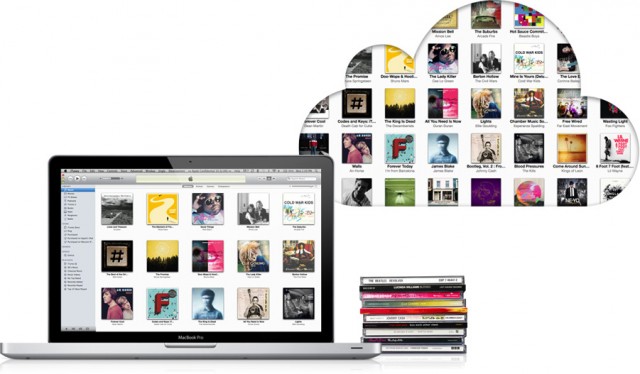
We totally have to give Apple credit: The conceit around the iTunes portion of the iCloud service, while not exactly what we expected (it's not Lala 2.0, sadly), manages to pull off an interesting trick — it creates a revenue model from a place where only piracy existed before. By upgrading your music's quality and making it easily accessible from the cloud, it adds value inexpensively, and gets around a major sticking point for the major labels cleverly. And music industry officials see it as a positive. "It allows for revenue to be made off of pirated music in a way that consumers don't feel that's what they're paying for, and that's what I find fascinating about it," noted Jeff Price, the CEO of TuneCore Inc., which helps independent artists sell their music online. Our music anywhere for $25 a year? Sure, we'll pay that. source
In their defense, it was never technically announced as a real product. Last year, the Internet went aflutter over the idea of the Microsoft Courier, which turned the tablet concept into a book which focused less on consuming media but acting more like a journal where once could save scraps of content, take notes using a stylus and turn nerds into puddles of awe. Instead, the company killed it yesterday, choosing to focus their energy on the coming-soon Windows Phone 7 Series. Hopefully its memory endures, if not the product itself. source
It'll be fun to see them try to pull this off. Someone needed to combine the philosophy of Digg with a print product, right? And these guys are all about it – it appears that they're not newspaper people, even, but smart people with a good idea (and hopefully, money). One interesting thing to note is that they plan to ultra-localize the content they distribute, with the possibility of 100 print editions in Chicago alone (!). Watch out for this one. source
 ShortFormBlog