Read a little. Learn a lot. • Now Mullenweg-free! • Since 2009
☰

Biz

1,767 posts

Oct 19 2011W

Biz: Apple's quarterly profits below expectations for first time since 2004

  • 6% drop in price of Apple shares in wake of 3rd quarter results source
  • » But they're not so worried: Parsing the present-day meaning of past quarter business reports can be a sketchy task, especially considering that in Apple's case, the recently released iPhone 4S is expected to lend a surge to their profits, though that won't come across until the current quarter's figures come out. (One company official specifically blamed iPhone 5 rumors for hurting the company's bottom line.) And despite the dip in share prices, Apple's actual business in the 3rd quarter was yet robust; profits increased by 54%, and sales went up 39%. And since we're talking Apple, we'd be remiss not to mention also that there's a Steve Jobs memorial exclusively for employees that's happening today; Apple's Cupertino campus is hosting, and Apple stores nationwide will be closing for the duration to allow staff to watch.

Posted by Chris Tognotti • Permalink

Oct 19 2011W

Biz: Citigroup settles civil fraud complaint over derivatives scheme

  • $285 million payout by Citigroup over fraud complaint source
  • » A tidy little sum: It's being reported that Citigroup has agreed to the above settlement, which would bring to an end a civil fraud complaint filed by some of their investors. The story is, as it happens, quite similar to what Goldman Sachs was found to have done (Goldman shelled out $550 million in that case). Citigroup helped structure investment portfolios for their clients without telling them that the bank itself was selecting the assets while betting against their success. In simple terms, a conflict of interest, and one that netted the company nearly $1 billion dollars. That figure, also, says something about the problem of mega-corporations buying out of legal trouble; namely, the amount it costs to satisfy a plaintiff is nearly never enough to such a company to truly dissuade the behavior.

Posted by Chris Tognotti • Permalink

Oct 17 2011W

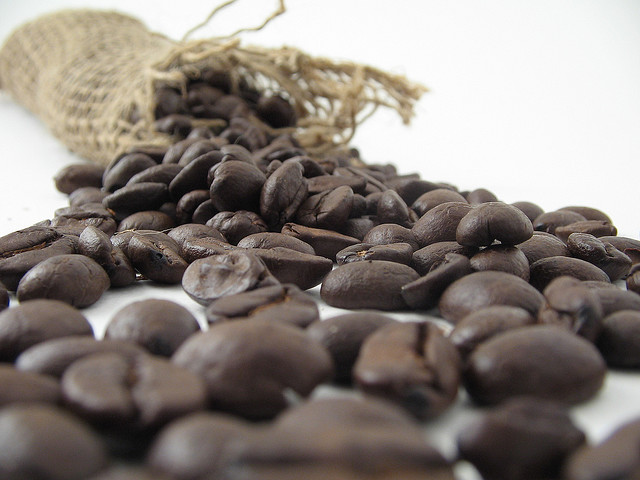
Biz: Has-bean? Starbucks worried climate change will damage coffee supply

  • They say they're already seeing the effects: Could you imagine a world without Starbucks … or coffee? That's what officials for the world's largest caffeine hawker are seriously worried about, especially after a fairly busy hurricane season and more resistant bugs. The company has even considered partly converting many outlets to juice bars. "What we are really seeing as a company as we look 10, 20, 30 years down the road – if conditions continue as they are – is a potentially significant risk to our supply chain, which is the Arabica coffee bean," says the company's sustainability director, Jim Hanna. Three words, Jim: Yerba Mate Frappuccino. (photo via TPEGroup Photography & Design's Flickr page) source

Posted by Ernie Smith • Permalink

Oct 16 2011W

Biz: Publishers freak out because Amazon's cutting into their territory

  • cause Amazon, with its growing clout as an e-book outlet and ability to work around the traditional system, has made significant inroads as a publisher of books, with at least one bestseller to its name. They will publish 122 books this fall in electronic and physical form.
  • reaction Large publishers and agents are starting to freak out. In one case, Hawaiian writer Kiana Davenport angered the publisher of a forthcoming book and got sued because she dared use Amazon to self-publish an old anthology no publisher wanted. source

Posted by Ernie Smith • Permalink

Oct 15 2011W

Biz: Peanut butter cups run dry? Prices increase on the nutty stuff

  • $450 the price per ton of runner peanuts, the kind of peanuts generally used to make peanut butter, last year
  • $1,200 the price per ton of runner peanuts this year, according to the U.S. Department of Agriculture source
  • » Raise prices? That's nuts! The result of a fairly weak peanut harvest? You might have to reach for another product next time you want to make a sandwich. Kraft plans to raise prices of its Planters peanut butter by 40 percent next month; Peter Pan, the peanut butter that never grows up, will fly to a 20 percent higher price, and damn skippy, the makers of Skippy are watching the situation closely. The spread on this one is that it's pretty likely your cookies are going to be less awesome next time around. Bummer. We kinda like your cookies.

Posted by Ernie Smith • Permalink

Oct 13 2011W

Biz: The Gap shrinks its gap significantly, says it's "natural pruning"

  • 21% of U.S. Gap stores will fall into the Gap … for good source
  • » But they're expanding in China: Why the change, you ask? It's all a part of the "natural pruning" process for the company, which is streamlining its supply chain. High quality global journalism requires investment. “I’ll be the first to say that our stores have not been executing with the consistency that they need to execute at in order to deliver the kind of brand experience that we are committed to delivering,” said the company's North American president, Arthur Peck. The company plans to cut back on some of the poorly-performing stores, open up a few more outlet stores, and boost its presence in Asia. No word on a new logo.

Posted by Ernie Smith • Permalink

Oct 12 2011W

Biz: Warren Buffett made lots of money in 2010, paid fairly low taxes

  • $63 million dollars in 2010 alone for Mr. Berkshire Hathaway source
  • » And he only paid 17.4% in taxes: Buffett, whose monetary gains are the subject of scrutiny because of the fact that he's the inspiration for Obama's "Buffett Rule" (a notable part of the president's jobs plan), released the earnings after being prodded by Rep. Tim Huelskamp of Kansas, a Republican. Of note: Just $39,814,784 of his earnings were taxable, with the rest going to deductions and exemptions (like, say, his fairly robust charitable givings). And in case you're wondering, Warren's tax rate is low largely because he makes most of his income through investing. In the end, how much did he pay in taxes? A paltry $7 million (or a mere nine percent in taxes on adjusted gross income).

Posted by Ernie Smith • Permalink

Oct 9 2011W

Biz: Some among upper-middle class don't pay income taxes, either

  • 4,025 number of people among the $75,000-$100,000 tax bracket who didn't pay income taxes in 1996
  • 476,624 number of people among the same tax bracket who didn't pay income taxes in 2009 … wait a second source
  • » Beyond numbers, into percentages: Now, if you break this down by percentages among tax brackets, it's still a fairly small number — 1 percent of the total number, versus 76 percent of people who made less than $25,000. But there's a difference here — the people making between $75,000 and $100,000 can generally afford to pay taxes, and they're the largest-growing group of the bunch. Now, what's the reason for all this? Well, between 1996 and 2009, a couple of presidents (whom you might know as Bush and Obama) enacted a series of changes to the tax code which effectively made it possible for more people to receive tax cuts that whittled the amount owed down to nothing. They most likely pay taxes in other ways — payroll and sales tax, for example — however. Force them to pay, you take money out of the pockets of the poor. So, what's the balance?

Posted by Ernie Smith • Permalink

Oct 5 2011W

Tech: Could Bank of America's debit card charge push us to digital wallets?

It may be too early now to talk about the Law of Unintended Consequences, but years from now, we may owe a debt to reforms like Dodd-Frank for finally weaning us off the physical wallet and encouraging us to experiment with the new technologies helping to create the Digital Wallet.

The Washington Post's Dominic Basulto • Arguing that Dodd-Frank's side effects — such as Bank of America's decision to start charging people for the right to use a debit card — will be great in the long run, because it will push consumers and businesses to stop relying on banks for these sorts of services, instead going for phone-based options, provided by companies such as Google or Square, instead. Basuito compares Bank of America's controversial move to Netflix's price-raising scheme, and suggests it will hurt them long-term. source

Posted by Ernie Smith • Permalink