Read a little. Learn a lot. • Now Mullenweg-free! • Since 2009
☰

Tag: studies

9 posts

Feb192013t

Deep Inside - A Study of 10,000 Porn Stars

wilwheaton:

wilwheaton:

For the first time, a massive data set of 10,000 porn stars has been extracted from the world’s largest database of adult films and performers. I’ve spent the last six months analyzing it to discover the truth about what the average performer looks like, what they do on film, and how their role has evolved over the last forty years.

This is fascinating.

“Nikki Lee and David Lee—the most common first and last names of porn stars. A nice coincidence that they share the same last name. It means if these hypothetical hedonists were to marry, a name change wouldn’t be needed.”

Posted by Ernie Smith • Permalink

Aug82012t

Study: Cats are the brutal killing machines you always knew they were

  • 2.1 animals per week killed by cats wearing KittyCams source
  • » The secret world of cats: A test of the National Geographic Society’s Crittercam program, run by the University of Georgia, showed a couple of interesting things about kitties that we didn’t already know about — that, given the opportunity to go outside, they will kill, but they may not bring their prey back with them (something that happens only 23 percent of the time). “The results were certainly surprising, if not startling,” said the University of Georgia's Kerrie Anne Loyd, in the understatement of the year. The study has prompted American Bird Conservancy president Dr. George Fenwick to estimate four billion animals per year — and 500 million birds alone — are killed by cats, whether domestic or feral. “Cat predation is one of the reasons why one in three American bird species are in decline,” Fenwick claims. That’s right, it’s Kitty’s fault.

Posted by ShortFormBlog • Permalink

Apr12012t

We use the term ‘comfort food’ for a reason. It can help alleviate stress, anxiety, and depression. So it may…

We use the term ‘comfort food’ for a reason. It can help alleviate stress, anxiety, and depression. So it may be that people with depression are turning to [fast food] for relief.

— Dr. David Katz, the director of Yale University's Prevention Research Center • Discussing how fast food might be a sign of depression among people who eat eat. Researchers in Spain recently found that people who ate lots of fast food were 51 percent more likely to be depressed. Anyone else surprised by that finding?

Posted by ShortFormBlog • Permalink

Mar122012t

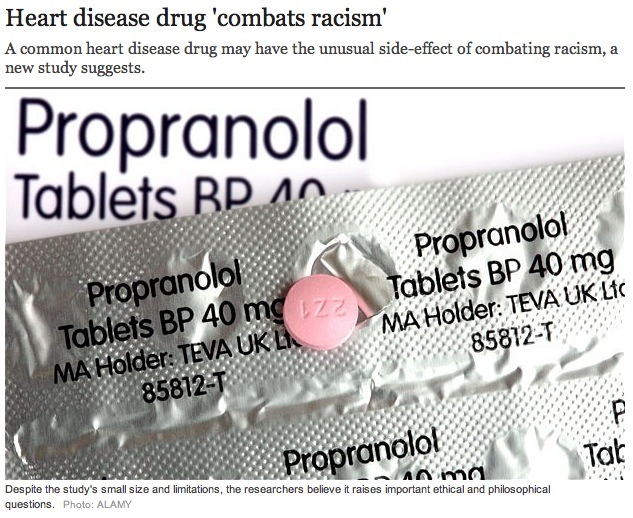
So we basically

So we basically have no idea what to think about this. Note that the sample size of this study is fairly small. Despite this, researchers are intrigued and plan to look into this more. Notable comment on this story: “That is a bunch of hooey. I live in the south with a lot of people taking propanalol for their blood pressure and they are as much a racist as they were before they took it. Case closed.”

Posted by ShortFormBlog • Permalink

Feb282012t

Someone actually studied it, and it turns out that rich people are more likely to steal candy from children…

And Ezra Klein brings the kicker:

Bloomberg has more details on the findings here, including interviews with the authors. They also note that the study isn’t alone. It “builds on previous research that has shown wealthy people are worse at recognizing how others feel and are more likely to be disengaged during social interactions than others.”

Of course, left unanswered is a key correlation/causation question: Are rich people more likely to be jerks, or are jerks more likely to get rich?

You guys wanna try answering Ezra’s question?

Posted by ShortFormBlog • Permalink

Feb142012W

U.S.: Researchers gradually deprive children of sleep over a century

  • 70 minutes of sleep taken away from children over 100 years source
  • » Between 1897 and 2009, 32 separate sets of sleeping guidelines for kids gradually suggested that children get less and less sleep — at a rate of about 0.71 fewer minutes each year. Despite this, parents over the year managed to fail at these declining expectations, with children getting on average of 37 fewer minutes of sleep each year. Why's that? Depends on the era — at the turn of the 20th century, it was artificial light, radio and cinema; in the '90s, it was video games, cell phones and the Internet. Let's update these standards slightly: We blame Twitter and the iPad.

Posted by Sami Main • Permalink