Read a little. Learn a lot. • Now Mullenweg-free! • Since 2009
☰

Tag: security

108 posts

Oct 26 2013t

The Obama administration has promised to put its surveillance program under review, according to an op-ed by…

To be clear: Our intelligence capabilities, and the dedication of the men and women who work in the U.S. intelligence community, including at the NSA, are beyond compare. Their contributions and sacrifices are a significant reason we have enjoyed relative security since 9/11.

No one disputes the need for careful, thorough intelligence gathering. Nor is it a secret that we collect information about what is happening around the world to help protect our citizens, our allies and our homeland. So does every intelligence service in the world.

While our capabilities are unmatched, the U.S. government is not operating unrestrained. We are not listening to every phone call or reading every e-mail. Far from it. There are legal limits to what the NSA can and cannot do, and the recent disclosures and additional documents the government has declassified prove just how seriously the NSA takes these limits.

The promise comes at a time when the administration is facing criticism from numerous countries around the world for alleged spying and as a mass rally against government spying takes place in D.C.

Posted by Ernie Smith • Permalink

Jul 25 2013t

They’ll tell you that the government must violate the rights of the American people to defend us against…

They’ll tell you that the government must violate the rights of the American people to defend us against those that hate our freedoms. Tell that to our constituents back home, We’re here to answer one question for the people we represent: Do we oppose the collection of every Americans’ phone records?

— U.S. Rep. Justin Amash (R-MI), speaking during yesterday’s House vote on his amendment to defund the NSA phone surveillance programs. The proposal was voted down by a close 217-205.

Posted by Patrick deHahn • Permalink

Jun 22 2013t

Everything is ready on our side and the plane could take off tomorrow…Now we are only awaiting a response…

Everything is ready on our side and the plane could take off tomorrow…Now we are only awaiting a response from the [Icelandic] government.

— Wikileaks-allied businessman Olafur Sigurvinsson, on efforts to obtain political asylum for Edward Snowden. Apparently, Julian Assange and Sigurvinsson have contracted a plane to take Snowden from Hong Kong to Iceland. An Icelandic official confirmed that the country has had “informal talks” with a Snowden intermediary about the possibility of his asylum, but it’s uncertain if it will actually grant it to him. While the country has a reputation for housing whistleblowers and journalists, some suspect that the newly-formed conservative coalition in the government may not feel as bound by this tradition as its predecessors. source

Posted by Seth Millstein • Permalink

Jun 9 2013t

Boundless Informant, the NSA's secret tool to track global surveillance data

patrickdehahn:

Yes, more from The Guaridan’s Glenn Greenwald:

Revealed: The NSA’s powerful tool for cataloguing global surveillance data, including figures on US collection. Boundless Informant, a mission outlined in four slides and read the NSA’s frequently asked questions document The leaks continue. The United States’ global war also has gone cyber, as revealed in The Guardian’s latest piece on the NSA’s program called Boundless Informant. It categorizes “the voluminous amount” of online and telephone information they receive from each country in the world.

Incremental isn’t the word for these stories. More like flood.

Posted by ShortFormBlog • Permalink

May 22 2013t

Good news for Burger King

Good news for Burger King: After many months of people asking for it, Twitter finally offers two-step verification for its users. “Of course, even with this new security option turned on, it’s still important for you to use a strong password and follow the rest of our advice for keeping your account secure,” the company emphasizes.

Posted by ShortFormBlog • Permalink

May 4 2013t

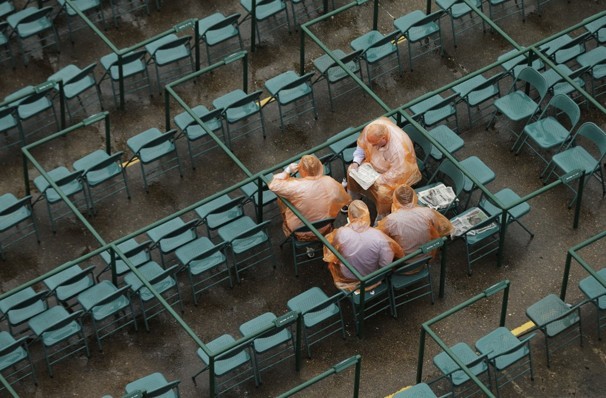
Why are these people wearing ponchos?

Why are these people wearing ponchos? Simple. Because they couldn’t bring umbrellas with them. During today’s Kentucky Derby event, officials bumped up security, preventing thousands of attendees from bringing in backpacks, large purses, and despite the rain forecast, umbrellas. The tightened security comes weeks after the Boston Marathon bombing caused an unprecedented security crackdown in the city of Boston. (photo by Charlie Riedel/Associated Press)

Posted by Ernie Smith • Permalink

Apr 30 2013t

More on why Twitter really blew it with launching two-step authentication

woody:

Hey shortformblog, you’re mostly wrong.

Because Twitter cannot prevent the type of attack which has caused so many brands to loose their twitter account - malware (specifically keyloggers) logs the users credentials when they log into twitter.com, which the attacker then uses to make a perfectly “legitimate” login at a later time.

How do you prevent this as a user, given that its the #1 vector of attack for these big name brand hijackings? Use a computer that you know isn’t infected with MalWare. How do you ensure that a computer doesn’t have any malware? Never connect it to the internet (or if you do connect, only use twitter.com, and not browsing or emailing).

Does this make sense for the average user? Not at all. Does it make sense for a global brand or news agency who want to avoid what happened to AP? Easily. The $1200 hypothetical laptop is far cheaper than the damage to a brand from a high publicity hijacking.

The reason that I say “mostly” is that twitter could prevent this by using Google Authenticator or some other form of two-factor authentication. This would be unneeded for a normal user, but would allow big brands to add the extra security. I suspect that Twitter is probably working on this right now, and that this announcement is just until it is deployed.

You realize these accounts are used by multiple users and organizations as large as AP use third-party apps, right? And that numerous people use that single account, right? And that social media pretty much only works because you can share links? This solution is not realistic. It’s a band-aid solution until Twitter gets its stuff together.

The problem here is that large brands have been asking for that two-factor solution for at least two years (Facebook launched it two years ago, and Google has had it for years), and now, Twitter is feeling some serious pain because they only hired someone to work on the two-factor thing within the past six months.

They can’t block such attacks because they haven’t built out their system to deal with them.

If Twitter was serious about protecting its users, it would have been working on this solution before it got to this point, especially considering the seriousness of the problems being raised and the size of the brands it was courting. But instead, they’re playing catch-up. The best solution to bad security is being proactive.

The hypothetical dedicated laptop is not the problem. The fact that the hypothetical dedicated laptop was required in the first place is the problem.

Posted by Ernie Smith • Permalink

Oct 11 2012t

Here's a list and a heat map of the most common 4-digit PIN codes in the world

seldo:

“1234” unsurprisingly leads the pack, followed closely by “1111”. Check the top 20 and make sure you’re not using any of them. And then yell at your bank for making you remember all sorts of random passwords but still using a 4-digit PIN.

We know one person who isn’t happy about this revelation.

Posted by Seth Millstein • Permalink

Sep 26 2012t

Turns out Apple, Google engineers have passwords as bad as yours and mine

  • 100GB worth of website logs remained publicly available on the servers of the Institute of Electrical and Electronics Engineers. Some of the unencrypted plaintext files included user names, passwords, and users’ site activity.
  • 100k computer engineers, including employees of Apple and Google, had their personal data compromised by the oversight. IEEE is the world’s largest professional trade organization for computer engineers, and the leak affected nearly one-fourth of its 411,000 members. So what was the most common password? “123456”

Posted by Scott Craft • Permalink

Sep 4 2012t

Hacker group leaks list of 1 million Apple device identifiers, says it's from FBI

  • 12 million the number of Apple iOS device identifiers in the FBI’s custody, according to AntiSec
  • 1 million the number of device numbers AntiSec publicly leaked early Tuesday morning source
  • » Wait a sec … the FBI had them? Well, funny story about that. Back in March, the group says they gained access to a computer owned by an FBI official. Just by chance, they found a file on the agent’s desktop titled “NCFTA_iOS_devices_intel.csv” — a long list of 12 million UDID identifiers for iOS devices, along with a number of other pieces of personal info. AntiSec released just 1 million of the UDID numbers (which you can analyze here to see if you were nailed), but it’s worth keeping in mind that the odds may not be super-high of getting hit. There are 410 million iOS devices on the market, as of July. The problem for many is that the FBI reportedly had this info in the first place. What did they need it for, and why was it sitting on some dude’s desktop?

UPDATE: The FBI says that there is “no evidence” they had a file like the one described above.

Posted by ShortFormBlog • Permalink