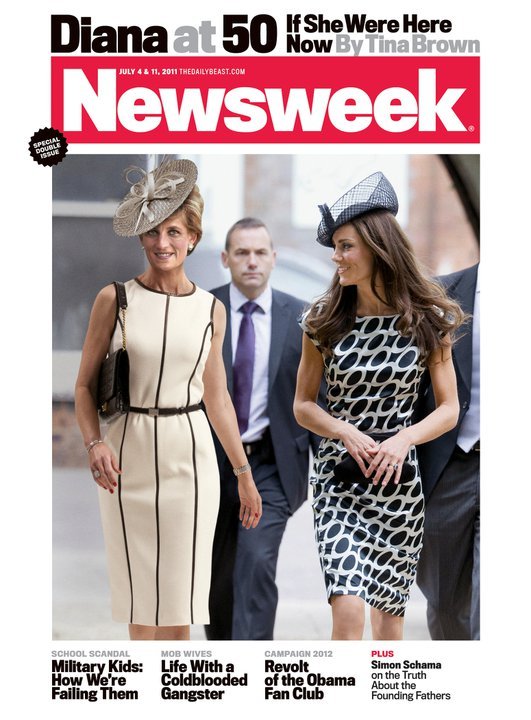
We like Newsweek. We’re Newsweek fans. But perhaps we may have gone a different direction with this cover story. (The inside illustration isn’t so hot either.)
 ShortFormBlogRead a little. Learn a lot. • Now Mullenweg-free! • Since 2009
61 posts
We like Newsweek. We’re Newsweek fans. But perhaps we may have gone a different direction with this cover story. (The inside illustration isn’t so hot either.)
Posted by ShortFormBlog • Permalink
Can we just emphasize how amazing this article is? We want to give him a hug. Right now. Journalism needs more, not fewer, people like Sidney fighting the good fight. He had a lot of good days, yes. But based on the defiant tone taken in this piece, he could’ve used a few more. And we would’ve been made the better for them. Peace out, Sidney.
Posted by ShortFormBlog • Permalink
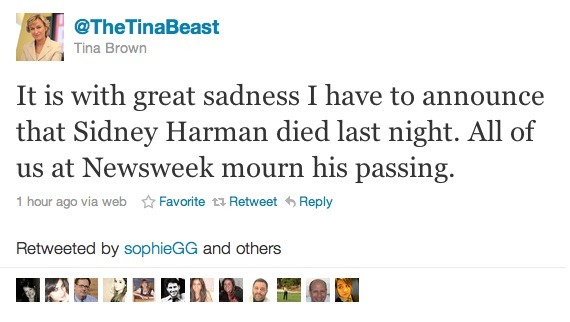
Sidney Harman, he of late-blooming media empire: Last August, audio mogul Sidney Harman bought Newsweek from The Washington Post Company, setting the stage for the blockbuster merger of the magazine with The Daily Beast (that’s Tina Brown tweeting above). He was 91 at the time. Before this, he was largely known for being one of the men behind the modern speaker. His Harman Kardon corporation, founded in the 1950s, was responsible for selling some of the first high-fidelity stereo speakers to large audiences. He also put in some time as a top Commerce official under Jimmy Carter, and his wife is former Democratic Rep. Jane Harman. He lived a pretty full life. He died last night at 92. source
Posted by ShortFormBlog • Permalink
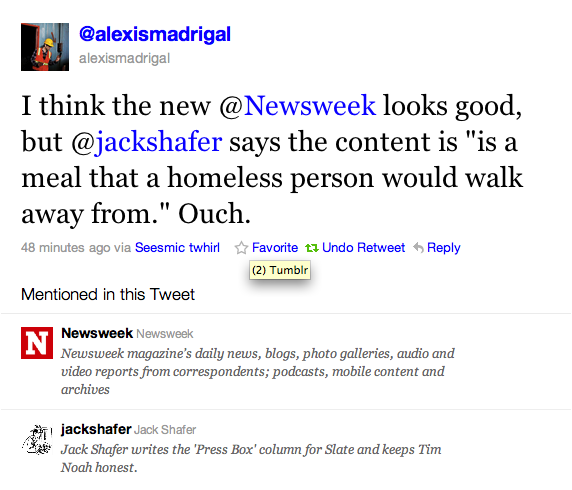
Ouch! Below the belt, Jack. Visual content treatment ≠lacking content.
Posted by ShortFormBlog • Permalink
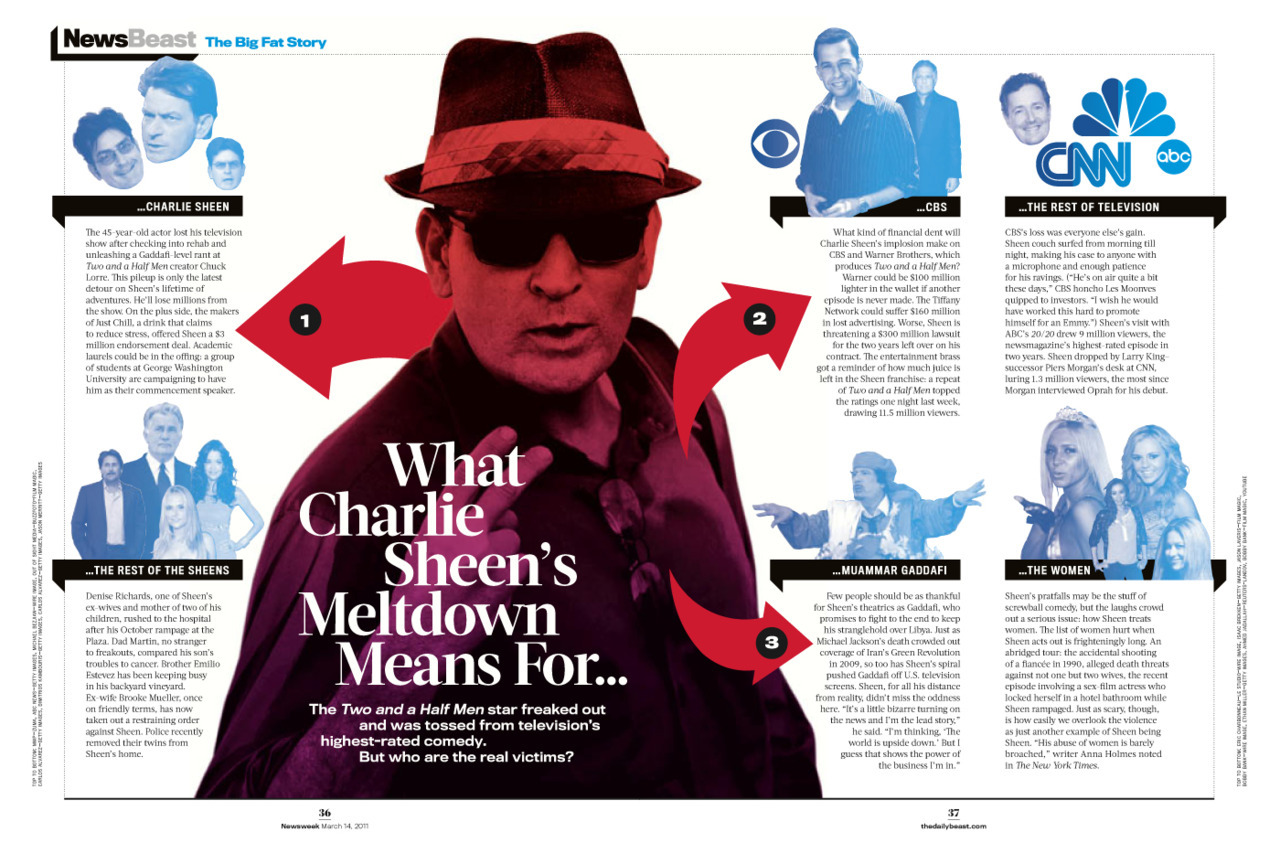
The Society of Publication Designers has a first look of Dirk Barnett’s redesign of Newsweek, along with an interview:
Tell us about your plan with infographics in the magazine.
Infographics, another element killed off over the past few years at Newsweek, will definitely be coming back. While we plan to up the presence, we have no plans to blow them out in aBloomberg/Wired direction, our content just doesn’t require or sustain it (plus, Bloomberg Businessweek is killing it, who can compete with that?!). Rather, it will be a vital tool to telling elements of stories that photogrpahy or illustration just don’t nail. We have introduced a new page, DataBeast, that will give us the opportunity to do a weekly infogrpahic on various subjects.
Click through for more pages from the new Newsweek.
A great look for a great magazine looking for a fresh spark. The biggest change? No more slab-serif logo. It’s kinda like what would happen if Time got rid of the red borders on its front page. Bold.
Posted by ShortFormBlog • Permalink
Tina Brown • Explaining in her redesign-launching letter what Newsweek's relaunch means. She's absolutely right, really – her time with The Daily Beast makes her pretty much the perfect person to play the role of editor of a newsmagazine in 2011. She can take the lessons from the Beast and build a shared vision between two entities which are designed to handle different parts of the media pie. We wish her the best. source
Posted by Ernie Smith • Permalink
Newsweek owner Sidney Harman • Explaining the dynamic between the ownership of his Newsweek and that of the Barry Diller-owned Daily Beast. One anonymous source described the potential failure of the collaboration being “like a bad Nora Ephron movie.” Will the collaboration turn out like "Sleepless in Seattle," "You've Got Mail," or "Bewitched"? All we know is that we'll have what they're having. source
Posted by Ernie Smith • Permalink
Posted by Ernie Smith • Permalink

Posted by Ernie Smith • Permalink
Newsweek scribe Daniel Lyons • Offering an interesting perspective on the decline of Digg, which he suggests may have been as much about the change of its audience as a failure of Digg to keep up. The TV show metaphor is actually a very good one. While not every company will fall prey to changing seasons, Web 2.0 companies are particularly apt to them due to their socially-oriented business models. Lyons suggestion at the end is most telling: "The big lesson of Digg may be simply this: if someone offers you a ridiculous amount of money for a company that wasn’t that hard to build, don’t think twice. Take the money and run." source
Posted by Ernie Smith • Permalink