Read a little. Learn a lot. • Now Mullenweg-free! • Since 2009
☰

Tag: media

135 posts

May 9 2010W

Politics: Obama dislikes modern technology's role in democracy

  • What he said about new tech In his commencement speech at Hampton University yesterday, the president threw out this gem: "With iPods and iPads and Xboxes and PlayStations – none of which I know how to work – information becomes a distraction, a diversion, a form of entertainment, rather than a tool of empowerment, rather than the means of emancipation." He also notes that it allows false claims to quickly gain traction.
  • Why we (mostly) disagree May we note that all those new ways to get information empower us to hear a huge diversity of voices? While we agree that this technology has an addictive element to it, the fact of the matter is, it empowers a diversity of voices that didn't exist even a decade ago. And plus, Obama's arguments could easily apply to television or radio, if you think about it. We do agree with the false claims part, though. source

Posted by Ernie Smith • Permalink

Mar 9 2010W

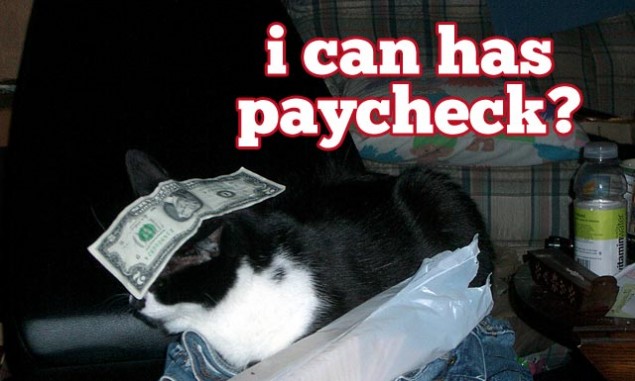
Biz: Is "I Can Has Cheezburger" the equivalent of Sweatshop 2.0?

  • We like the meme machines that Ben Huh's "I Can Has Cheezburger" network provides. They're goofy, they're funny at times, and they often drive some pretty interesting trends online. What we don't like, however, are his wages. What's essentially a job in a profitable niche media industry is treated as if it's a struggling startup. Gawker has been all over this the last few days, after Huh himself backed his company into a corner thanks to a frank admission.

What "Cheezburger" makes in revenue

  • $4 million in yearly revenue off of user-submitted content source

The "Cheezburger" employee picture

  • 30 employees work for Ben Huh's cat-loving empire source
  • $8.55 the starting rate (40 hr./week, no benefits) at one of Huh's sites for an office admin or a junior designer – that's minimum wage in Washington
  • $17,784 the amount that brings home for potential employees each year, before taxes of any sort – that's just $7,000 above the poverty line source
  • » A notable wrinkle: These jobs are contract jobs without benefits starting out. Contract jobs that don't take out taxes, just an FYI, are the ones that Joe Stack railed against when he crashed that plane into the IRS building. And while Huh claims that people move up in the company, the fact of the matter is that this is a near-poverty level job starting out.

How that compares

  • $30k starting rate for an entry-level office administrator
  • $29k starting rate for a Web-based graphic designer
  • $20k starting rate for a "blogger" – so Huh is even low for that source

Can you live off that? No

  • $17,784the entry-level pay (before taxes) at Cheezburger Network, with the possibility of wage increases
  • $18,337the living wage (after taxes) in the Seattle area, where the network is located source

The justification for low wages

We advertise lower wages for entry-level positions because the worst candidates focus on money the most. Believe it or not, advertising lower-than-market wages actually helped us yield better candidates.

Cheezburger Network CEO Ben Huh • In an article discussing how a recent ad drew candidates who were upset that he was offering so little for what are in reality jobs that require a college education. While passion is one thing, it's another thing entirely to force low wages on college-educated people. He lists three reasons why he feels employees who ask about compensation aren't desirable. The first? "The candidate’s inability to control their personal expenses, which inevitably leads to drama and demands at work." He goes further, noting: "If you have high financial requirements in order to absolutely survive, I don’t really know what to say than go get a job at a bank (you know what I mean)." Know what would help them control personal expenses, Ben? A living wage. Well, maybe they could get one (and health insurance!) if they worked at a Starbucks instead. source

But wait, they're not alone

  • Look, it's easy to focus on them. But the real problem we're starting to see with user-generated content is that nobody's really paying enough, and preying on passion. Lots of companies are guilty of this. Examiner.com is a great example. Journalists have for years been able to make a decent, if not great, wage by working at newspapers and other print publications. Will this go away? Will we even be able to buy cheezburgers? Just a thought.

Posted by Ernie Smith • Permalink

Mar 8 2010W

Politics: Note to mainstream news bloggers: Get over your fear of linking

The fundamental problem with Kouwe was that when he saw good stories elsewhere, he felt the need to re-report them himself, rather than simply linking to what he had found, as any real blogger would do as a matter of course.

Reuters blogger Felix Salmon (who knows how to rock a pair of glasses) • Nailing the real problem with a lot of mainstream media blogs (but specifically regarding the situation of New York Times plagiarist Zachary Kouwe), which is that they're link-phobic. Instead of having the guts to link to a story (out of fear of looking like he was behind the story), what Kouwe and other mainstream journalists do is find a story that needs to get on the blog, rewrite it and make it their own. Unfortunately for Kouwe, he left pieces of language from the other stories in his posts. Salmon puts his criticism like so: "If there’s a minor news story on a trustworthy wire service, and you think you need it on the blog, then link to it." source

Posted by Ernie Smith • Permalink

Feb 3 2010W

Politics: New Yorker writer trashes Twitter even though he's never used it

The truth is, I feel like yelling Stop quite a bit these days. Every time I hear about Twitter I want to yell Stop. The notion of sending and getting brief updates to and from dozens or thousands of people every few minutes is an image from information hell.

New Yorker staff writer George Packer • Complaining about the popularity of Twitter. He won't use it because he's scared of becoming addicted. He calls it "crack for media addicts." He seems to not understand the appeal of the service at all. He's a journalist – with sources who understand the need to be constantly connected – and he himself doesn't even own a BlackBerry. Mr. Packer, stop complaining and catch up. If you want to be a journalist in this new environment, you have to catch up. source

Posted by Ernie Smith • Permalink

Dec 15 2009W

Culture: Golf writers admit to being clueless about Tiger Woods

Everywhere I go these days, people who know what I do for a living keep asking the same question: Did you have any idea this was going on? I smile and sheepishly shake my head: No, I did not, never even a whiff.

Washington Post golf writer Leonard Shapiro • Discussing how the golf press missed the Tiger Woods story pretty badly. Why's that? Simply put, they rarely dealt with him off the golf course, and when they did, it was during carefully vetted 10-minute interviews. Shapiro asked his industry colleagues if they had a hint of Woods' private life, and none of them did. Surprising, to say the least, especially since these were the guys that put Woods on a pedestal all these years. source

Posted by Ernie Smith • Permalink

Dec 12 2009W

Politics: The Wall Street Journal on Tiger Woods: Gossip can be useful

The Tiger gossip is replete with moral messages and motivations that are compelling, instructive and powerful. Moral guidance can often sound like a collection of tired bromides when expressed in the abstract. But when told as part of a compelling drama—as gossip—it can appear as an eloquent demarcation of good behavior.

Wall Street Journal columnist Nicholas DiFonzo • In an article defending gossip's usefulness in the media. He's says that why much gossip can be ugly, sometimes it can teach lessons to outsiders. Woods' situation is especially messy – the cheater passed off as the wholesome family man, the do-no-wrong sports figure doing lots of wrong – but it makes the lessons stronger. source

Posted by Ernie Smith • Permalink

Dec 2 2009W

Tech: Digg might be about to do newspapers a huge favor

So what's in it for Digg? While the company might sacrifice some page views, it could get an even better sense of the content being blasted around the Web.

Forbes Senior Editor Brian Caulfield • On Digg's new API, which is designed to make it stupidly easy to Digg posts all over the Webb. (Whoops, sorry, we put that extra "b" on "Web" by accident.) Caulfield argues that the site is attempting at a decentralized approach much like Twitter with the move – a move that could help journalism significantly. source

Posted by Ernie Smith • Permalink