Read a little. Learn a lot. • Now Mullenweg-free! • Since 2009
☰

Tag: manufacturing

11 posts

Oct12013t

Etsy Sellers Can Now Use Factories for Handmade Goods

Etsy Inc., an online marketplace for handmade and vintage goods, will let its sellers use outside manufacturers and hire as many employees as they need, loosening rules amid confusion over requirements.

The change will allow sellers that cultivated their businesses on Etsy to keep expanding on the site, Chief Executive Officer Chad Dickerson said in an interview. It will also permit moves that were previously forbidden, like employing people in another location or producing goods in a factory.

Etsy is home to about 1 million sellers, some of whom are struggling to keep up with demand for their products, the company said. Under the new policy, sellers will have to disclose their business relationships and apply to use manufacturing services. Etsy will try to ensure that goods sold on the site still meet its definition of “handmade.”

The perils of popularity.
Posted by Scott Craft • Permalink

Jan212012W

Tech: On Apple, the U.S. economy, and China's manufacturing prowess

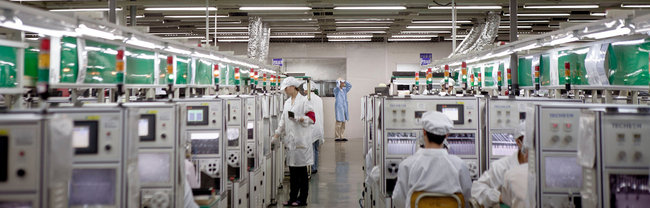
  • The U.S. factories couldn't get close enough to perfection for Steve Jobs. So Apple went to China. In perhaps the broadest profile you'll read about the manufacturing process that creates most of the electronics you use today, The New York Times' analysis of the structural reasons why the iPhone isn't made in the U.S. manages to pull off a surprising trick: It turns a story which on the surface is about one of the world's largest corporations into a story which shows weaknesses in the recession-laden U.S. economy. A quick roundup of what we learned from this article:
  • one Apple was a late-comer to the international manufacturing racket, and as recently as 2003 built their products in California. Before they went to Asia, they struggled to keep up with the rest of the tech industry, which used the kinds of contractors Apple uses now.
  • two In Asia, it's much easier to get all their ducks in a row in terms of supply chain management. The lower labor cost helps, but it's the ability to turn on a dime — such as when Apple changed its iPhone screen from plastic to glass — that really makes a difference in terms of cost.
  • three Despite the outsourcing, an important point to keep in mind is that Apple's success does create jobs in the U.S., both directly — 8,000 in the past year alone — and indirectly, with companies like FedEx and UPS adding many jobs based solely on Apple's needs. source
  • » What it means for the U.S. economy: With speed, flexibility and manufacturing prowess better in China, Apple's move abroad has taken two types of jobs out of play: One, the low-paid but stable manufacturing job (which FoxConn offers both to Apple and numerous other manufacturers); and two, the mid-level engineer, which the article suggests is hard to find in the U.S., but easy to find in China. In fact, the story features a fascinating anecdote about a mid-level engineer who once worked a well-paying job at a U.S. Apple factory, only to get laid off and, years later, work another Apple job he was overqualified for — at a much lower salary. That's the real story. Look past Apple. They're the hook of the article, but the real story is how the U.S. economy is no longer the best spot for these kinds of jobs. How can the U.S. change that?

Posted by Ernie Smith • Permalink

Jan212012t

More on Apple & FoxConn's suicide issues

wherethecrowflies says: No mention of the 14 suicides at that factory in China last year? Must not be important enough for the New York Times..

  • » SFB says: They’ve covered those issues numerous times before. (By the way, the suicides happened in 2010 and Apple made changes as a result of them.) While it’s clearly a big issue and probably deserved a mention, this article honestly isn’t about that quite as much. Personally, it didn’t bother me it wasn’t mentioned, simply because it’s been covered at depth numerous times before. This is about a particular angle of that whole mess that doesn’t get quite as much play. The stuff about the supply chain being much easier to handle in Asia than the U.S.? That’s a big deal and told me something fairly new. Honestly, I felt this article was angled towards people who already knew about Apple and FoxConn, but perhaps didn’t know the systemic reasons the company moved away from “Made in the U.S.A." — Ernie @ SFB

Posted by ShortFormBlog • Permalink

Jan202012t

Apple, you have all those employees over there [China], you wanna bring them back, you’ll pay a 35% tax…

Apple, you have all those employees over there [China], you wanna bring them back, you’ll pay a 35% tax. Under our plan, you bring them back and open a factory in Charleston, you pay nothing.

— Rick Santorum, answering a question about how he would bring manufacturing back into the U.S. with power companies like Apple already based in lower-cost places like China.

More debate coverage: ShortFormBlog | DC Decoder

Posted by ShortFormBlog • Permalink

Jul232010W

Tech: Apple: White iPhones somehow harder to make than black ones

White models of Apple’s new iPhone® 4 have continued to be more challenging to manufacture than we originally expected, and as a result they will not be available until later this year. The availability of the more popular iPhone 4 black models is not affected.

A PR statement from Apple • Noting the technical limitations caused by in creating the white iPhone 4. Apple is certainly running into a lot of problems with the phone this time around, aren't they? Considering how smoothly most of their other launches go, it's almost absurd. source

Posted by Ernie Smith • Permalink

May142010W

Biz: So yeah, the plant where Children's Tylenol was made is a disaster

This inspection report is pretty close to being the worst I've seen. It suggests that basically the FDA found an issue with almost every system at the plant.

Temple University professor (and former Johnson & Johnson employee) David Lebo • Regarding the conditions of a Pennsylvania Tylenol plant that was shut down recently by the Food and Drug Administration. The shutdown followed a mass recall of many children's drug products by the manufacturer. Nearly three dozen complaints were filed regarding the drugs, which including foreign materials. The FDA's report suggests that there was lacking quality control that made some of the drugs superpotent (as scary as it sounds). We're guessing that this PR crisis won't be fixed as easily as that other one. source

Posted by Ernie Smith • Permalink